

Prototype tech shrinks AI to deliver brain-like functionality in one powerful device.
Researchers have developed artificial intelligence technology that brings together imaging, processing, machine learning, and memory in one electronic chip, powered by light.
The prototype shrinks artificial intelligence technology by imitating the way that the human brain processes visual information. The nanoscale advance combines the core software needed to drive artificial intelligence with image-capturing hardware in a single electronic device.
With further development, the light-driven prototype could enable smarter and smaller autonomous technologies like drones and robotics, plus smart wearables and bionic implants like artificial retinas.
The study, from an international team of Australian, American, and Chinese researchers led by RMIT University, is published in the journal Advanced Materials.
Lead researcher Associate Professor Sumeet Walia, from RMIT, said the prototype delivered brain-like functionality in one powerful device.
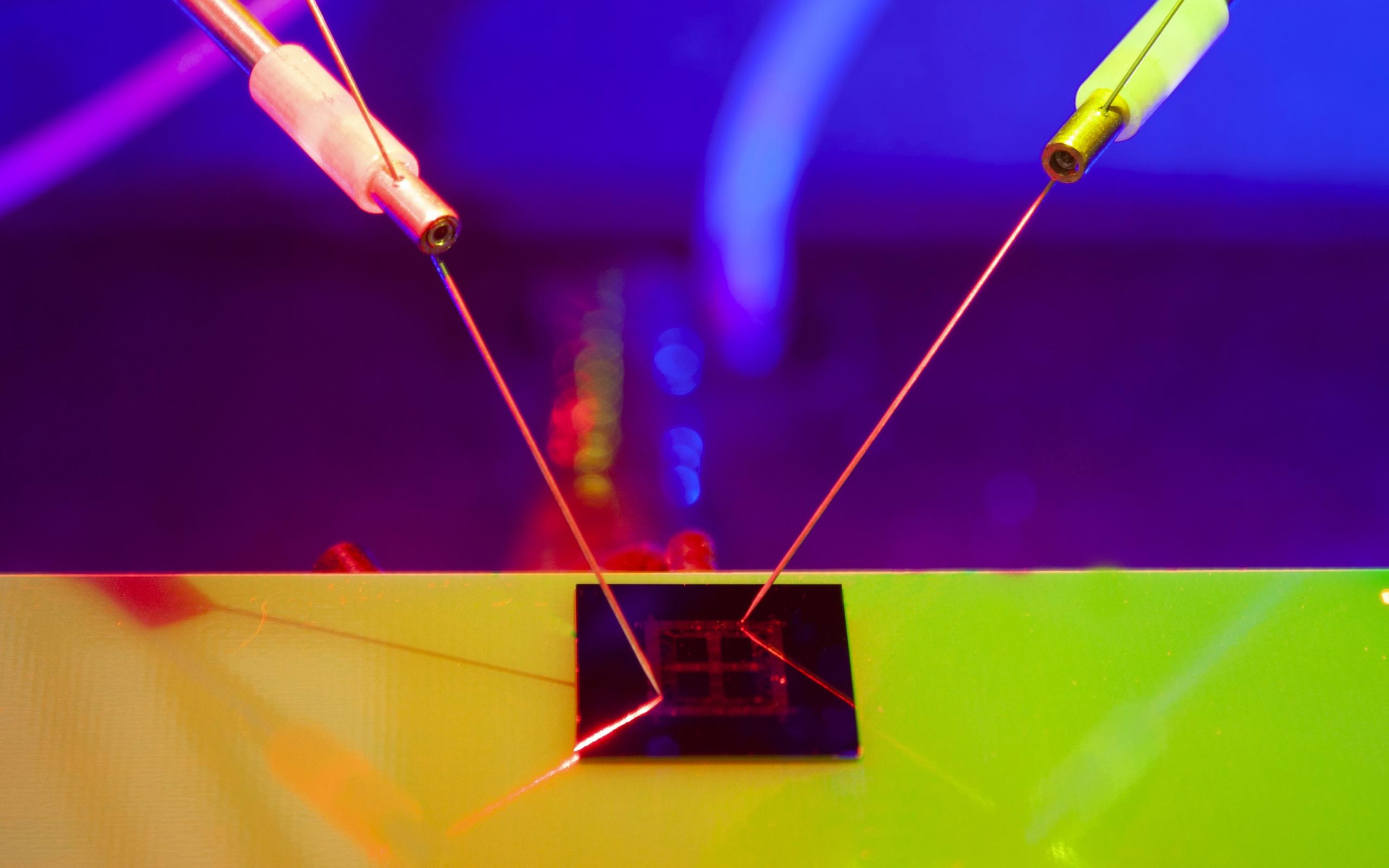
“Our new technology radically boosts efficiency and accuracy by bringing multiple components and functionalities into a single platform,” Walia said.
“It’s getting us closer to an all-in-one AI device inspired by nature’s greatest computing innovation – the human brain.
“Our aim is to replicate a core feature of how the brain learns, through imprinting vision as memory. The prototype we’ve developed is a major leap forward towards neurorobotics, better technologies for human-machine interaction, and scalable bionic systems.”
Total package: advancing AI
Typically artificial intelligence relies heavily on software and off-site data processing. The new prototype aims to integrate electronic hardware and intelligence together, for fast on-site decisions.
“Imagine a dash cam in a car that’s integrated with our neuro-inspired hardware – this means it can recognize lights, signs, objects and make instant decisions, without having to connect to the internet,” Walia, who co-leads the Functional Materials and Microsystems Research Group at RMIT, said.
“By bringing it all together into one chip, we can deliver unprecedented levels of efficiency and speed in autonomous and AI-driven decision-making.”
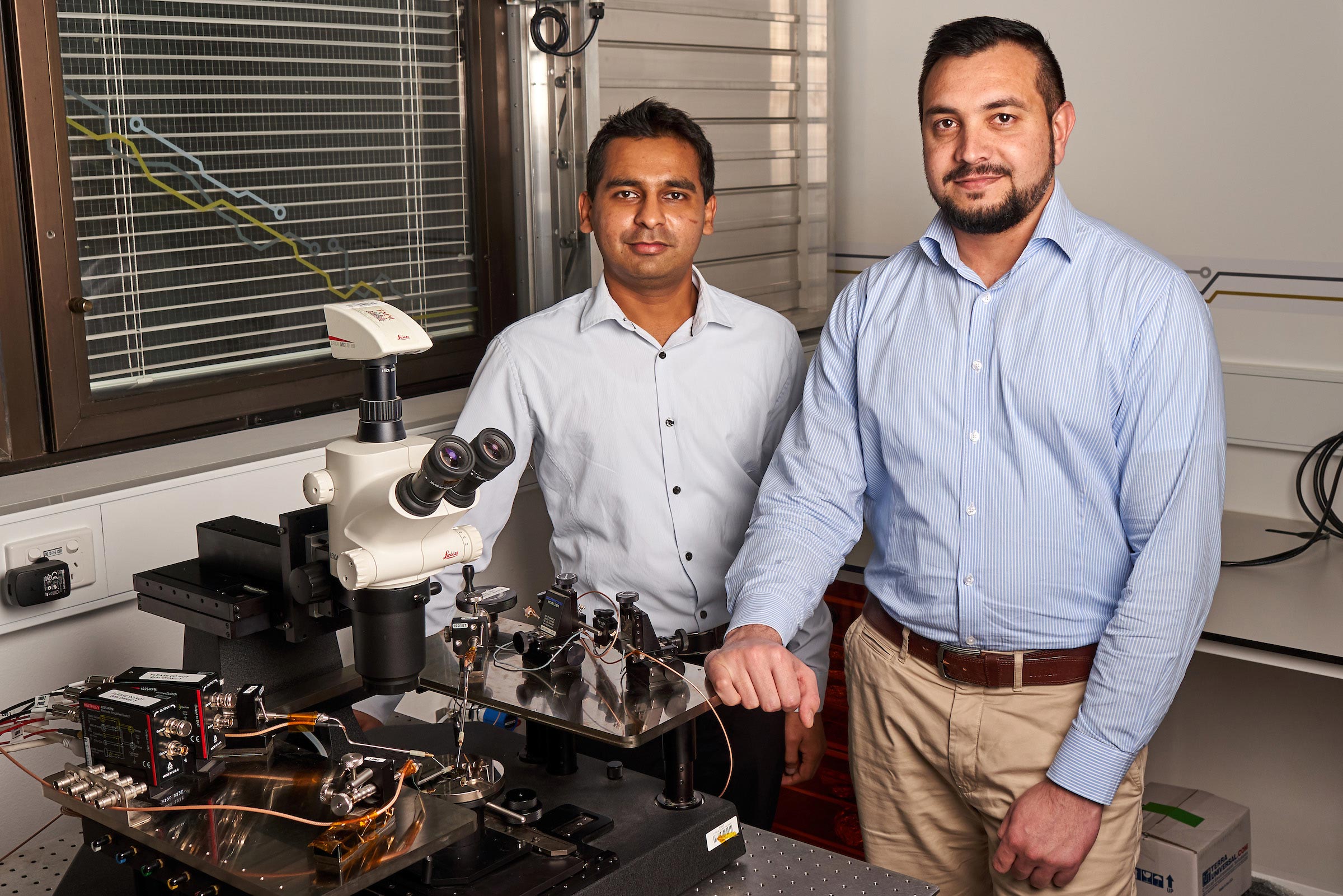
The technology builds on an earlier prototype chip from the RMIT team, which used light to create and modify memories.
New built-in features mean the chip can now capture and automatically enhance images, classify numbers, and be trained to recognize patterns and images with an accuracy rate of over 90%.
The device is also readily compatible with existing electronics and silicon technologies, for effortless future integration.
Seeing the light: how the tech works
The prototype is inspired by optogenetics, an emerging tool in biotechnology that allows scientists to delve into the body’s electrical system with great precision and use light to manipulate neurons.
The AI chip is based on an ultra-thin material – black phosphorous – that changes electrical resistance in response to different wavelengths of light. The different functionalities such as imaging or memory storage are achieved by shining different colors of light on the chip.
Study lead author Dr. Taimur Ahmed, from RMIT, said light-based computing was faster, more accurate, and required far less energy than existing technologies.
“By packing so much core functionality into one compact nanoscale device, we can broaden the horizons for machine learning and AI to be integrated into smaller applications,” Ahmed said.
“Using our chip with artificial retinas, for example, would enable scientists to miniaturize that emerging technology and improve accuracy of the bionic eye.
“Our prototype is a significant advance towards the ultimate in electronics: a brain-on-a-chip that can learn from its environment just like we do.”
This work was performed in part at the Micro Nano Research Facility (MNRF) at RMIT, with support from the RMIT Microscopy and Microanalysis Research Facility (RMMF), National Computational Infrastructure Australia (NCI), Multimodal Australian Sciences Imaging and Visualisation Environment (MASSIVE) and Pawsey Supercomputing Facility.
Reference: “Fully Light‐Controlled Memory and Neuromorphic Computation in Layered Black Phosphorus” by Taimur Ahmed, Muhammad Tahir, Mei Xian Low, Yanyun Ren, Sherif Abdulkader Tawfik, Edwin L. H. Mayes, Sruthi Kuriakose, Shahid Nawaz, Michelle J. S. Spencer, Hua Chen, Madhu Bhaskaran, Sharath Sriram and Sumeet Walia, 17 November 2020, Advanced Materials.
DOI: 10.1002/adma.202004207
Never miss a breakthrough: Join the SciTechDaily newsletter.
Follow us on Google and Google News.
2 Comments
Use of this smart chip could help in organ failure or replacement and especially with the eyes and ears. Could really help with brain and nerve damage.
thank you