
Close Menu
    Facebook X (Twitter) Instagram
    SciTechDaily
    • Biology
    • Chemistry
    • Earth
    • Health
    • Physics
    • Science
    • Space
    • Technology
    Facebook X (Twitter) Pinterest YouTube RSS
    SciTechDaily
    Home»Earth»Contrary to Popular Belief, Neanderthals Were as Technologically Advanced as Homo Sapiens
    Earth

    Contrary to Popular Belief, Neanderthals Were as Technologically Advanced as Homo Sapiens

    By CNRSApril 9, 2020No Comments2 Mins Read
    Facebook Twitter Pinterest Telegram LinkedIn WhatsApp Email Reddit
    Share
    Facebook Twitter LinkedIn Pinterest Telegram Email Reddit
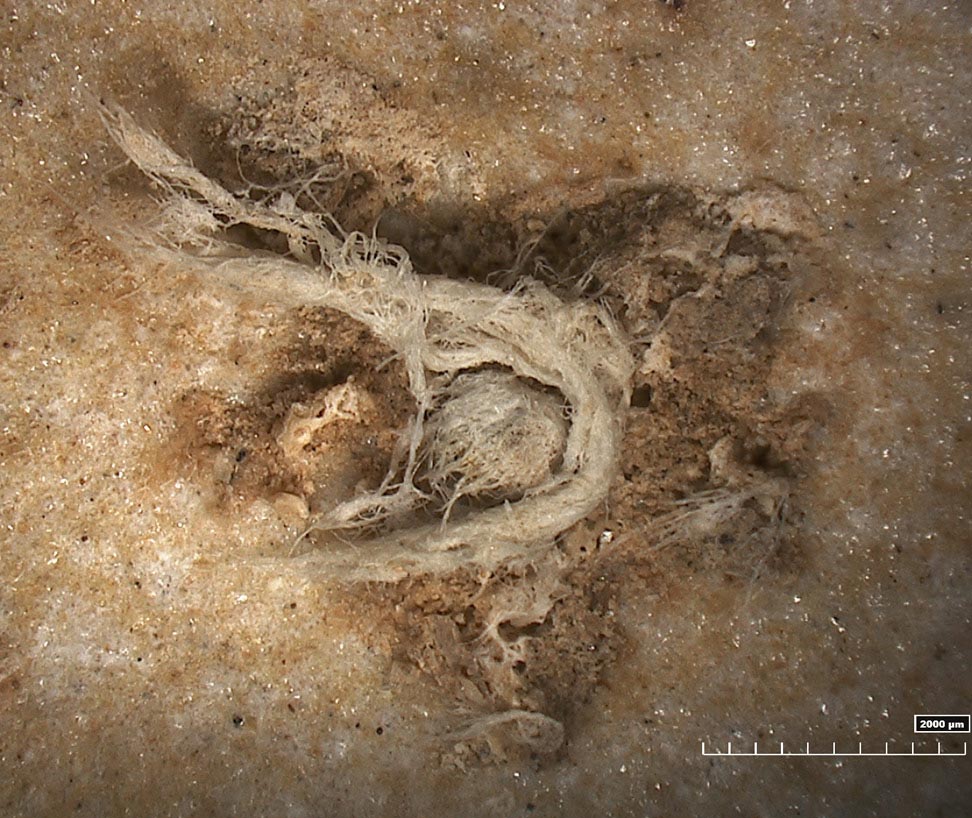
    Cord Fragment
    Photograph of the cord fragment taken by digital microscopy (the fragment is approximately 6.2 mm long and 0.5 mm wide). Credit: © C2RMF

    Contrary to popular belief, Neanderthals were no less technologically advanced than Homo sapiens.

    An international team, including researchers from the CNRS, have discovered the first evidence of cord making, dating back more than 40,000 years,[1] on a flint fragment from the prehistoric site of Abri du Maras in the south of France.[2] Microscopic analysis showed that these remains had been intertwined, proof of their modification by humans.

    Photographs revealed three bundles of twisted fibers, plied together to create one cord. In addition, spectroscopic analysis revealed that these strands were made of cellulose, probably from coniferous trees.
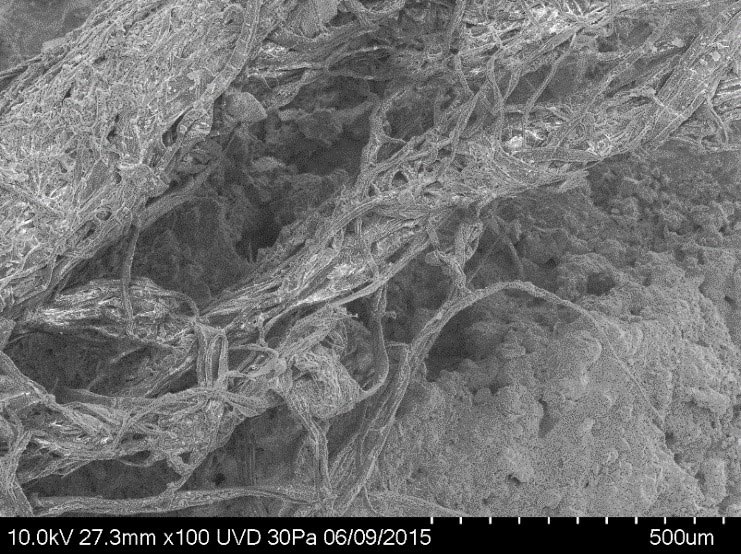
    Cord Fragment Scanning Electron Microscopy
    Detail of the cord fragment showing twisted fibers, observed by scanning electron microscopy. Credit: © MNHN

    This discovery highlights unexpected cognitive abilities on the part of Neanderthals, who not only had a good understanding of the mathematics involved in winding the fibers, but also a thorough knowledge of tree growth.

    These results, published today (April 9, 2020) in Scientific Reports, represent the oldest known proof of textile and cord technology to date.

    Read 50,000 Year-Old String Reveals Neanderthals Were Technologically Advanced for more on this discovery.

    Reference: “Direct evidence of Neanderthal fibre technology and its cognitive and behavioral implications” by B. L. Hardy, M.-H. Moncel, C. Kerfant, M. Lebon, L. Bellot-Gurlet and N. Mélard, 9 April 2020, Scientific Reports.
    DOI: 10.1038/s41598-020-61839-w

    The following laboratories contributed to this work: Histoire naturelle de l’Homme préhistorique (CNRS/Muséum national d’Histoire naturelle/Université de Perpignan Via Domitia), De la molécule aux nano-objets : réactivité, interactions et spectroscopies (CNRS/Sorbonne Université), along with the Centre de recherche et de restauration des musées de France (ministère de la Culture).

    The excavations at the Abri du Maras have in particular benefited from funding from the French Ministry of Culture and the Auvergne-Rhône-Alpes Regional Archaeology Service.

    Notes:

    1. Neanderthals lived between 350,000 and 28,000 years BC.
    2. Archaeological site in southeastern France (Ardèche). The team led by Marie-Hélène Moncel has previously shown that Neanderthals occupied this shelter.

    Never miss a breakthrough: Join the SciTechDaily newsletter.
    Follow us on Google and Google News.

    Archaeology CNRS Neanderthals Popular
    Share. Facebook Twitter Pinterest LinkedIn Email Reddit

    Related Articles

    41,000-Year-Old Bones Reveal Chilling Pattern of Neanderthal Cannibalism

    Neanderthals Changed Ecosystems 125,000 Years Ago – Were Not “Primal Hippies”

    Unraveling the Mystery of Neanderthal Death Rites – Discovery at ‘Flower Burial’ Site Offers “Unparalleled Opportunity”

    What Caused Neanderthal Extinction and Were Our Human Ancestors to Blame?

    Researchers Find the Last Neanderthal Necklace – Here’s What It Was Made From

    New Evidence Shows Humans Mastered Fire Earlier Than Thought

    Controversial Theory on Extinction of Ice-Age Animals Supported by New Evidence

    European Cave Paintings Older Than Previously Thought, Might Have Been Painted by Neanderthals

    Previously Unknown Hominin Discovered In Denisova Cave in Siberia

    Leave A Reply Cancel Reply

    • Facebook
    • Twitter
    • Pinterest
    • YouTube

    Don't Miss a Discovery

    Subscribe for the Latest in Science & Tech!

    Trending News

    NASA Finds Earth Microbes Could Hide in the Moon’s Deep Shadows

    New Study: Intermittent Fasting Lowers Blood Sugar in Type 1 Diabetes

    Alzheimer’s Brain Changes May Begin 7 Years Earlier Than Scientists Thought

    This New Molecule Could Transform How We Recover Gold From Electronic Waste

    A Billion Years Before the Grand Canyon, a Giant Cliff May Have Stretched Across America

    The Immune Systems of 110-Year-Olds Are Hiding a Remarkable Secret

    Common Osteoarthritis Treatment Fails a Major Test

    Dark Stars May Have Left a Gravitational-Wave Signal We Can Detect Today

    Follow SciTechDaily
    • Facebook
    • Twitter
    • YouTube
    • Pinterest
    • Newsletter
    • RSS
    SciTech News
    • Biology News
    • Chemistry News
    • Earth News
    • Health News
    • Physics News
    • Science News
    • Space News
    • Technology News
    Recent Posts
    • Researchers Have Discovered a New Way To Reduce Chronic Nerve Pain
    • Less Sugar Early in Life Linked to Lower Dementia Risk Decades Later
    • Naked Comet Photobombs Public Telescope Image
    • JWST Finds Giant Planets Face a Cosmic Race Against Time
    • Brain Cells Once Thought Protective May Actually Drive Cognitive Decline With Age
    Copyright © 1998 - 2026 SciTechDaily. All Rights Reserved.
    • Science News
    • About
    • Contact
    • Editorial Board
    • Privacy Policy
    • Terms of Use

    Type above and press Enter to search. Press Esc to cancel.