
Close Menu
    Facebook X (Twitter) Instagram
    SciTechDaily
    • Biology
    • Chemistry
    • Earth
    • Health
    • Physics
    • Science
    • Space
    • Technology
    Facebook X (Twitter) Pinterest YouTube RSS
    SciTechDaily
    Home»Earth»Incredible View of the Falkland Islands Captured From Space [Video]
    Earth

    Incredible View of the Falkland Islands Captured From Space [Video]

    By European Space Agency (ESA)July 24, 2020No Comments2 Mins Read
    Facebook Twitter Pinterest Telegram LinkedIn WhatsApp Email Reddit
    Share
    Facebook Twitter LinkedIn Pinterest Telegram Email Reddit
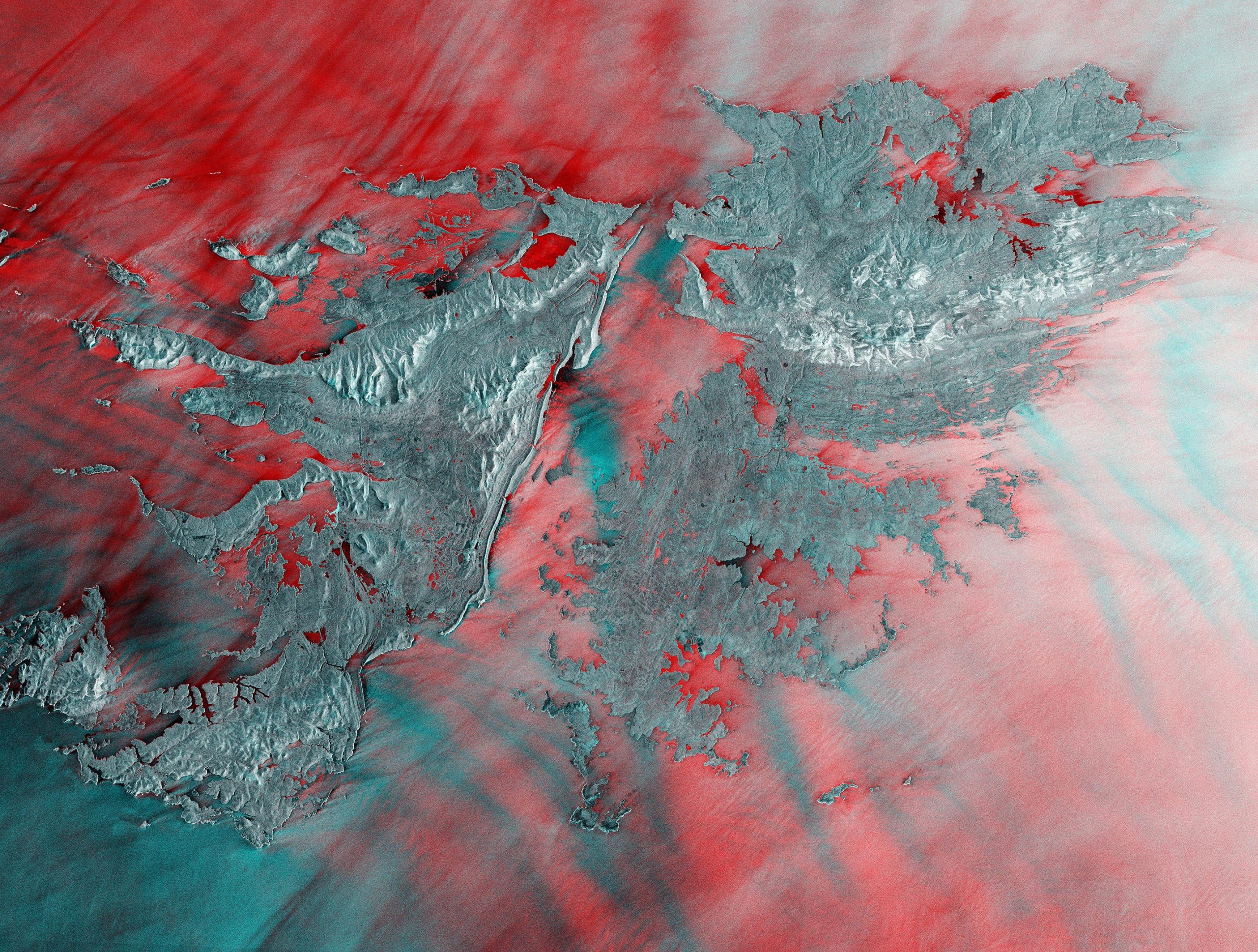
    Falkland Islands From Space
    The Falkland Islands as captured by the Copernicus Sentinel-1 Radar Observatory. Credit: Contains modified Copernicus Sentinel data (2019-20), processed by ESA, CC BY-SA 3.0 IGO

    The Falkland Islands are featured in this radar image captured by the Copernicus Sentinel-1 mission.

    The Falkland Islands lie in the South Atlantic Ocean, around 500 km (310 mi) northeast of the southern tip of South America. The Falklands comprise two main islands, West Falkland and East Falkland, as well as hundreds of other smaller islands and islets, which form a total land area approximately five times the size of Luxembourg. The two main islands are separated by the Falkland Sound, a channel that averages around 20 km (12 mi) in width.

    This multi-temporal image combines two radar acquisitions from the Copernicus Sentinel-1 mission taken one month apart to show changes over time. The first image was captured on December 29, 2019, while the second was taken on 22 January 2020. Here, the main changes between acquisitions occurred in the open ocean, with the bright red colors showing wavy waters in December 2019.

    The Copernicus Sentinel-1 mission provides a continuous sampling of the seas, offering information on wind and waves. This is useful for understanding interactions between waves and currents and to improve efficiency for shipping and wave-energy applications, potentially producing economic benefits.

    The landscape of the Falkland Islands comprises mountain ranges, flat plains, rugged coastlines, and cliffs. Hills run east-west across the northern parts of the two main islands, with the highest point being Mount Usborne on East Falkland (around 700 m or 2,300 ft). Two inlets, Berkeley Sound and Port William, visible in the far right of the image, run far into the land and provide anchorage for shipping. The majority of the population of the islands live in Stanley, on East Falkland.

    The islands are covered with grasslands, but not trees, which are widely used as pastureland for sheep and cattle. The islands are also an important habitat and breeding grounds for birds, penguins, and seals.

    Never miss a breakthrough: Join the SciTechDaily newsletter.
    Follow us on Google and Google News.

    European Space Agency Geography
    Share. Facebook Twitter Pinterest LinkedIn Email Reddit

    Related Articles

    Breathtaking View of Andros, Bahamas From Space [Video]

    Stunning Views of Houston Texas From Copernicus Sentinel-1 Satellite

    Earth From Space: Bolivian Highland Heart [Video]

    Flevoland, Netherlands From Space: One of the Largest Land Reclamation Projects in the World

    Earth From Space: Lake George, Uganda – A Center for Biological Diversity [Video]

    Deforestation in Bolivia Spied From Space Satellite

    Earth From Space: Japanese Archipelago [Video]

    Earth From Space: Faroe Islands [Video]

    Earth From Space: Tromsø, Norway [Video]

    Leave A Reply Cancel Reply

    • Facebook
    • Twitter
    • Pinterest
    • YouTube

    Don't Miss a Discovery

    Subscribe for the Latest in Science & Tech!

    Trending News

    A Star Near the Milky Way’s Black Hole Is Losing Mass at an Astonishing Rate

    Scientists Solve a Vitamin B12 Mystery With an Unexpected Culprit

    Has the Autism Spectrum Become Too Broad? Leading Scientist Warns of Hidden Consequences

    Rewriting History: Researchers Uncover a Forgotten Amazon Civilization That May Have Housed 3 Million People

    New Research May Change How We Think About Weight Loss Drugs Like Ozempic

    Coffee Drinkers Show Surprising Differences in Fat, Muscle, and Hormones

    New Treatment Targets Gum Disease Without Killing Good Bacteria

    Scientists Discover a 245-Million-Year-Old Reptile With Its Organs Still Preserved

    Follow SciTechDaily
    • Facebook
    • Twitter
    • YouTube
    • Pinterest
    • Newsletter
    • RSS
    SciTech News
    • Biology News
    • Chemistry News
    • Earth News
    • Health News
    • Physics News
    • Science News
    • Space News
    • Technology News
    Recent Posts
    • Why Does an Irregular Heartbeat Strike 40 Years Early in Some People?
    • Scientists Reveal How ADHD Could Fuel Creative Thinking
    • Scientists Find a Surprising Diabetes-Fighting Compound in Turmeric
    • Archaeologists Discover a 10,000-Year Human History Hidden in the Pyrenees
    • Scientists Discover a Surprising Link Between Human Genes and Language
    Copyright © 1998 - 2026 SciTechDaily. All Rights Reserved.
    • Science News
    • About
    • Contact
    • Editorial Board
    • Privacy Policy
    • Terms of Use

    Type above and press Enter to search. Press Esc to cancel.