
Close Menu
    Facebook X (Twitter) Instagram
    SciTechDaily
    • Biology
    • Chemistry
    • Earth
    • Health
    • Physics
    • Science
    • Space
    • Technology
    Facebook X (Twitter) Pinterest YouTube RSS
    SciTechDaily
    Home»Space»Origin of Oddball Meteorites: Exploring Magnetization Preserved for Billions of Years
    Space

    Origin of Oddball Meteorites: Exploring Magnetization Preserved for Billions of Years

    By Lawrence Berkeley National LaboratoryAugust 3, 2020No Comments3 Mins Read
    Facebook Twitter Pinterest Telegram LinkedIn WhatsApp Email Reddit
    Share
    Facebook Twitter LinkedIn Pinterest Telegram Email Reddit
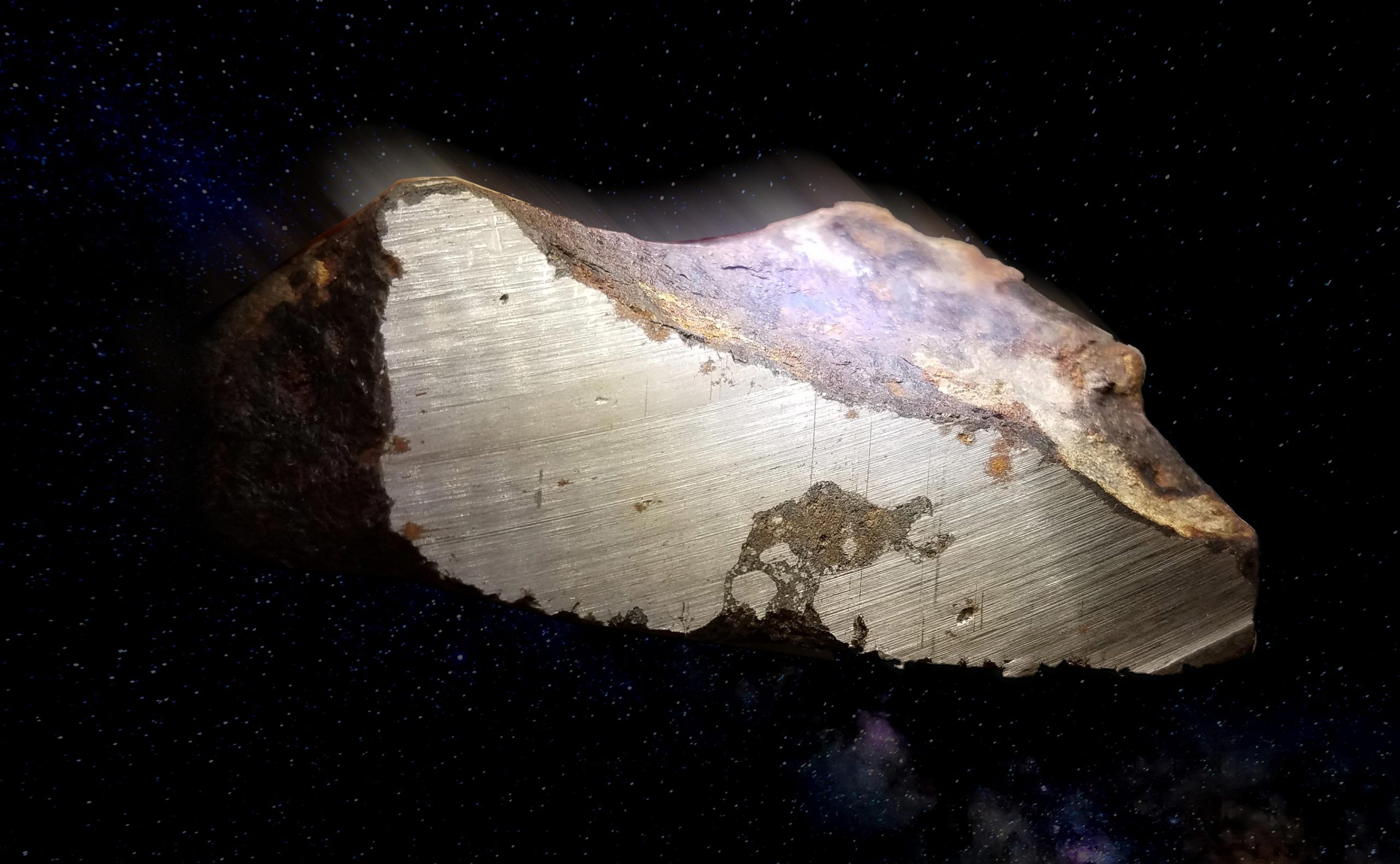
    Rare Layered Meteorite Sample
    X-ray experiments at Berkeley Lab’s Advanced Light Source helped scientists to establish that the parent planetesimal of rare meteorites, like the one shown here, had a molten core, a solid crust, and a magnetic field similar in strength to the Earth’s magnetic field. Credit: Carl Agee, Institute of Meteoritics, University of New Mexico. Background edited by MIT News.

    Berkeley Lab scientists contribute to study exploring magnetization preserved for billions of years in meteorite samples.

    X-ray experiments at Lawrence Berkeley National Laboratory (Berkeley Lab) played a key role in resolving the origin of rare, odd meteorites that have puzzled scientists since their discovery a half-century ago. Known as type IIE iron meteorites, they appear to have originated from a parent body that had a composition featuring both fully melted and unmelted parts – other meteorite types display only one composition.

    Researchers used Berkeley Lab’s Advanced Light Source (ALS), a synchrotron user facility that produces light ranging from infrared to X-rays for a variety of experiments, to produce 3D reconstructions of the detailed patterns of magnetic orientation imprinted in samples from two of these rare meteorites. Only nine of these meteorites have been found on Earth.

    The magnetization pockets pointed to their likely origin in a large “planetesimal” – an object that took shape during the formative stage of our solar system – that indeed was both unmelted and melted. The object likely had a molten metallic core, a solid crust, and a magnetic field that may have rivaled the Earth’s in strength. The study was published online July 24 in Science Advances.

    The ALS experiments used an X-ray microscopy technique known as XPEEM, coupled with a technique known as XMCD that produced greater contrast, to generate more than 500 images of the 3D-reconstructed magnetization for each sample.

    “We helped the research team to get this quantitative information about the direction and magnitude of the magnetization” in the samples, said Berkeley Lab’s Andreas Scholl, who first met with researchers on the team in 2015. Scholl is a senior staff scientist, beamline scientist, and science deputy at the ALS.

    Rajesh Chopdekar, an ALS project scientist and a beamline scientist, noted that the X-rays were tuned specifically to measure the magnetic iron present in the samples. Thousands of magnetic images were compiled to generate statistical confidence in the magnitude and direction of the ancient magnetic field imprinted into the meteorites.

    Read Family of Oddball Meteorites Stumped Researchers for Decades for more on this study.

    Reference: “Meteorite evidence for partial differentiation and protracted accretion of planetesimals” by Clara Maurel, James F. J. Bryson, Richard J. Lyons, Matthew R. Ball, Rajesh V. Chopdekar, Andreas Scholl, Fred J. Ciesla, William F. Bottke and Benjamin P. Weiss, 24 July 2020, Science Advances.
    DOI: 10.1126/sciadv.aba1303

    The Advanced Light Source is a DOE Office of Science user facility.

    The research team was led by scientists from the Massachusetts Institute of Technology, and also featured participation by researchers at the University of Cambridge, University of Chicago, and the Institute for the Science of Exploration Targets. The study was supported by the U.S. Department of Energy’s Office of Science, the NASA Discovery Program, the NASA Emerging Worlds program, and the University of Cambridge.

    Never miss a breakthrough: Join the SciTechDaily newsletter.
    Follow us on Google and Google News.

    Astrophysics DOE Lawrence Berkeley National Laboratory Meteorites MIT Planets
    Share. Facebook Twitter Pinterest LinkedIn Email Reddit

    Related Articles

    Meteorites Reveal Ancient Magnetic Record of Protoplanet Churn

    Missing Baryons Found in Far-Out Reaches of Galactic Halos

    Super-Earth Atmospheres Probed With Sandia National Lab’s Powerful Z Machine

    Family of Oddball Meteorites Stumped Researchers for Decades – Now an Answer to the Puzzling Chimera

    Dark Energy Telescope Enables Seeing the Universe Through New Lenses

    World’s First 3D Supercomputer Simulations of Superluminous Supernovae

    Building a 3D Map of the Universe to Uncover the Mysteries of Dark Energy

    ‘Time Machine’ With 5,000 Robotic Eyes to Explore Dark Energy

    Revealing Data from Super-Earth 55 Cancri e

    Leave A Reply Cancel Reply

    • Facebook
    • Twitter
    • Pinterest
    • YouTube

    Don't Miss a Discovery

    Subscribe for the Latest in Science & Tech!

    Trending News

    Mezcal “Worm” in a Bottle Mystery: DNA Testing Reveals a Surprise

    New Research Reveals That Your Morning Coffee Activates an Ancient Longevity Switch

    This Is What Makes You Irresistible to Mosquitoes

    Shockingly Powerful Giant Octopuses Ruled the Seas 100 Million Years Ago

    Scientists Stunned by New Organic Molecules Found on Mars

    Rewriting Dinosaur Evolution: Scientists Unearth Remarkable 150-Million-Year-Old Stegosaur Skull

    Omega-3 Supplements Linked to Cognitive Decline in Surprising New Study

    First-of-Its-Kind Discovery: Homer’s Iliad Found Embedded in a 1,600-Year-Old Egyptian Mummy

    Follow SciTechDaily
    • Facebook
    • Twitter
    • YouTube
    • Pinterest
    • Newsletter
    • RSS
    SciTech News
    • Biology News
    • Chemistry News
    • Earth News
    • Health News
    • Physics News
    • Science News
    • Space News
    • Technology News
    Recent Posts
    • Scientists Just Discovered the Hidden Trick That Keeps Your Cells Alive
    • This Simple Movement Could Be Secretly Cleaning Your Brain
    • Male Birth Control Breakthrough: Scientists Find Way To Turn Sperm Production Off and Back On
    • A Common Vitamin Could Hold the Key to Treating Fatty Liver Disease
    • New Research Shows Vitamin B12 May Hold the Key to Healthy Aging
    Copyright © 1998 - 2026 SciTechDaily. All Rights Reserved.
    • Science News
    • About
    • Contact
    • Editorial Board
    • Privacy Policy
    • Terms of Use

    Type above and press Enter to search. Press Esc to cancel.