
Close Menu
    Facebook X (Twitter) Instagram
    SciTechDaily
    • Biology
    • Chemistry
    • Earth
    • Health
    • Physics
    • Science
    • Space
    • Technology
    Facebook X (Twitter) Pinterest YouTube RSS
    SciTechDaily
    Home»Space»Meteorites Reveal Ancient Magnetic Record of Protoplanet Churn
    Space

    Meteorites Reveal Ancient Magnetic Record of Protoplanet Churn

    By Lawrence Berkeley National LaboratoryMay 3, 2021No Comments3 Mins Read
    Facebook Twitter Pinterest Telegram LinkedIn WhatsApp Email Reddit
    Share
    Facebook Twitter LinkedIn Pinterest Telegram Email Reddit
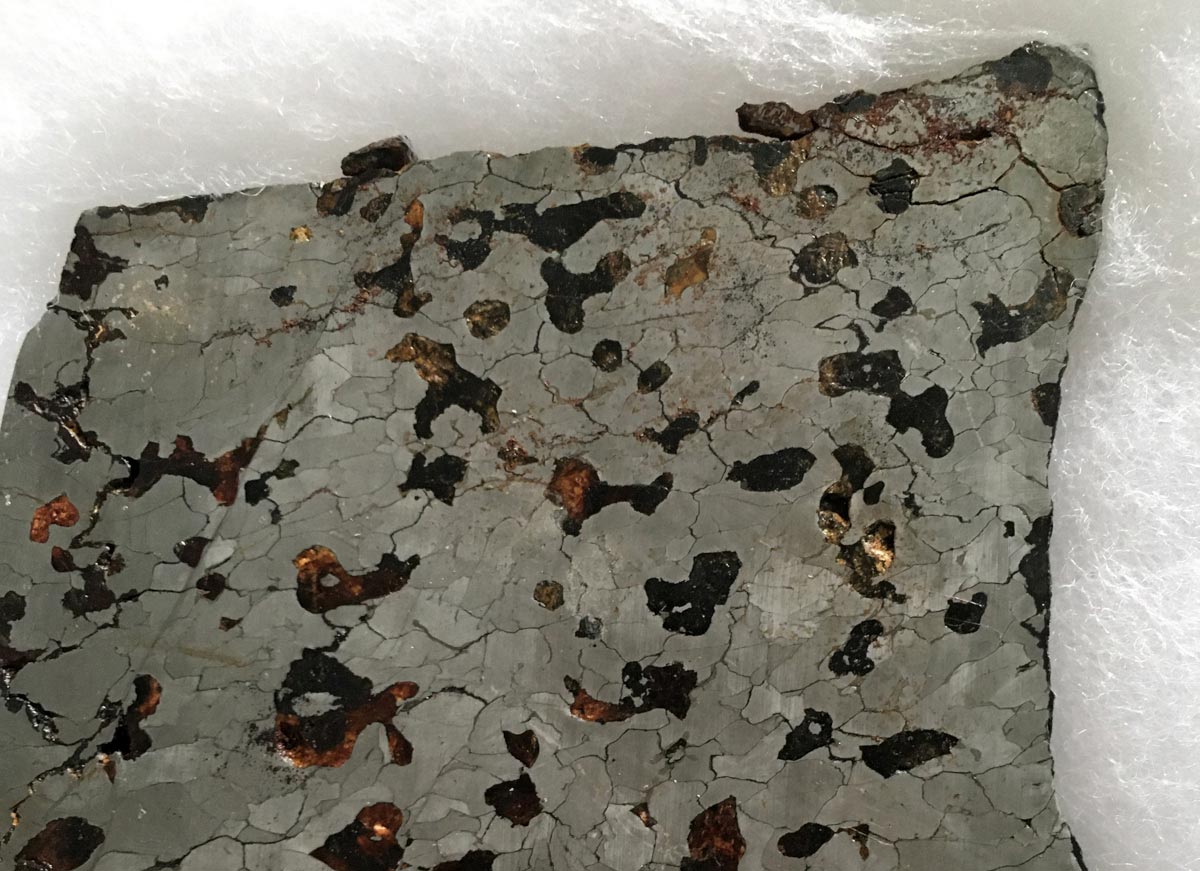
    Miles Meteorite
    The meteorite studied in this work, named Miles, weighed 265 kg (584 lb) when it was discovered on a farm in Queensland, Australia, in 1992. This photo shows a 20-centimeter slice of the Miles meteorite loaned by the Harvard Museum of Natural History collection. Credit: Clara Maurel/MIT

    The signatures of ancient magnetic fields in meteorites support an extended time frame for the cooling of molten protoplanetary cores.

    If you stumble upon an unusual rock that could be a meteorite, do not place a magnet on it to see if it’s magnetic – you’d end up erasing 4.5 billion years of magnetic history. Meteorites are remnants of our solar system’s first protoplanets and, in some cases, retain a record of the magnetic fields they’ve experienced in the distant past.

    “As planetary scientists, we’re interested in understanding how protoplanets formed and evolved prior to the formation of the planets we know today,” said Clara Maurel, a Ph.D. student at MIT’s Department of Earth, Atmospheric, and Planetary Sciences. “There are many different areas of research that tackle these questions, and our angle of approach is to use magnetism.”

    In a recent paper published in the journal Geophysical Research Letters, Maurel and colleagues from MIT, Oxford, Arizona State, NASA’s Jet Propulsion Laboratory, and Berkeley Lab detected the signatures of ancient magnetic fields imprinted in a meteorite’s ferromagnetic grains at Berkeley Lab’s Advanced Light Source (ALS).

    Evidence of a Dynamo in a Molten Core

    The results revealed a bias in the magnetization directions found in different regions of the sample, indicating that the meteorite was exposed to a substantial, stable magnetic field that magnetized its ferromagnetic grains upon cooling. The team interpreted this as evidence for a dynamo-generated magnetic field powered by the parent body’s churning, molten-metal core. A similar mechanism powers the Earth’s magnetic field today.

    Combined with earlier measurements of two other meteorites from the same parent and radioisotopic dating of the samples, the results support an extended time frame for the cooling of molten protoplanetary cores. Despite its small size compared to planets, this protoplanet did not cool quickly, but instead sustained a molten metallic core for tens of millions of years after the birth of the solar system.

    “For people who are interested in modeling the evolution of protoplanets, experimental constraints like this are essential,” said Maurel. “These data points represent an important first step toward a better understanding of the chronological activity of protoplanets, from their formation to the time they completely solidify and become inactive.”

    Reference: “A Long‐Lived Planetesimal Dynamo Powered by Core Crystallization” by Clara Maurel, James F. J. Bryson, Jay Shah, Rajesh V. Chopdekar, Linda T. Elkins‐Tanton, Carol A. Raymond and Benjamin P. Weiss, 11 February 2021, Geophysical Research Letters.
    DOI: 10.1029/2020GL091917

    Never miss a breakthrough: Join the SciTechDaily newsletter.
    Follow us on Google and Google News.

    Geophysics Lawrence Berkeley National Laboratory Meteorites Planets
    Share. Facebook Twitter Pinterest LinkedIn Email Reddit

    Related Articles

    Analyzing Meteorites To Track Down the Forces That Shaped Our Solar System’s Evolution

    Origin of Oddball Meteorites: Exploring Magnetization Preserved for Billions of Years

    Family of Oddball Meteorites Stumped Researchers for Decades – Now an Answer to the Puzzling Chimera

    Evidence Pluto Started Out With Liquid Oceans That Have Been Slowly Freezing Over Time

    How’s the Weather on Mars? Electrically Charged Dust Storms Drive Martian Chlorine Cycle

    What’s Mars Made Of? Simulating Martian Core to Investigate Its Composition and Origin

    Using Martian Meteorites to Reconstruct Mars’ Chaotic History

    Lunar Rock Samples Reveal Evidence of a Huge Meteorite Strike

    A Potential Solution to a 135 Year Old Meteorite Mystery

    Leave A Reply Cancel Reply

    • Facebook
    • Twitter
    • Pinterest
    • YouTube

    Don't Miss a Discovery

    Subscribe for the Latest in Science & Tech!

    Trending News

    Mezcal “Worm” in a Bottle Mystery: DNA Testing Reveals a Surprise

    New Research Reveals That Your Morning Coffee Activates an Ancient Longevity Switch

    This Is What Makes You Irresistible to Mosquitoes

    Shockingly Powerful Giant Octopuses Ruled the Seas 100 Million Years Ago

    Scientists Stunned by New Organic Molecules Found on Mars

    Rewriting Dinosaur Evolution: Scientists Unearth Remarkable 150-Million-Year-Old Stegosaur Skull

    Omega-3 Supplements Linked to Cognitive Decline in Surprising New Study

    First-of-Its-Kind Discovery: Homer’s Iliad Found Embedded in a 1,600-Year-Old Egyptian Mummy

    Follow SciTechDaily
    • Facebook
    • Twitter
    • YouTube
    • Pinterest
    • Newsletter
    • RSS
    SciTech News
    • Biology News
    • Chemistry News
    • Earth News
    • Health News
    • Physics News
    • Science News
    • Space News
    • Technology News
    Recent Posts
    • Male Birth Control Breakthrough: Scientists Find Way To Turn Sperm Production Off and Back On
    • A Common Vitamin Could Hold the Key to Treating Fatty Liver Disease
    • New Research Shows Vitamin B12 May Hold the Key to Healthy Aging
    • Scientists Map Thousands of Brain Connections With RNA Barcodes
    • This Gene Tweak Turns Strawberries Into Healthier, Tastier Superfruit
    Copyright © 1998 - 2026 SciTechDaily. All Rights Reserved.
    • Science News
    • About
    • Contact
    • Editorial Board
    • Privacy Policy
    • Terms of Use

    Type above and press Enter to search. Press Esc to cancel.