
Close Menu
    Facebook X (Twitter) Instagram
    SciTechDaily
    • Biology
    • Chemistry
    • Earth
    • Health
    • Physics
    • Science
    • Space
    • Technology
    Facebook X (Twitter) Pinterest YouTube RSS
    SciTechDaily
    Home»Biology»Toxic Masculinity: Solving the Puzzle of Why Male Funnel-Web Spiders Are So Deadly
    Biology

    Toxic Masculinity: Solving the Puzzle of Why Male Funnel-Web Spiders Are So Deadly

    By University of QueenslandSeptember 21, 20201 Comment3 Mins Read
    Facebook Twitter Pinterest Telegram LinkedIn WhatsApp Email Reddit
    Share
    Facebook Twitter LinkedIn Pinterest Telegram Email Reddit
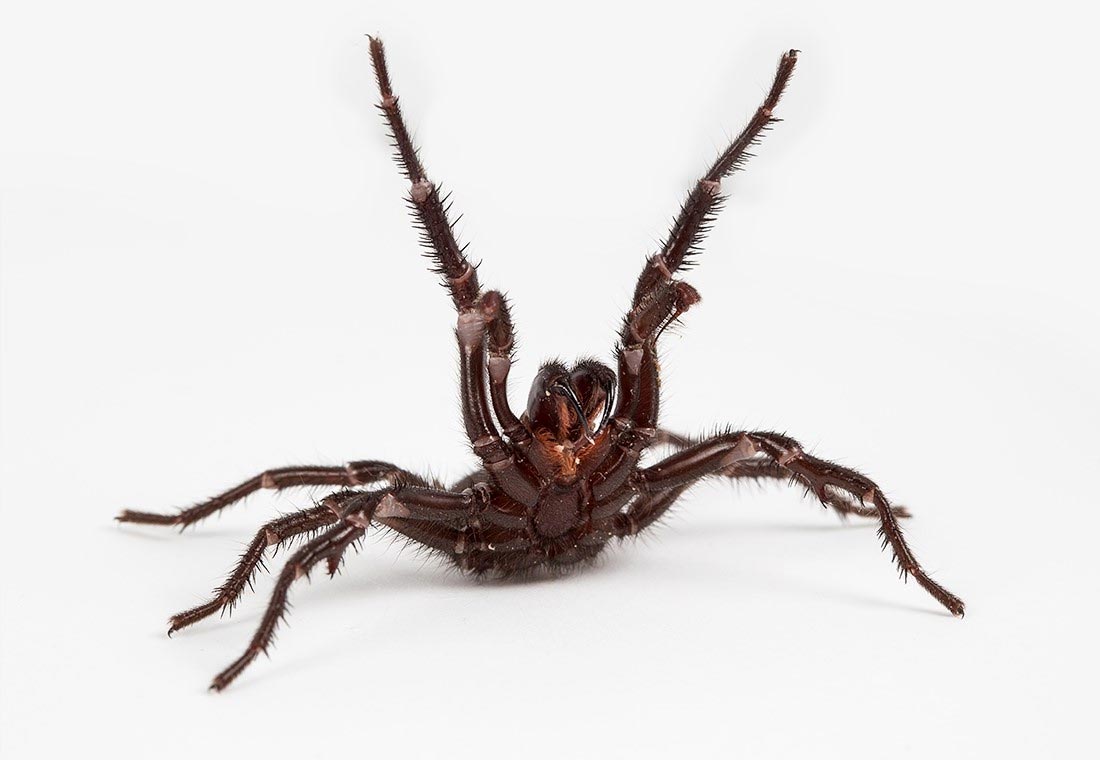
    Deadly Funnel Web Spider
    Close up and terrifying: the deadly funnel-web spider. Credit: Dr. David Wilson

    A team of University of Queensland researchers has revealed why male funnel-web spiders develop much deadlier venom than their female counterparts. Led by the University of Queensland’s Associate Professor Bryan Fry, the team has spent 20 years investigating delta-hexatoxins, the venom peptides that make funnel web spider venom so dangerous.

    “Australian funnel-web spiders are infamous for causing human fatalities with this particular range of toxins,” Dr. Fry said. “Delta-hexatoxins exert fatal neurotoxic effects in humans by keeping nerves turned on, so that they keep firing over and over again.

    “It has puzzled scientists why these toxins are so deadly to humans, when they and other primates, haven’t featured as either prey or predator during the spider’s evolution. And we couldn’t understand why most human deaths were being caused by male funnel-web spiders, which seemingly had much deadlier venom than females.”

    Using molecular analysis of the venom, Dr. Fry and the team decided to take a closer look.
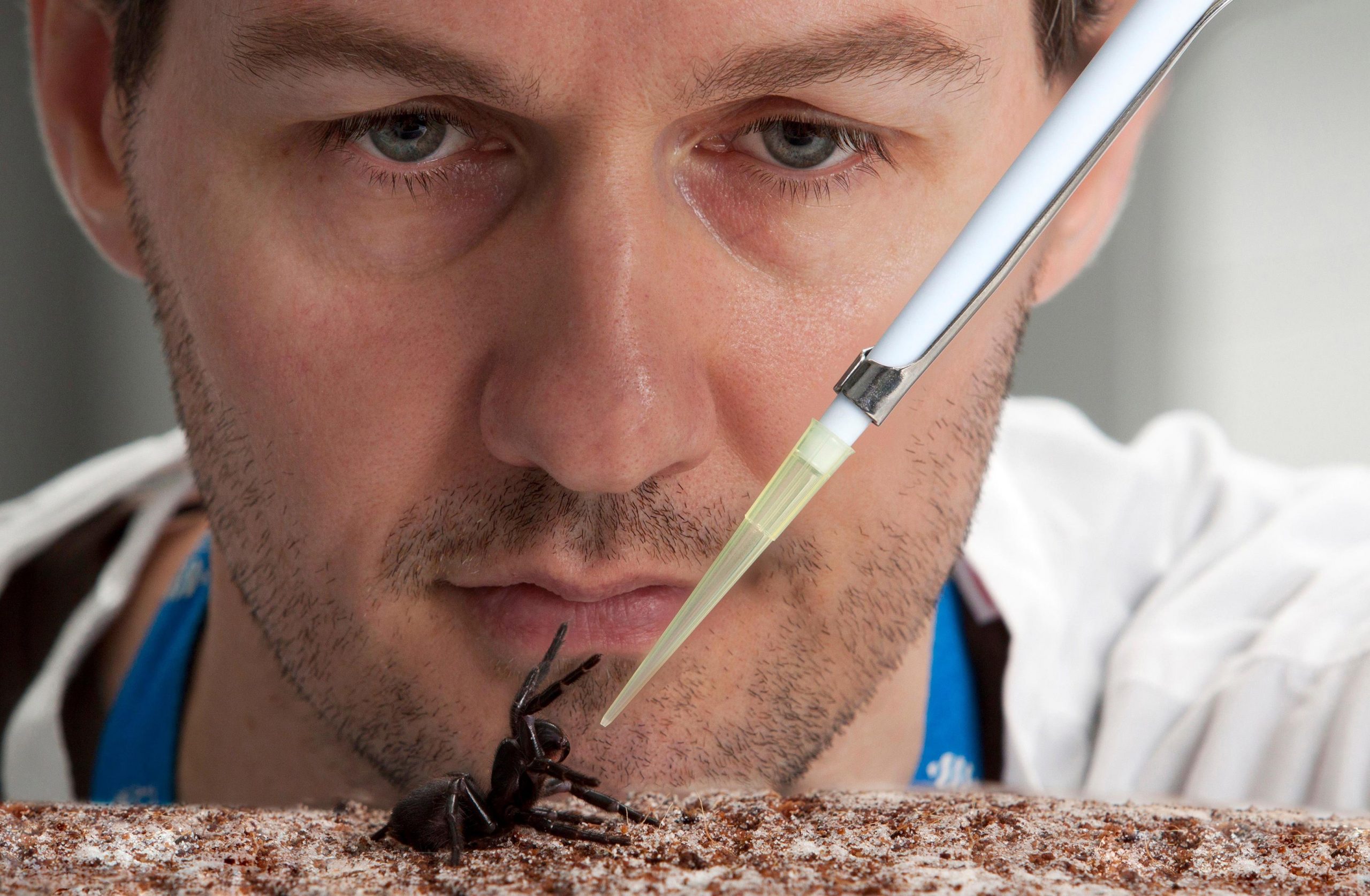
    Dr. David Wilson and Spider
    Research team member Dr. David Wilson milking venom samples from a funnel web spider. Credit: Paul Dymond

    Although 35 species of funnel-web spiders had previously been described, only eight delta-hexatoxins from five species had been analyzed. Dr. Fry and his team almost tripled the data — profiling 22 novel delta-hexatoxins from the venom of 10 funnel-web species.

    Bryan Fry
    UQ’s Associate Professor Bryan Fry retrieving still-live funnel web spiders from his suburban pool in not-particularly-scientific attire. Credit: Associate Professor Bryan Fry

    “Having much more data helped paint a much clearer picture, revealing an incredibly interesting evolutionary story — one that had been hypothesized, but we’ve now proven,” he said.

    “These toxins had originally evolved to kill insects such as cockroaches and flies.

    “But, when male funnel-web spiders become sexually mature, they leave the safety of their burrow and wander quite considerable distances in search of females.

    “This can be quite treacherous, and these male funnel-web spiders started to encounter dangerous vertebrate predators, such as the dunnart, a small nocturnal mouse-like marsupial.

    “The data shows that natural selection put the necessary pressure on to switch an insect-specific venom into a vertebrate-specific defensive venom.

    “And, unluckily for us, we’re a vertebrate species which copped it in the process.”

    With a stronger evolutionary understanding of delta-hexatoxins, Dr. Fry and his team are now endeavoring to put this new knowledge to use.

    “We’re hoping this research will give us a better understanding of exactly what funnel-web spider venom does to the human body,” he said.

    “And — medically speaking — this could be critical for the design of evidence-based treatment strategies for bite victims.

    “We’re also hoping it will help researchers discover novel insecticides, finding better sources for insect-specific toxins.

    “They’re dangerous as hell, but male funnel-web spiders offer us some real opportunities.”

    Reference: “Australian funnel-web spiders evolved human-lethal δ-hexatoxins for defense against vertebrate predators” by Volker Herzig, Kartik Sunagar, David T. R. Wilson, Sandy S. Pineda, Mathilde R. Israel, Sebastien Dutertre, Brianna Sollod McFarland, Eivind A. B. Undheim, Wayne C. Hodgson, Paul F. Alewood, Richard J. Lewis, Frank Bosmans, Irina Vetter, Glenn F. King, and Bryan G. Fry, 21 September 2020, Proceedings of the National Academy of Science.
    DOI: 10.1073/pnas.2004516117

    Never miss a breakthrough: Join the SciTechDaily newsletter.
    Follow us on Google and Google News.

    Biochemistry Entomology Molecular Biology Popular Spiders University of Queensland
    Share. Facebook Twitter Pinterest LinkedIn Email Reddit

    Related Articles

    Strange Biology: The Very Venomous Caterpillar

    Scientists Find Neurochemicals – Dopamine and Serotonin – Have Unexpectedly Profound Roles in the Human Brain

    Missing Link Discovered in the Evolution of Photosynthesis and Carbon Fixation

    Optical Illusions Have Long Mystified Neuroscientists – Now Explained in a Fly’s Eyes

    Low-Cost Second-Generation Ethanol Production Powered by Genetically Engineered Enzyme Cocktail

    Rutgers Scientists Have Discovered the Origins of the Building Blocks of Life

    Scientists Find Link in How Cells Start Process Necessary for Life

    Spider Building Spider Decoys Discovered in Peruvian Amazon

    Adanson’s Jumping Spiders Hunt Using Unusual Depth Perception

    1 Comment

    1. John Blank on December 27, 2020 4:33 pm

      So have any cuban nationals suffered from it,that would give the first clue!

      Reply
    Leave A Reply Cancel Reply

    • Facebook
    • Twitter
    • Pinterest
    • YouTube

    Don't Miss a Discovery

    Subscribe for the Latest in Science & Tech!

    Trending News

    Don’t Miss: A Brilliant Venus and Glowing Harvest Moon Light Up the Sky

    New Twist on the Einstein Problem Reveals Unexpected Physics

    JWST Captures Stunning Evidence of How Supermassive Black Holes Feed

    Early Exercise May Permanently Change How Much Energy the Body Uses To Move

    New Molecule Wipes Out Aggressive Lymphoma Tumors in Mice in Just 11 Days

    The Human Family Tree May Need a Major Rewrite

    Scientists Find a Surprising Cancer-Fighting Effect in Dark Sweet Cherries

    New AI Detects Hidden Warning Signs of Solar Eruptions Hours Before They Emerge

    Follow SciTechDaily
    • Facebook
    • Twitter
    • YouTube
    • Pinterest
    • Newsletter
    • RSS
    SciTech News
    • Biology News
    • Chemistry News
    • Earth News
    • Health News
    • Physics News
    • Science News
    • Space News
    • Technology News
    Recent Posts
    • Pomegranates Could Unlock a New Treatment for Heart Failure
    • Africa’s Giant Herbivores Were Disappearing Millions of Years Before Humans Could Hunt Them
    • This Utah Mountain Is Hiding Enough Ice To Fill 600 Olympic Pools
    • Vagus Nerve Stimulation Could Unlock the Brain’s Hidden Learning Potential
    • Your Mother’s Age May Leave a Biological Mark That Lasts for Generations
    Copyright © 1998 - 2026 SciTechDaily. All Rights Reserved.
    • Science News
    • About
    • Contact
    • Editorial Board
    • Privacy Policy
    • Terms of Use

    Type above and press Enter to search. Press Esc to cancel.