
Close Menu
    Facebook X (Twitter) Instagram
    SciTechDaily
    • Biology
    • Chemistry
    • Earth
    • Health
    • Physics
    • Science
    • Space
    • Technology
    Facebook X (Twitter) Pinterest YouTube RSS
    SciTechDaily
    Home»Biology»Strange Biology: The Very Venomous Caterpillar
    Biology

    Strange Biology: The Very Venomous Caterpillar

    By University of QueenslandJune 24, 20211 Comment3 Mins Read
    Facebook Twitter Pinterest Telegram LinkedIn WhatsApp Email Reddit
    Share
    Facebook Twitter LinkedIn Pinterest Telegram Email Reddit
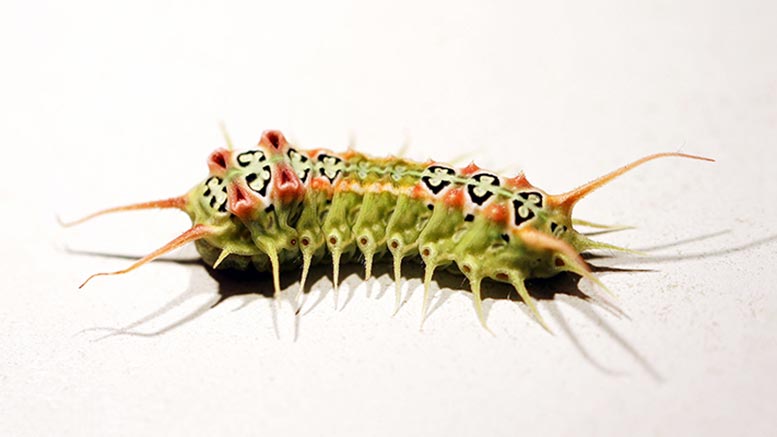
    Venomous Caterpillar Doratifera vulnerans
    Venomous Caterpillar Doratifera vulnerans

    The venom of a caterpillar, native to South East Queensland, shows promise for use in medicines and pest control, Institute for Molecular Bioscience researchers say.

    The Doratifera vulnerans is common to large parts of Queensland’s south-east and is routinely found in Toohey Forest Park on Brisbane’s southside.

    Dr. Andrew Walker has been researching the striking-looking caterpillar since 2017.


    The Doratifera vulnerans is common to large parts of Queensland’s south-east and shows promise for use in medicines and pest control, Institute for Molecular Bioscience researchers say. Credit: Institute for Molecular Bioscience, The University of Queensland

    Venomous Caterpillar Has Strange Biology

    “We found one while collecting assassin bugs near Toowoomba and its strange biology and pain-causing venom fascinated me,” Dr. Walker said.

    Unlike The Very Hungry Caterpillar that charmed generations of children around the world, this caterpillar is far from harmless. 

    “Its binomial name means ‘bearer of gifts of wounds’,” Dr. Walker said.
    Caterpillar Venom Spines
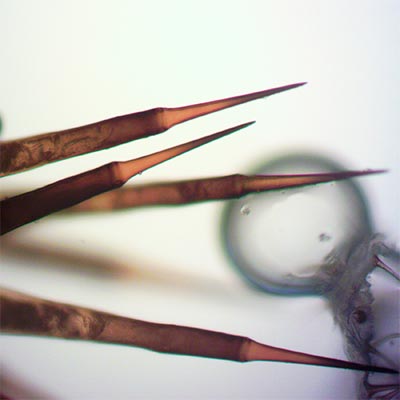
    The caterpillar has spines that inject liquid venom. Credit: Jiayi Jin

    Caterpillar Venom Similar to Spiders

    Dr. Walker’s research found the caterpillar has venom toxins with a molecular structure similar to those produced by spiders, wasps, bees, and ants.

    The research also unlocked a source of bioactive peptides that may have uses in medicine, biotechnology, or as scientific tools.

    “Many caterpillars produce pain-inducing venoms and have evolved biological defenses such as irritative hairs, toxins that render them poisonous to eat, spots that mimic snake eyes or spines that inject liquid venoms,” Dr. Walker said.

    “Previously researchers had no idea what was in the venom or how they induce pain.

    Venom With Stunning Complexity

    “We found that the venom is mostly peptides and shows stunning complexity, containing 151 different protein-based toxins from 59 different families.”

    The research team synthesized 13 of the peptide toxins and used them to show the unique evolutionary trajectory the caterpillar followed to produce pain-inducing venom.

    “We now know the amino acid sequences, or the blueprints, of each protein-based toxin,” Dr Walker said.

    “This will enable us to make the toxins and test them in diverse ways.”

    Venom Can Kill Bacteria

    Some peptides already produced in the laboratory as part of Dr. Walker’s research showed very high potency, with the potential to efficiently kill nematode parasites that are harmful to livestock, as well as disease-causing pathogens.
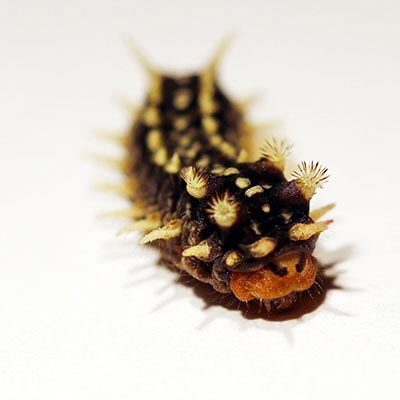
    Venomous Caterpillar

    “Our research unlocks a new source of bioactive peptides that may have use in medicine, through an ability to influence biological processes and promote good health,” he said.

    Potential for Medicines and Pesticides

    “First, we need to work out what the individual toxins do, to inform us about how they might be used.”

    The findings incorporate work from researchers at the CSIRO, Canada’s York University, Austria’s University of Vienna, and the Department of Food and Agriculture in the US.

    The research is published in the Proceedings of the National Academy of Sciences of the USA.

    Reference: “Production, composition, and mode of action of the painful defensive venom produced by a limacodid caterpillar, Doratifera vulnerans” by Andrew A. Walker, Samuel D. Robinson, Jean-Paul V. Paluzzi, David J. Merritt, Samantha A. Nixon, Christina I. Schroeder, Jiayi Jin, Mohaddeseh Hedayati Goudarzi, Andrew C. Kotze, Zoltan Dekan, Andy Sombke, Paul F. Alewood, Bryan G. Fry, Marc E. Epstein, Irina Vetter, and Glenn F. King, 22 June 2021, Proceedings of the National Academy of Sciences.
    DOI: 10.1073/pnas.2023815118

    Never miss a breakthrough: Join the SciTechDaily newsletter.
    Follow us on Google and Google News.

    Biochemistry Entomology Evolution Molecular Biology Popular Toxicology University of Queensland Zoology
    Share. Facebook Twitter Pinterest LinkedIn Email Reddit

    Related Articles

    Chilling Discovery: Cryo-EM Uncovers Ancient Molecular Machine of Life

    New Insight Into Possible Origins of Life: For the First Time Researchers Create an RNA Molecule That Replicates

    Scientists See the Invisible: How Butterflies Make Transparent Wings

    Virus Variants: A Vital Tool to Study Viral Evolution in the Test Tube

    Aphid-Like Insects Stole DNA From Plants – Gene Shields Them From Leaf Toxins

    Evolution Reconstructed: New Proteins “Out of Nothing”

    A Surprisingly Simple Biochemistry Rule Drives the Evolution of Useless Complexity

    Toxic Masculinity: Solving the Puzzle of Why Male Funnel-Web Spiders Are So Deadly

    Rutgers Scientists Have Discovered the Origins of the Building Blocks of Life

    1 Comment

    1. Glicerio Geronimo on June 25, 2021 1:22 am

      I am learning with you Sir. Thanks a lots.

      Reply
    Leave A Reply Cancel Reply

    • Facebook
    • Twitter
    • Pinterest
    • YouTube

    Don't Miss a Discovery

    Subscribe for the Latest in Science & Tech!

    Trending News

    Largest-Ever Study Finds Medicinal Cannabis Ineffective for Anxiety, Depression, PTSD

    250-Million-Year-Old Egg Solves One of Evolution’s Biggest Mysteries

    Living With Roommates Might Be Changing Your Gut Microbiome Without You Knowing

    Century-Old Cleaning Chemical Linked to 500% Increased Risk of Parkinson’s Disease

    What if Your Memories Never Happened? Physicists Take a New Look at the Boltzmann Brain Paradox

    One of the Universe’s Largest Stars May Be Getting Ready To Explode

    Scientists Discover Enzyme That Could Supercharge Ozempic-Like Weight Loss Drugs

    Popular Sweetener Linked to DNA Damage – “It’s Something You Should Not Be Eating”

    Follow SciTechDaily
    • Facebook
    • Twitter
    • YouTube
    • Pinterest
    • Newsletter
    • RSS
    SciTech News
    • Biology News
    • Chemistry News
    • Earth News
    • Health News
    • Physics News
    • Science News
    • Space News
    • Technology News
    Recent Posts
    • Scientists Prove There Are Just Six Degrees of Separation in a Social Network
    • Bee Bacteria Could Fix a Major Flaw in Plant-Based Milk
    • Scientists Discover a Surprising Way To Make Bread Healthier and More Nutritious
    • Natural Compounds Boost Bone Implant Success While Killing Bacteria and Cancer Cells
    • After 60 Years, Scientists Uncover Unexpected Brain Effects of Popular Diabetes Drug Metformin
    Copyright © 1998 - 2026 SciTechDaily. All Rights Reserved.
    • Science News
    • About
    • Contact
    • Editorial Board
    • Privacy Policy
    • Terms of Use

    Type above and press Enter to search. Press Esc to cancel.