
Close Menu
    Facebook X (Twitter) Instagram
    SciTechDaily
    • Biology
    • Chemistry
    • Earth
    • Health
    • Physics
    • Science
    • Space
    • Technology
    Facebook X (Twitter) Pinterest YouTube RSS
    SciTechDaily
    Home»Biology»Spider Building Spider Decoys Discovered in Peruvian Amazon
    Biology

    Spider Building Spider Decoys Discovered in Peruvian Amazon

    By SciTechDailyDecember 19, 20123 Comments2 Mins Read
    Facebook Twitter Pinterest Telegram LinkedIn WhatsApp Email Reddit
    Share
    Facebook Twitter LinkedIn Pinterest Telegram Email Reddit
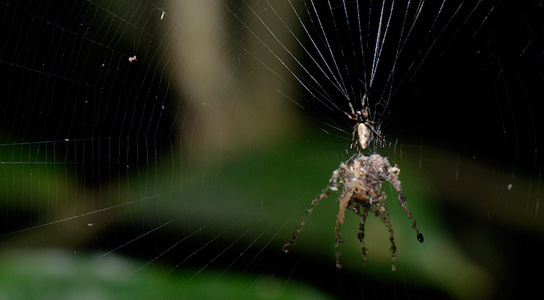
    cyclosa-building-decoy-spider-torres
    Fake spiders act as decoys, forming part of a defense mechanism designed to confuse or distract predators. Credit: Phil Torres

    Discovered at the Tambopata Research Center in the Peruvian Amazon, a spider belonging to the genus Cyclosa is capable of producing elaborate, fake spider decoys. It hangs them in its own web and shakes the web, furthering the illusion.

    The spider is believed to be a new species, and crafts a larger spider from leaves, debris, and dead insects. The genus Cyclosa includes other sculpting spiders, but this is the first that has been observed to build a replica with multiple legs and to use a web-shaking behavior.
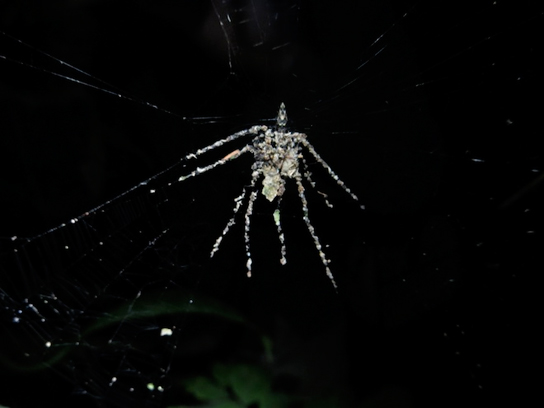
    cyclosa-building-decoy-spider-torres-decoy
    A decoy spider hangs below its much smaller builder, suspected to be a new species in the genus Cyclosa. Credit: Phil Torres.

    The fake spiders serve as decoys, as part of a defense mechanism meant to confuse or distract predators. Within a 1-square-mile (2.6-square-kilometer) area, researchers found more of these spider-building spiders. They could be locally restricted, but there could also be millions of these spiders in the rainforest. Some of the decoys looked realistic, while others looked more like cartoon octopi.

    Other spiders of the genus Cyclosa build decoys that are clumpy and made out of multiple little balls built from egg sacs, debris and prey, rather than something that actually looks like another spider.

    Never miss a breakthrough: Join the SciTechDaily newsletter.
    Follow us on Google and Google News.

    Arachnology Entomology Popular Spiders Zoology
    Share. Facebook Twitter Pinterest LinkedIn Email Reddit

    Related Articles

    Strange Biology: The Very Venomous Caterpillar

    New Miniature Trap-Jaw Ant Ant Species Discovered – Named in Recognition of Gender Diversity

    Toxic Masculinity: Solving the Puzzle of Why Male Funnel-Web Spiders Are So Deadly

    Daddy Longlegs With Leg Span of 12 Inches Discovered

    Haemaphysalis Flava Hardy Enough to Survive Vacuum and Electron Beam

    European Cave Spiders Produce Extremely Stretchable Silk

    Researchers Use Computer Simulations to Better Understand Spider Silk

    Adanson’s Jumping Spiders Hunt Using Unusual Depth Perception

    Bearing Gifts Equals More Sex Even With Spiders

    3 Comments

    1. Phil Torres on December 19, 2012 1:48 pm

      Thanks for posting on the spider! Just wanted to correct the author and let you know it was found in Peru, not Panama, at the Tambopata Research Center.

      Reply
      • Mike O'Neill on December 19, 2012 6:05 pm

        Thanks so much for the correction (and the fascinating discovery)! I fixed the article and added some links to the end so readers can get more details from the source.

        Reply
    2. kamir bouchareb st on November 16, 2020 2:07 am

      very good

      Reply
    Leave A Reply Cancel Reply

    • Facebook
    • Twitter
    • Pinterest
    • YouTube

    Don't Miss a Discovery

    Subscribe for the Latest in Science & Tech!

    Trending News

    Giant Plasma Waves May Be Stripping Away Mars’ Atmosphere

    Scientists Thought SuperAgers Had Lucky Genes. They Were Wrong

    Astronomers Find Ancient Black Holes Shining With the Power of a Trillion Suns

    Researchers Solve Mystery Behind Contradictory Weight-Loss Drug Paradox

    Long-Lost Megalodon Fossils Found Hiding on a Museum Shelf

    Experimental Eye Drops Restore Sight in Blind Mice

    Scientists Discover the Brain May Enter a New Biological Phase Between 50 and 75

    New Research Reveals Autistic Brains Process Faces Differently

    Follow SciTechDaily
    • Facebook
    • Twitter
    • YouTube
    • Pinterest
    • Newsletter
    • RSS
    SciTech News
    • Biology News
    • Chemistry News
    • Earth News
    • Health News
    • Physics News
    • Science News
    • Space News
    • Technology News
    Recent Posts
    • Scientists Find Remarkable New Snail Species in Montenegro’s Mountains
    • Scientists Discover a 300-Million-Year-Old Geological Time Capsule Inside Fossilized Wood
    • Why Are Wasps Disappearing This Summer?
    • This Fingertip Patch Tracks Parkinson’s Medication Using Sweat
    • Why Low-Carb Diets Send Some People’s Cholesterol Soaring
    Copyright © 1998 - 2026 SciTechDaily. All Rights Reserved.
    • Science News
    • About
    • Contact
    • Editorial Board
    • Privacy Policy
    • Terms of Use

    Type above and press Enter to search. Press Esc to cancel.