
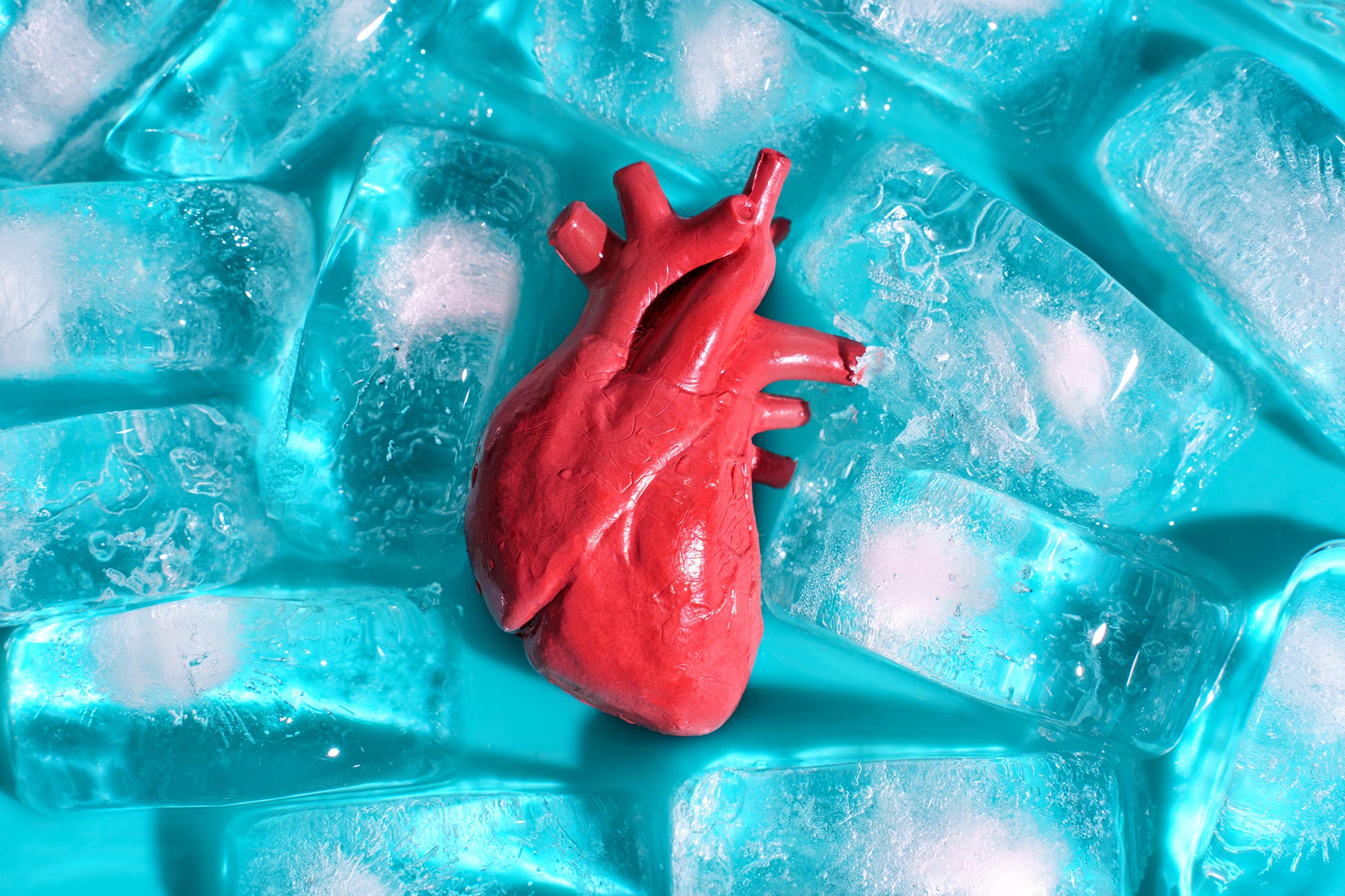
The breakthrough approach could lead to successful, long-term organ transplants, bringing science fiction closer to becoming medical reality.
Cryopreservation, the process of preserving biological tissues by cooling them to subzero temperatures, might sound like something out of science fiction. However, scientists have been developing this technology for nearly a century.
For most of that time, progress was limited—until 2023, when researchers at the University of Minnesota successfully transplanted a cryopreserved kidney into another rat. This achievement demonstrated the potential for using cryopreserved organs in future human transplants.
Preventing cracking in frozen organs
Cryopreserving larger organs poses a significant obstacle because the tissues are prone to cracking during rapid cooling. Avoiding these fractures is critical for maintaining organ integrity in human preservation and transplantation. A research team from the J. Mike Walker ’66 Department of Mechanical Engineering at Texas A&M University, led by Dr. Matthew Powell-Palm, has published a paper detailing a new cryopreservation technique that may prevent cracking in organs.
To preserve organs outside the body for longer periods, scientists use a process called vitrification. This method freezes tissue in a specialized solution, keeping it in a glass-like state that prevents damage from ice crystal formation. By modifying the composition of the vitrification solution, researchers can analyze how different properties influence the likelihood of cracking in an organ.
“In this study, we investigated different glass transition temperatures, which we believe play a dominant role in cracking,” said Powell-Palm, an assistant professor of mechanical engineering. “We learned that higher glass transition temperatures reduce the likelihood of cracking.”
Designing better biocompatible cryosolutions
Equipped with the knowledge that higher transition temperatures are less likely to cause cracks than lower temperatures, researchers can focus on creating aqueous vitrification solutions with higher glass transition temperatures to help avoid cracking.
“Cracking is only one part of the problem,” Powell-Palm said. “The solutions need to be biocompatible with the tissue as well.”
Broad applications across science and medicine
This knowledge is essential to the field of cryopreservation, which has applications beyond organ transplantation, including wildlife and biodiversity conservation, vaccine stabilization, and food waste reduction. Cryopreservation can extend the viability of any biological sample, benefiting any life science field.
“This study offers a seminal contribution to our understanding of aqueous solution thermodynamics,” said co-author and Mechanical Engineering Department Head Dr. Guillermo Aguilar, who serves as the James and Ada Forsyth Professor. “I look forward to more encouraging results in this direction, which will ultimately yield an increased viability of biological systems of all scales—from single cells to whole organs.”
Powell-Palm and Aguilar’s co-authors on this paper include Dr. Soheil Kavian, Ph.D. students Crystal Alvarez and Ron Sellers, and undergraduate student Gabriel Arismendi Sanchez, all from the mechanical engineering department.
“At its core, mechanical engineering requires an understanding of how something — anything —works. This project integrates physical chemistry, glass physics, thermomechanics, and cryobiology,” said Powell-Palm. “These students have done an amazing job applying the holistic thinking that mechanical engineering requires to this work.”
Reference: “Higher glass transition temperatures reduce thermal stress cracking in aqueous solutions relevant to cryopreservation” by Soheil Kavian, Ronald Sellers, Gabriel Arismendi Sanchez, Crysthal Alvarez, Guillermo Aguilar and Matthew J. Powell-Palm, 31 July 2025, Scientific Reports.
DOI: 10.1038/s41598-025-13295-7
This study was funded by the National Science Foundation’s Engineering Research Center for Advanced Technologies for the Preservation of Biological Systems, which funds the highest levels of cryopreservation research.
Never miss a breakthrough: Join the SciTechDaily newsletter.
Follow us on Google and Google News.
1 Comment
Oh. I was mistaken and wondered if they tried to freeze planos also. My bad.