

At the smallest scales, heat engines can do more than Carnot ever imagined.
Researchers at the University of Stuttgart have shown that the Carnot principle, a foundational rule of thermodynamics, does not hold for atomic-scale systems whose physical properties are interconnected (so-called correlated objects).
The finding, published in Science Advances, could help pave the way for the development of extremely small and energy-efficient quantum engines.
Traditional thermal engines, such as internal combustion engines and steam turbines, work by converting heat into mechanical motion. In recent years, however, advances in quantum experiments have made it possible to shrink heat engines down to microscopic dimensions.
“Tiny motors, no larger than a single atom, could become a reality in the future,” says Professor Eric Lutz of the Institute for Theoretical Physics I at the University of Stuttgart. “It is now also evident that these engines can achieve a higher maximum efficiency than larger heat engines.”
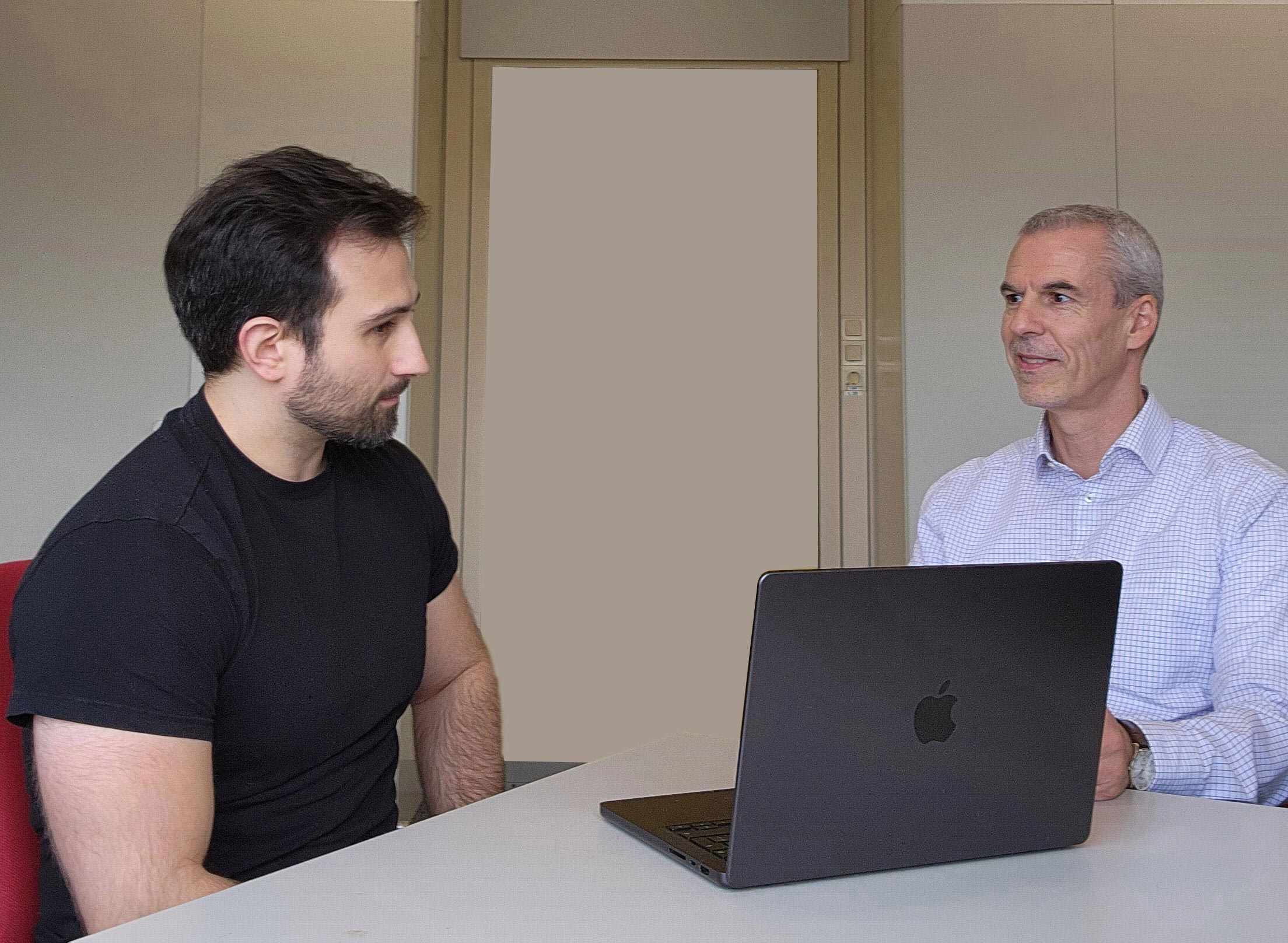
Lutz and Dr. Milton Aguilar, a postdoctoral researcher at the same institute, describe the scientific basis for this conclusion in their Science Advances paper. In a three-question interview, the two physicists summarize what they have discovered.
What exactly did you discover?
Almost exactly 200 years ago, French physicist Sadi Carnot determined the maximum efficiency of heat engines. The Carnot principle, the second law of thermodynamics, was developed for large, macroscopic objects. This applies to steam turbines, for example.
However, we have now been able to prove that the Carnot principle must be extended to describe objects on the atomic scale – for example, strongly correlated molecular motors.
Why is that?
Carnot demonstrated that the temperature difference has a decisive influence: the greater the difference between hot and cold, the higher the maximum possible efficiency of a heat engine. However, the Carnot principle neglects the influence of so-called quantum correlations.
These are special bonds that form between particles on a very small scale. For the first time, we have derived generalized laws of thermodynamics that fully account for these correlations.
Our results show that thermal machines operating at the atomic scale can convert not only heat but also correlations into work. As a result, they can produce more work, and the efficiency of a quantum engine can surpass the traditional Carnot limit.
What prospects does your basic research open up?
Our work deepens our knowledge of the world at the atomic level. The better we understand the physical laws that apply in these dimensions, the sooner we will be able to use them to develop technologies for tomorrow—such as tiny, highly efficient quantum motors that can precisely perform tasks at the nanoscale.
Perhaps one day such motors will power medical nanobots or control machines that process materials at the atomic level? The potential is enormously diverse.
Reference: “Correlated quantum machines beyond the standard second law” by Milton Aguilar and Eric Lutz, 10 October 2025, Science Advances.
DOI: 10.1126/sciadv.adw8462
This work was supported the German Science Foundation (DFG) under project FOR 2724.
Never miss a breakthrough: Join the SciTechDaily newsletter.
Follow us on Google and Google News.
11 Comments
One must assume that, if molecular heat engines can be made to exist, they most likely already do, and the goal should be to figure out how to find them!
It’s unclear to me whether such micro engines would have applications in macro devices – like replacing the internal combustion engine in cars – or whether just good for microscopic medical applications and such.
Physicists have shown that a cornerstone of thermodynamics, the Carnot efficiency limit, breaks down at the atomic scale when quantum correlations come into play. Their results suggest that microscopic heat engines can exploit these correlations to exceed classical efficiency limits.
WHY?
Please ask the researchers to think deeply:
How do you understand the hierarchical structure of matter? Quantum, atomic, or classical?
Topological Vortex Theory (TVT), through geometric-topological hybrid freedoms and fractal dynamics, revolutionizes our understanding of superposition diversity, interaction complexity, and information capacity in topological materials. The “colorful” nature of topological materials lies not only in their physical richness but also in their role as bridges between quantum and classical worlds—positioning them as key candidates for unifying relativity and quantum mechanics.
—— Excerpted from https://zhuanlan.zhihu.com/p/1900140514277320438.
When we pursue the ultimate truth of all things, the space in which our bodies and all things exist may itself be the final and deepest puzzle we need to explore. This is not only the pursuit of physics, but also the most magnificent exploration of the origin of the universe by human reason.
Based on the Topological Vortex Theory (TVT), space is an uniformly incompressible physical entity. Space-time vortices are the products of topological phase transitions of the tipping points in space, are the point defects in spacetime. Point defects do not only impact the thermodynamic properties, but are also central to kinetic processes. They create all things and shape the world through spin and self-organization.
In today’s physics, some so-called peer-reviewed journals—including Physical Review Letters, Nature, Science, and others—stubbornly insist on and promote the following:
1. Even though θ and τ particles exhibit differences in experiments, physics can claim they are the same particle. This is science.
2. Even though topological vortices and antivortices have identical structures and opposite rotational directions, physics can define their structures and directions as entirely different. This is science.
3. Even though two sets of cobalt-60 rotate in opposite directions and experiments reveal asymmetry, physics can still define them as mirror images of each other. This is science.
4. Even though vortex structures are ubiquitous—from cosmic accretion disks to particle spins—physics must insist that vortex structures do not exist and require verification. Only the particles that like God, Demonic, or Angelic are the most fundamental structures of the universe. This is science.
5. Even though everything occupies space and maintains its existence in time, physics must still debate and insist on whether space exists and whether time is a figment of the human mind. This is science.
6. Even though space, with its non-stick, incompressible, and isotropic characteristics, provides a solid foundation for the development of physics, physics must still insist that the ideal fluid properties of space do not exist. This is science.
and go on.
Is this the counterintuitive science they widely promote? Compromising with pseudo academic publications and peer review by pseudo scholars is an insult to science and public intelligence. Some so-called scholars no longer understand what shame is. The study of Topological Vortex Theory (TVT) reminds us that the most profound problems in physics often lie at the intersection of different theories. By exploring these border regions, we can not only resolve contradictions in existing theories but also discover new physical phenomena and application possibilities.
Under the topological vortex architecture, it is highly challenging for even two hydrogen atoms or two quarks to be perfectly symmetrical, let alone counter-rotating two sets of cobalt-60. Contemporary physics and so-called peer-reviewed publications (including Physical Review Letters, Science, Nature, etc.) stubbornly believe that two sets of counter rotating cobalt-60 are two mirror images of each other, constructing a more shocking pseudoscientific theoretical framework in the history of science than the “geocentric model”. This pseudo scientific framework and system have seriously hindered scientific progress and social development.
For nearly a century, physics has been manipulated by this pseudo scientific theoretical system and the interest groups behind it, wasting a lot of manpower, funds, and time. A large amount of pseudo scientific research has been conducted, and countless pseudo scientific papers have been published, causing serious negative impacts on scientific and social progress, as well as humanistic development.
Complexity does not necessarily mean that there is no logical and architectural framework to follow. Mathematics is the language and tool that reveals the motion of spacetime, rather than the motion itself. Although the physical form of spacetime vortices is extremely simple, their interaction patterns are highly complex, and we must develop more and richer mathematical languages to describe and understand them.
The development of the Topological Vortex Theory (TVT) reflects a progression from concrete physical phenomena to abstract mathematical modeling and, ultimately, to interdisciplinary unification. Its core innovation lies in forging the continuous spacetime geometry of general relativity with the discrete interactions of quantum field theory within the same topological dynamical system. The core idea of TVT — space is physical, and matter is its topological excitation—already provides a solid and elegant scientific path for understanding the origin of all things.
——Excerpted from https://scitechdaily.com/microscope-spacecrafts-most-precise-test-of-key-component-of-the-theory-of-general-relativity/#comment-909171 and https://t.pineal.cn/blogs/6255/A-Mathematical-and-Physical-Analysis-On-the-Origin-of-Objects.
The problem with thermodynamics is that energy is not well-defined. In my opinion, based solely on Newtonian physics, energy manifests solely as motion. Inside the lattice, atoms have both vibratory and oscillatory motions. Heat energy is most probably oscillatory motion of atoms. So at the quantum level, it is possible that in addition to heat, vibratory energy is also available for doing work.
The original article published in the Science Advances,is a good attempt to assess quantum engine in the Carnot Cycle,foŕ an additional term of efficiency;trying to be derived from the Universal Principle,is permitted present in the priliminary stage.However,the term like athermal ìn calculation of additional efficiency in the Carnt engine is balanced through first law of thermodynamics,when shifting from the balanced thermal condition of second law of thermodynamics.
WHAT ARE THE Science Advances?
Errors or missteps in scientific inquiry are not in themselves cause for alarm. The far more concerning phenomenon is the persistent adherence to flawed premises, the continuous application of incorrect methodologies for superficial corrections, and the simultaneous opposition and resistance to fundamental, substantive improvement.
—— Excerpted from https://zhuanlan.zhihu.com/p/1991830545164959903.
The top illustration has nothing to do with the price of eggs in China.
If it breaks down, then it is not the law., anyway.
VERY GOOD!
It looks exactly like the 🌌 universe.