

The Clean Ocean Manifesto sets 2025 and 2030 targets to cut pollution, boost monitoring, and transition toward a healthier ocean.
Interim goals for 2025 and an integrated ocean debris observing system exemplify demands of experts’ “Clean Ocean Manifesto”
Reducing marine debris by 50-90% and a globe circling, high-tech system of monitors are two essential aims among several championed today by nine distinguished international experts appointed to help the UN reach the goal of a clean ocean by 2030.
The Clean Ocean International Expert Group of the UN Decade for Ocean Science for Sustainable Development will formally present its short list of activities and goals, and a strategy to reach them, in a “manifesto” at the outset of a three-day online conference on achieving a clean ocean, Wednesday (November 17) to Friday (November 19).
Co-Chaired by Angelika Brandt of Germany, a Southern Ocean / Antarctica biodiversity expert, and Elva Escobar Briones of Mexico, a deep sea biodiversity expert, the group concisely outlines “the challenges and some of the opportunities that the Ocean Decade can provide for a Clean Ocean.”
The statement charts the most direct route to a clean ocean citing these objectives for 2030:
- Enlarge understanding of pathways for spread and fates of pollutants
- Reduce and remove top-priority forms of pollution (e.g., marine debris) by large amounts, as much as 50% to 90%
- To prevent recurrence, reduce sources or emission of pollutants (e.g., anthropogenic noise, discarded plastic and harmful chemicals, farming practices adding harmful sediment outflow)
- Improve dramatically the outcomes of control measures (e.g., to decrease amounts of mercury in tuna, die-offs of marine life, eutrophication)
- Improve monitoring (often as part of the Global Ocean Observing System [GOOS]) for more accurate, precise, timely, comprehensive real-time tracing of spills and monitoring of ocean soundscapes; improve systems to provide timely warning of pollutants emerging and increasing
- Identify and accelerate development and adoption of technologies to promote a Clean Ocean. These could range from cleaner, more efficient motors and fuels to new forms of remediation and waste management; better ways to monitor, track, and map marine pollutants and progress toward a clean ocean (such as aerial remote sensing, genomics, and hydrophone arrays); and better technologies for emergency cleanup
- Improve national mechanisms (legal, regulatory) for control and prevention, better align financial incentives, and lift compliance with international treaties
- Lift public engagement and understanding with access to information associated with behavioral shifts favoring the motto of “reduce, reuse and recycle” and encourage participation in citizen science as part of events involving sailing, surfing, and other activities dependent on a Clean Ocean
With such a framework agreed and in place, specific objectives can be identified and efforts activated, with targets and timetables similar in scope and character to next spring’s anticipated world agreement to protect 30% of the marine environment by 2030, and the completion of high-resolution mapping of the seabed, also by 2030.
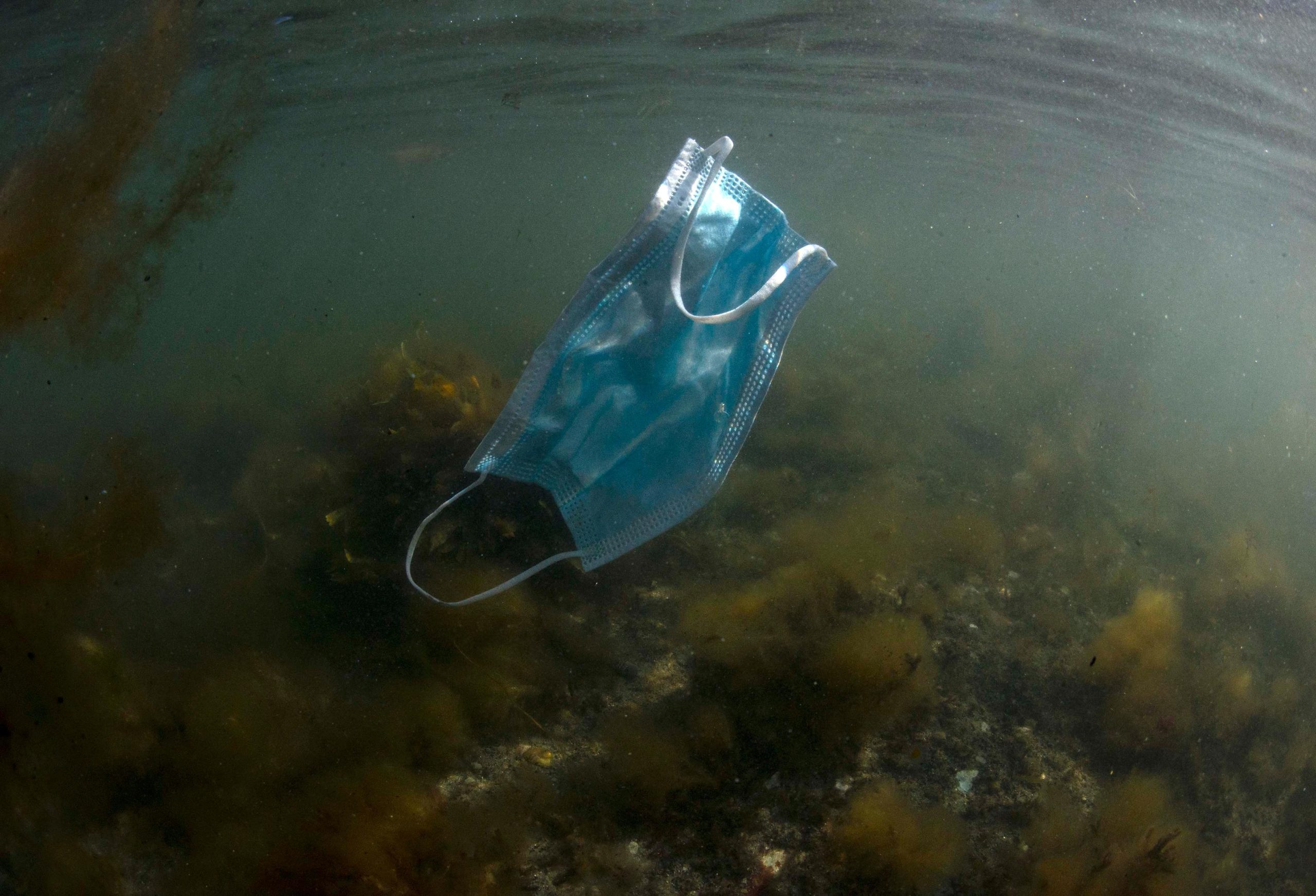
Interim objectives for 2025
The expert group underlined that, “This process should aim to define and attract financial and other support to meet an initial set of goals for 2025, followed by goals for the end of the Ocean Decade in 2030.”
And they set out examples of nearer term objectives for 2025:
- Quantify the global harm of marine pollution from all major sources on ecosystems and organisms and on human health; assessment methods need to take into account multiple stressors.
- Survey the totality of anthropogenic chemicals flowing into the oceans.
- Define a Clean Ocean, including acceptable levels of pollution to set threshold values, and define ecological boundaries or maximal levels of pollutants as well as their rates of degradation to maintain well-functioning ecosystems; this includes understanding tolerances of species and ecosystems to pollutants.
- Develop a widely shared vision of a Clean Ocean.
- Identify high-priority geographic challenges such as polar regions and urban coasts.
- Identify barriers to action impeding scaling up solutions for regional and global impact; quantify possibilities for amelioration.
- Identify key partners, including those who might be left behind, and provide engagement strategies for early career ocean professionals, indigenous peoples, and island communities.
- Develop reference scenarios for industrialization of the oceans during the next decade, including tourism, seabed mining, windfarm development, for example, as they relate to a Clean Ocean.
- Develop initial estimates of costs associated with transitions to a Clean Ocean.
- Secure major financial commitments.
“By 2030 we want to achieve measurable improvement in monitoring and clear reduction of emissions and harm through a spectrum of technical and behavioral strategies,” the group says.
The three-day online conference November 17-19 will highlight more than 30 activities in place or in development around the world that can make important contributions by 2030 to a Clean Ocean.
These include initiatives to:
- Successfully and consistently monitor marine debris from space as part of an Integrated Global Marine Debris Observing System
- Operate deep sea observatories in the Atlantic that document and publicize multiple stressors
- Observe the vast Southern Ocean to give early warnings of possible pollution hot spots in this relatively pristine ocean
- Instrument 30% of coastal city ocean spaces to report on pollution changes including restoration
- Identify and greatly reduce persistent organic pollutants globally.
The manifesto, which presents the signatories’ views and not the official positions of their respective institutions, is also directed at other groups such as the High Level Panel for a Sustainable Ocean Economy, the Economist magazine World Ocean Initiative, and the World Ocean Council.
The group plans to share its manifesto with other expert groups, national committees, and with endorsed projects and programs of the UN Ocean Decade to speed development of a strong set of Clean Ocean activities.
Says lead author Jesse Ausubel, Director of the Program for the Human Environment at The Rockefeller University, New York City: “We want this decade to transition from increasing to decreasing the environmental problems of the oceans.”
Clean Ocean International Expert Group
Co-Chairs
- Angelika Brandt, biodiversity of the Southern Ocean and Antarctica; Germany
- Elva Escobar Briones, biodiversity of the deep sea; Mexico
Members
- Frida Armas-Pfirter, marine and coastal law; Argentina
- Jesse Huntley Ausubel, technologies for ocean observing; USA, lead author
- Gina Bonne, environment and climate, Seychelles
- Saskia Brix-Elsig, polar seafloor biology; Germany
- Angelique Songco, marine protected areas; Philippines
- Kaveh Samimi-Namin, coral reef ecosystems; Iran
- Sofia Fürstenberg Stott, maritime industry innovation; Sweden
Never miss a breakthrough: Join the SciTechDaily newsletter.
Follow us on Google and Google News.