
Close Menu
    Facebook X (Twitter) Instagram
    SciTechDaily
    • Biology
    • Chemistry
    • Earth
    • Health
    • Physics
    • Science
    • Space
    • Technology
    Facebook X (Twitter) Pinterest YouTube RSS
    SciTechDaily
    Home»Earth»After Four Months of Darkness, the Sun Finally Rises at Concordia Research Station
    Earth

    After Four Months of Darkness, the Sun Finally Rises at Concordia Research Station

    By European Space AgencyAugust 14, 2020No Comments2 Mins Read
    Facebook Twitter Pinterest Telegram LinkedIn WhatsApp Email Reddit
    Share
    Facebook Twitter LinkedIn Pinterest Telegram Email Reddit
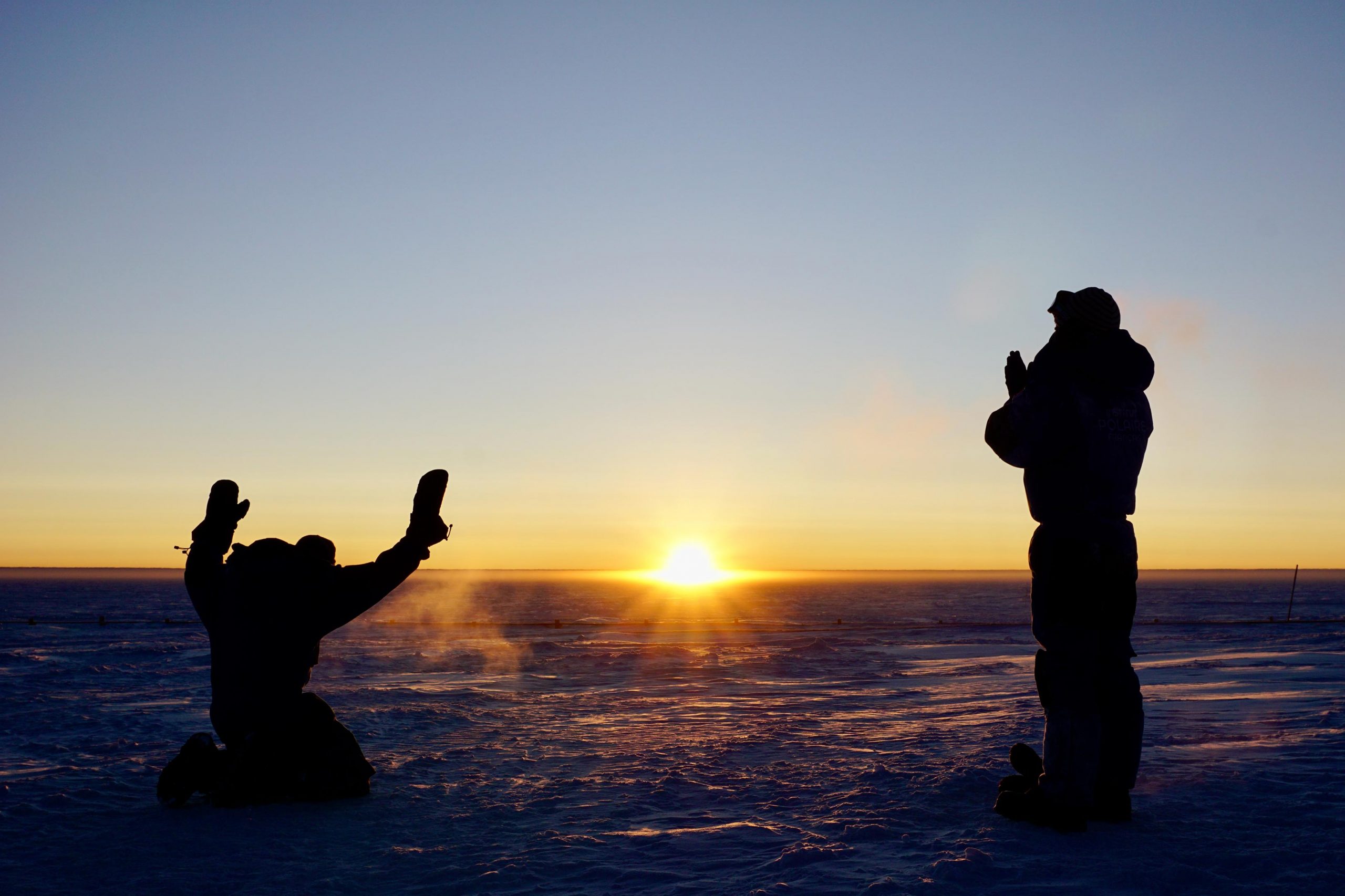
    Salute to the Sun
    Sun rises after 4 months of darkness at Concordia research station, Antarctica. Credit: ESA/IPEV/PNRA–S. Thoolen

    After four months of darkness, the Sun finally rises on August 11, 2020, at Concordia research station in Antarctica. The crew is understandably reverent.

    ESA-sponsored medical doctor Stijn Thoolen (left) and engineer Wenceslas Marie-Sainte (right) are part of the 12-member crew spending an entire year at Concordia. For nine months they are holding down the base in one of the most isolated, confined, and extreme environments on Earth, with no way in or out of the station.

    They run experiments in human physiology and biology, atmospheric physics, meteorology, and astronomy, among other disciplines, as well as maintain the base – one of only three to run year-round on the Antarctic Peninsula.

    Four months of complete darkness is quite the challenge, one researchers are very interested in studying from a physiological and psychological point of view. From questionnaires to blood and stool samples, the crew is poked and prodded to understand how better to prepare humans for deep space travel.

    Social dynamics are also of interest to researchers during the period of darkness. Stress brought on by lack of sunlight, changing sleep patterns, fatigue, and moodiness can affect the group. The crew is especially encouraged to take on group activities and get creative to combat the isolation of the winter.

    The first sunrise is always a remarkable moment, signaling the home stretch of their Antarctic residency. From now on the winter crew will start preparing for summer and the return of scientists that arrive for the warmer months starting in November. The base is cleaned thoroughly, machinery is serviced, tents are erected and heated, and the runway is cleared of snow. Extensive work is required to welcome the new arrivals back to the base at the end of the world.

    Never miss a breakthrough: Join the SciTechDaily newsletter.
    Follow us on Google and Google News.

    Antarctica European Space Agency
    Share. Facebook Twitter Pinterest LinkedIn Email Reddit

    Related Articles

    Massive Iceberg – 10 Times the Size of San Francisco – Breaks Off Brunt Ice Shelf in Antarctica

    Is the Brunt Ice Shelf in Antarctica on the Brink?

    Ozone Hole Over the Antarctic Is One of the Largest and Deepest in Recent Years

    Disintegration Fears Grow As Worsening Rifts and Fractures Spotted at Two of Antarctica’s Most Important Glaciers

    “Worst-Case Climate Scenario” – Ice Sheets in Greenland and Antarctica Loss Rates Rapidly Increasing

    Worst-Case Climate Change Scenario: Greenland and Antarctica Losing Ice 6x Faster Than Expected

    Massive Iceberg 5 Times Larger Than Manhattan Shatters Into Pieces – Satellite Video

    CryoSat Discovers Antarctica’s Biggest Glacier’s Ice Loss Pattern Is Evolving

    GOCE Gravity Mapper Reveals What’s Going on Deep Below Antarctica

    Leave A Reply Cancel Reply

    • Facebook
    • Twitter
    • Pinterest
    • YouTube

    Don't Miss a Discovery

    Subscribe for the Latest in Science & Tech!

    Trending News

    Scientists May Have Found the Key to Jupiter and Saturn’s Moon Mystery

    Scientists Uncover Brain Changes That Link Pain to Depression

    Saunas May Do More Than Raise Body Temperature – They Activate Your Immune System

    Exercise in a Pill? Metformin Shows Surprising Effects in Cancer Patients

    Hidden Oceans of Magma Could Be Protecting Alien Life

    New Study Challenges Alzheimer’s Theories: It’s Not Just About Plaques

    Artificial Sweeteners May Harm Future Generations, Study Suggests

    Splashdown! NASA Artemis II Returns From Record-Breaking Moon Mission

    Follow SciTechDaily
    • Facebook
    • Twitter
    • YouTube
    • Pinterest
    • Newsletter
    • RSS
    SciTech News
    • Biology News
    • Chemistry News
    • Earth News
    • Health News
    • Physics News
    • Science News
    • Space News
    • Technology News
    Recent Posts
    • Scientists Discover Unexpected Climate Benefit Hidden in Forest Soils
    • The Grand Canyon’s “Swiss Cheese” Rocks Hold a Critical Secret
    • Scientists Discover 430,000-Year-Old Wooden Tools, Rewriting Human History
    • Scientists Make Breakthrough on 40-Year-Old 2D Physics Puzzle
    • As Cities Invade the Amazon, Yellow Fever Makes a Dangerous Comeback
    Copyright © 1998 - 2026 SciTechDaily. All Rights Reserved.
    • Science News
    • About
    • Contact
    • Editorial Board
    • Privacy Policy
    • Terms of Use

    Type above and press Enter to search. Press Esc to cancel.