
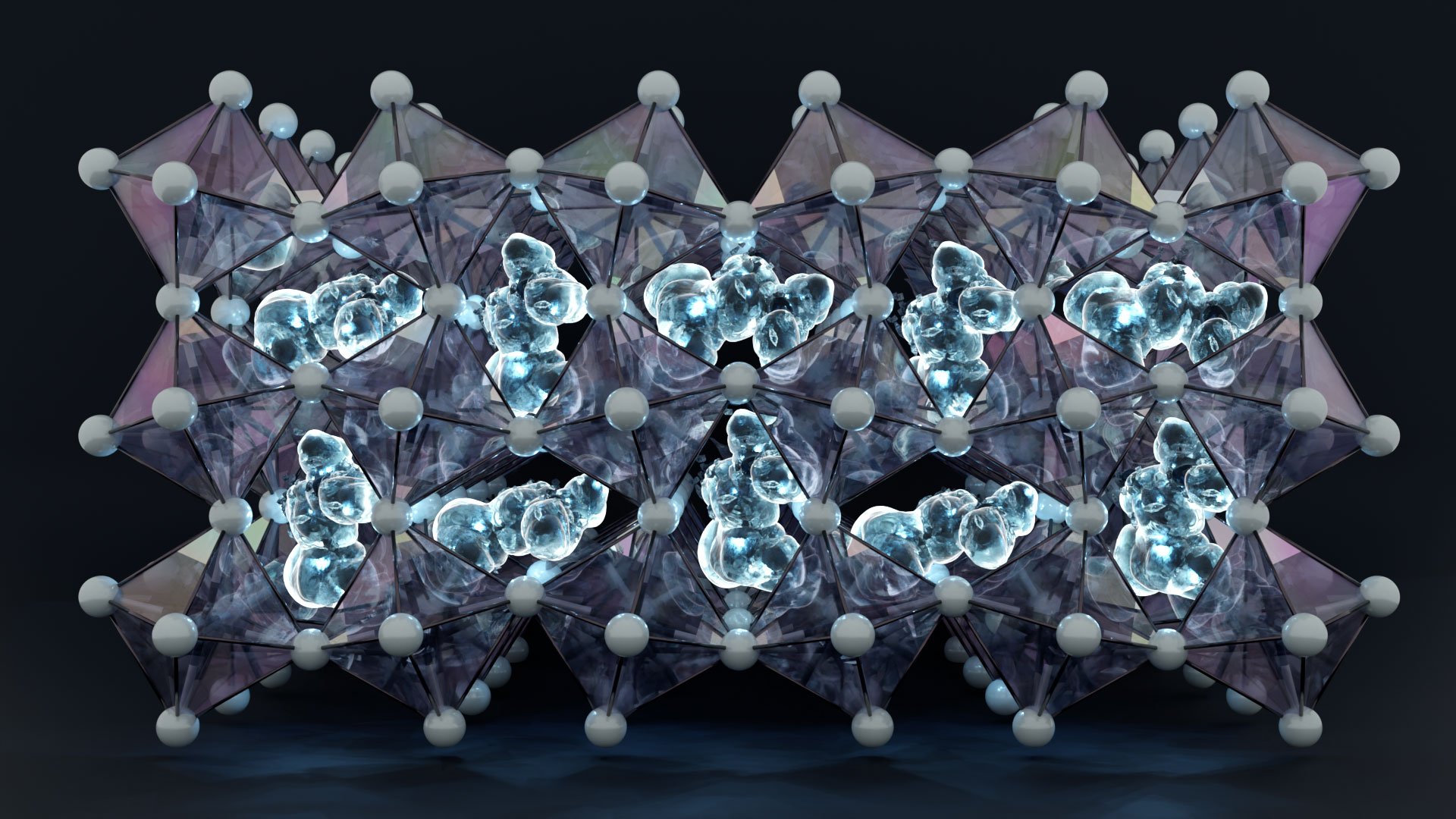
Rising global energy demands are pushing the limits of solar technology. Scientists in Sweden have now taken a major step toward unlocking the potential of halide perovskites.
Global demand for electricity is climbing at a fast pace, making it essential to find sustainable ways to meet future needs. One possible solution lies in the development of advanced solar cell materials that are far more efficient than those used today. These new materials could be manufactured so thin and flexible that they might cover everything from smartphones to entire buildings.
Researchers at Chalmers University of Technology in Sweden have recently made progress in tackling one of the most promising yet puzzling options: halide perovskites. By combining computer-based simulations with machine learning, they are beginning to unravel the complex behavior of these materials.
According to the International Energy Agency, electricity already accounts for 20 percent of global energy use. Within the next 25 years, that share is expected to rise above 50 percent, further underscoring the urgency of developing cleaner and more efficient energy technologies.
“To meet the demand, there is a significant and growing need for new, environmentally friendly and efficient energy conversion methods, such as more efficient solar cells. Our findings are essential to engineer and control one of the most promising solar cell materials for optimal utilization. It’s very exciting that we now have simulation methods that can answer questions that were unresolved just a few years ago,” says Julia Wiktor, the study’s principal investigator and an associate professor at Chalmers.
Promising materials for efficient solar cells
Materials lying within a group called halide perovskites are considered the most promising for producing cost-effective, flexible, and lightweight solar cells and optoelectronic devices such as LED bulbs, as they absorb and emit light extremely efficiently. However, perovskite materials can degrade quickly, and knowing how best to utilize them requires a deeper understanding of why this happens and how the materials work.

Scientists have long struggled to understand one particular material within the group, a crystalline compound called formamidinium lead iodide. It has outstanding optoelectronic properties. Greater use of the material has been hampered by its instability but this can be solved by mixing two types of halide perovskites. However, more knowledge is needed about the two types so that researchers can best control the mixture.
The key to material design and control
A research group at Chalmers can now provide a detailed account of an important phase of the material that has previously been difficult to explain by experiments alone. Understanding this phase is key to being able to design and control both this material and mixtures based on it. The study was recently published in the Journal of the American Chemical Society.
“The low-temperature phase of this material has long been a missing piece of the research puzzle, and we’ve now settled a fundamental question about the structure of this phase,” says Chalmers researcher Sangita Dutta.
Machine learning contributed to the breakthrough
The researchers’ expertise lies in building accurate models of different materials in computer simulations. This allows them to test the materials by exposing them to different scenarios and these are confirmed experimentally.
Nevertheless, modeling materials in the halide perovskite family is challenging, as capturing and decoding their properties requires powerful supercomputers and lengthy simulation times.
“By combining our standard methods with machine learning, we’re now able to run simulations that are thousands of times longer than before. And our models can now contain millions of atoms instead of hundreds, which brings them closer to the real world,” says Dutta.
Lab observations match the simulations
The researchers identified the structure of formamidinium lead iodide at low temperatures. They could also see that the formamidinium molecules get stuck in a semi-stable state while the material cools. To ensure that their study models reflect reality, they collaborated with experimental researchers at the University of Birmingham. They cooled the material to – 200°C to ensure their experiments matched the simulations.
“We hope the insights we’ve gained from the simulations can contribute to how to model and analyze complex halide perovskite materials in the future,” says Erik Fransson, at the Department of Physics at Chalmers.
Reference: “Revealing the Low-Temperature Phase of FAPbI3 Using a Machine-Learned Potential” by Sangita Dutta, Erik Fransson, Tobias Hainer, Benjamin M. Gallant, Dominik J. Kubicki, Paul Erhart and Julia Wiktor, 14 August 2025, Journal of the American Chemical Society.
DOI: 10.1021/jacs.5c05265
The research was supported by the Swedish Foundation for Strategic Research, the Swedish Energy Agency, the Swedish Research Council, the European Research Council, the Knut and Alice Wallenberg Foundation and the Nano Area of Advance at Chalmers University of Technology. The calculations were facilitated by resources from the National Academic Infrastructure for Supercomputing in Sweden (NAISS) at C3SE.
Never miss a breakthrough: Join the SciTechDaily newsletter.
Follow us on Google and Google News.
3 Comments
According to the article itself, the AI cracked nothing. They only hope it might, down the road.
But are we supposed to believe that the hallucinating AI is somehow gonna squeeze extra energy out of solar tech, when every serious study on the subject is saying that the solar already reached its top output and there’s no room for improvement?
Yeah it’s probably just propaganda just to hype up AI and the solar industry
However one thing remains blatantly obvious all industry depends on energy therefore if you find a way to generate energy for a profit you have the most universal form of business because all other manufacturers are dependent on your goods
Couldn’t agree more.
And the irony of this article is that the AI will always waste way more energy than it will help generate.