
Close Menu
    Facebook X (Twitter) Instagram
    SciTechDaily
    • Biology
    • Chemistry
    • Earth
    • Health
    • Physics
    • Science
    • Space
    • Technology
    Facebook X (Twitter) Pinterest YouTube RSS
    SciTechDaily
    Home»Science»AI Images Exposed: Researchers Reveal Simple Method To Detect Deepfakes
    Science

    AI Images Exposed: Researchers Reveal Simple Method To Detect Deepfakes

    By Royal Astronomical SocietyAugust 1, 20241 Comment3 Mins Read
    Facebook Twitter Pinterest Telegram LinkedIn WhatsApp Email Reddit
    Share
    Facebook Twitter LinkedIn Pinterest Telegram Email Reddit
    Real and Fake Image Comparison
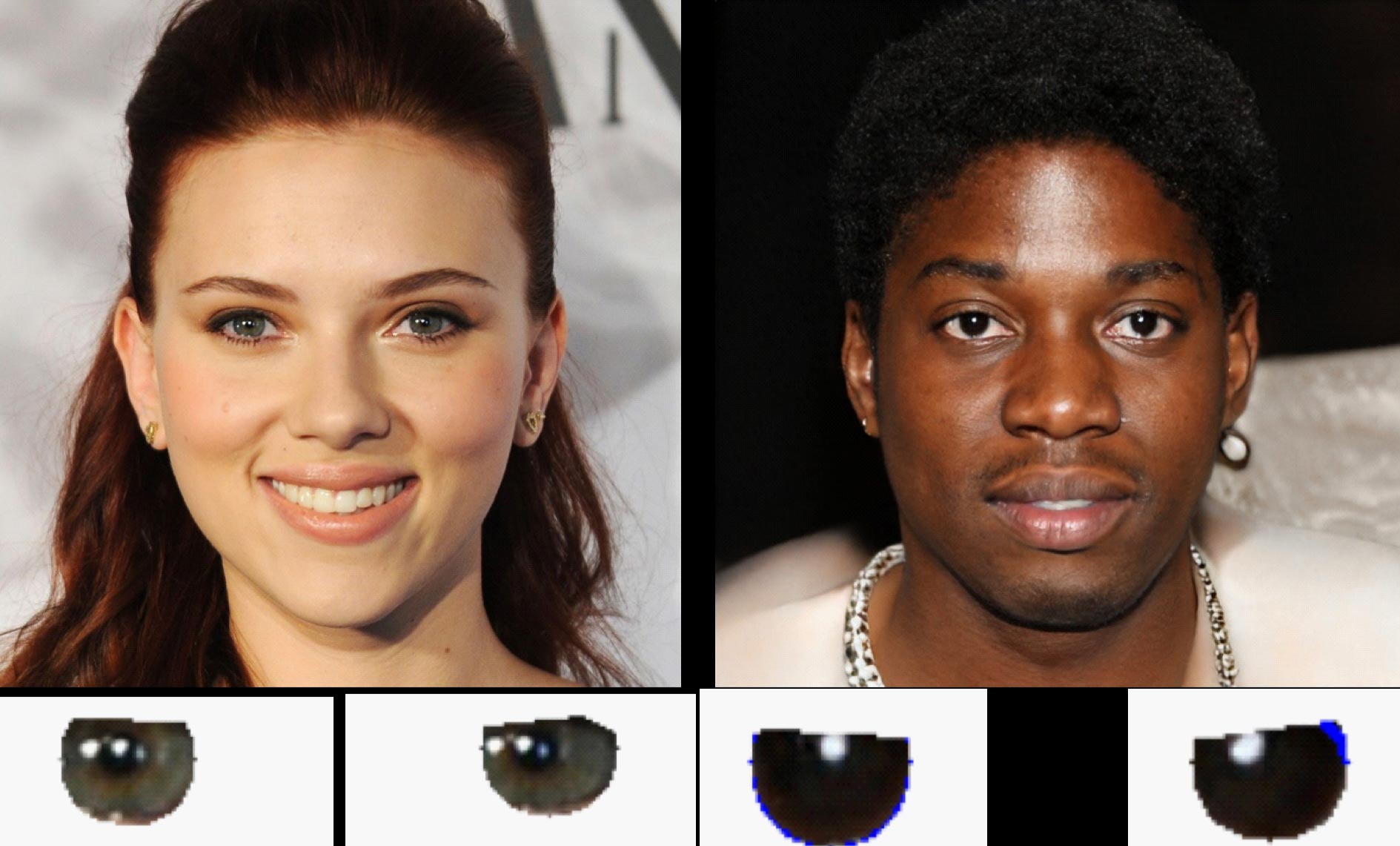
    In this image, the person on the left is real, while the person on the right is AI-generated. Their eyeballs are depicted underneath their faces. The reflections in the eyeballs are consistent for the real person, but incorrect (from a physics point of view) for the fake person. Credit: Adejumoke Owolabi

    By using astronomical methods to analyze eye reflections, researchers can potentially detect deepfake images, though the technique includes some risk of inaccuracies.

    In an era when anyone can create artificial intelligence (AI) images, the ability to detect fake pictures, particularly deepfakes of people, is becoming increasingly important. Now, scientists say the eyes may be the key to distinguishing deepfakes from real images.

    Detecting Deepfakes Through Eyeball Analysis

    New research presented at the Royal Astronomical Society’s National Astronomy Meeting indicates that deepfakes can be identified by analyzing the reflections in human eyes, similar to how astronomers study pictures of galaxies. The study, led by University of Hull MSc student Adejumoke Owolabi, focuses on the consistency of light reflections in each eyeball. Discrepancies in these reflections often indicate a fake image.
    Deepfake Eyes
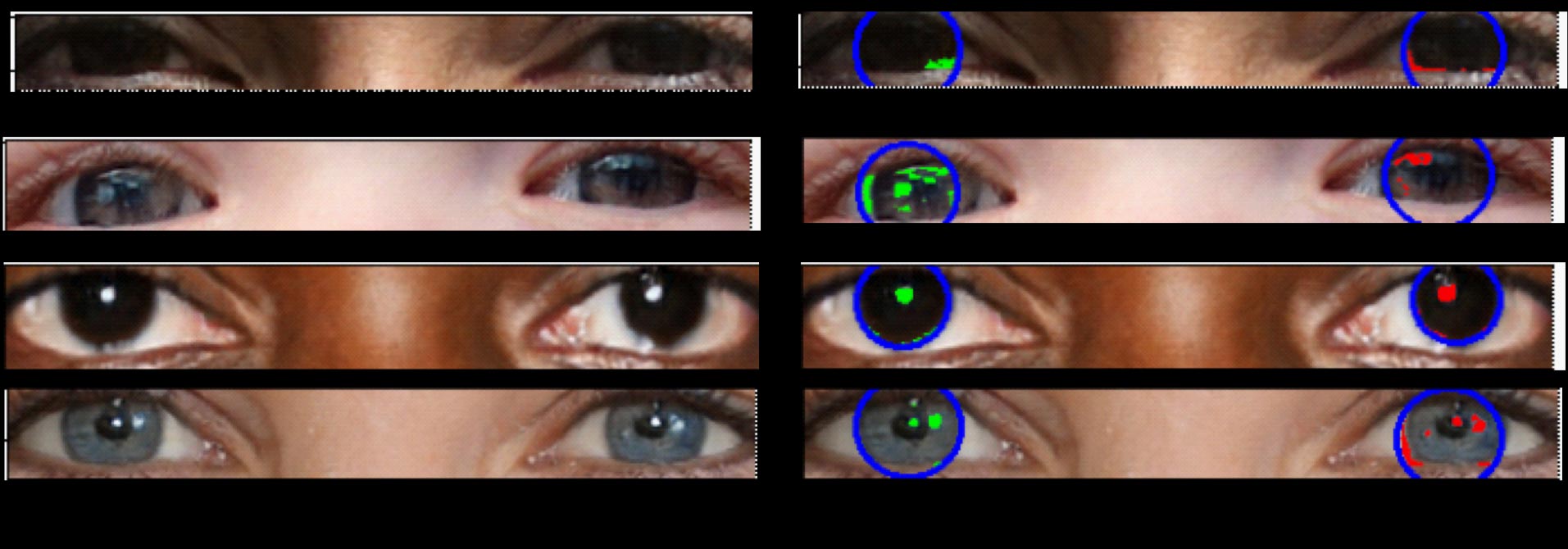
    A series of deepfake eyes showing inconsistent reflections in each eye. Credit: Adejumoke Owolabi

    Astronomical Techniques in Deepfake Detection

    “The reflections in the eyeballs are consistent for the real person, but incorrect (from a physics point of view) for the fake person,” said Kevin Pimbblet, professor of astrophysics and director of the Centre of Excellence for Data Science, Artificial Intelligence and Modelling at the University of Hull.

    Researchers analyzed reflections of light on the eyeballs of people in real and AI-generated images. They then employed methods typically used in astronomy to quantify the reflections and checked for consistency between left and right eyeball reflections.
    Eyes from Real Images
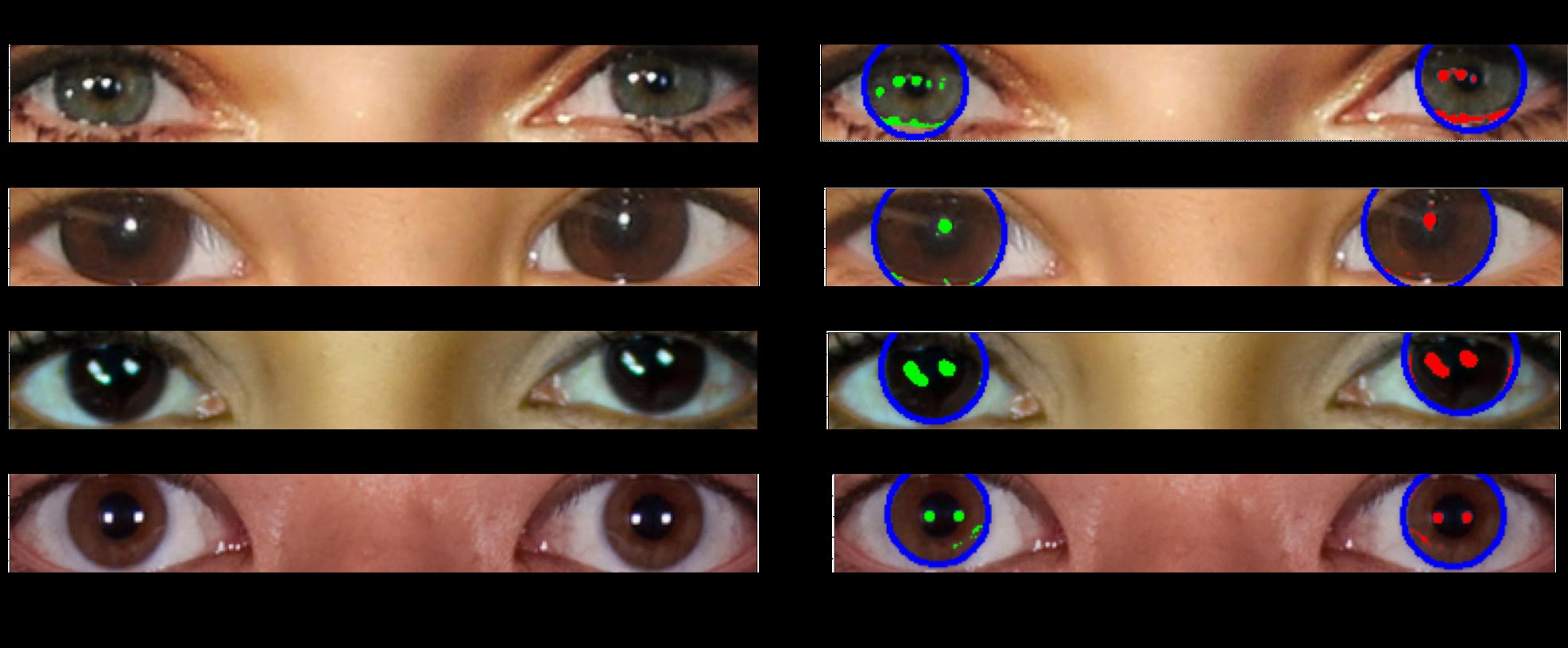
    A series of real eyes showing largely consistent reflections in both eyes. Credit: Adejumoke Owolabi

    Measuring Inconsistencies and Implications

    Fake images often lack consistency in the reflections between each eye, whereas real images generally show the same reflections in both eyes.

    “To measure the shapes of galaxies, we analyze whether they’re centrally compact, whether they’re symmetric, and how smooth they are. We analyze the light distribution,” said Pimbblet. “We detect the reflections in an automated way and run their morphological features through the CAS [concentration, asymmetry, smoothness] and Gini indices to compare similarity between left and right eyeballs.

    “The findings show that deepfakes have some differences between the pair.”

    The Gini coefficient is normally used to measure how the light in an image of a galaxy is distributed among its pixels. This measurement is made by ordering the pixels that make up the image of a galaxy in ascending order by flux and then comparing the result to what would be expected from a perfectly even flux distribution. A Gini value of 0 is a galaxy in which the light is evenly distributed across all of the image’s pixels, while a Gini value of 1 is a galaxy with all light concentrated in a single pixel.

    The team also tested CAS parameters, a tool originally developed by astronomers to measure the light distribution of galaxies to determine their morphology, but found it was not a successful predictor of fake eyes.

    “It’s important to note that this is not a silver bullet for detecting fake images,” Pimbblet added. “There are false positives and false negatives; it’s not going to get everything. But this method provides us with a basis, a plan of attack, in the arms race to detect deepfakes.”

    Never miss a breakthrough: Join the SciTechDaily newsletter.
    Follow us on Google and Google News.

    Artificial Intelligence Popular Royal Astronomical Society
    Share. Facebook Twitter Pinterest LinkedIn Email Reddit

    Related Articles

    AI Triumphs Over Venom: Revolutionary Snakebite Antidotes Unveiled

    New Research Demonstrates That Common Sense Is Not So Common After All

    Forensics Cornerstone Shattered: AI Discovers That Not Every Fingerprint Is Unique

    The Intersection of Math and AI: A New Era in Problem-Solving

    Scientists Discover Mysterious “Fairy Circles” at Hundreds of Sites Globally

    Uncovering the Secret Lives of Desert Ants With Revolutionary Tracking Technology

    AI Algorithm Predicts Future Crimes One Week in Advance With 90% Accuracy

    New AI-Inspired Theory of Dreaming: Our Dreams’ Weirdness Might Be Why We Have Them

    Artificial Intelligence Helps Crack the Code of the Dead Sea Scrolls

    1 Comment

    1. Eloi on August 4, 2024 4:12 am

      Interesting technique. The problem with the example application though, is the enlarged image of the “real” subject is also wrong. The eye on the left should show 4 lights, not 3.

      Reply
    Leave A Reply Cancel Reply

    • Facebook
    • Twitter
    • Pinterest
    • YouTube

    Don't Miss a Discovery

    Subscribe for the Latest in Science & Tech!

    Trending News

    Quantum Fluctuations Break a Crystal’s Symmetry Rules

    Why Does an Irregular Heartbeat Strike 40 Years Early in Some People?

    Scientists Reveal How ADHD Could Fuel Creative Thinking

    Scientists Find Just 3 Minutes of Sprinting Can Transform Blood Chemistry

    Have We Found Alien Life? Here’s What Scientists Really Think

    Neuroscientist Challenges the Idea That Your Brain “Makes” Decisions

    Quitting Alcohol Can Change the Brain in Surprising Ways, Mouse Study Finds

    FDA-Approved Drug Shows Promise for Reversing Osteoarthritis Damage

    Follow SciTechDaily
    • Facebook
    • Twitter
    • YouTube
    • Pinterest
    • Newsletter
    • RSS
    SciTech News
    • Biology News
    • Chemistry News
    • Earth News
    • Health News
    • Physics News
    • Science News
    • Space News
    • Technology News
    Recent Posts
    • Ancient DNA Reveals How Europe Changed After the Fall of Rome
    • Historians Called Them “Housekeepers” – but Roman Women Were Running Profitable Farms
    • Construction Crew Uncovers Giant 20-Meter Dinosaur in Brazil
    • New Soil Test Could Improve Our Understanding of a Vital but Limited Nutrient
    • A Manhattan-Sized Ice Island Just Broke Off Greenland
    Copyright © 1998 - 2026 SciTechDaily. All Rights Reserved.
    • Science News
    • About
    • Contact
    • Editorial Board
    • Privacy Policy
    • Terms of Use

    Type above and press Enter to search. Press Esc to cancel.