
Close Menu
    Facebook X (Twitter) Instagram
    SciTechDaily
    • Biology
    • Chemistry
    • Earth
    • Health
    • Physics
    • Science
    • Space
    • Technology
    Facebook X (Twitter) Pinterest YouTube RSS
    SciTechDaily
    Home»Earth»Air Pollution in New York City Linked to Wildfires From As Far as Canada
    Earth

    Air Pollution in New York City Linked to Wildfires From As Far as Canada

    By European Geosciences UnionJanuary 21, 20202 Comments4 Mins Read
    Facebook Twitter Pinterest Telegram LinkedIn WhatsApp Email Reddit
    Share
    Facebook Twitter LinkedIn Pinterest Telegram Email Reddit
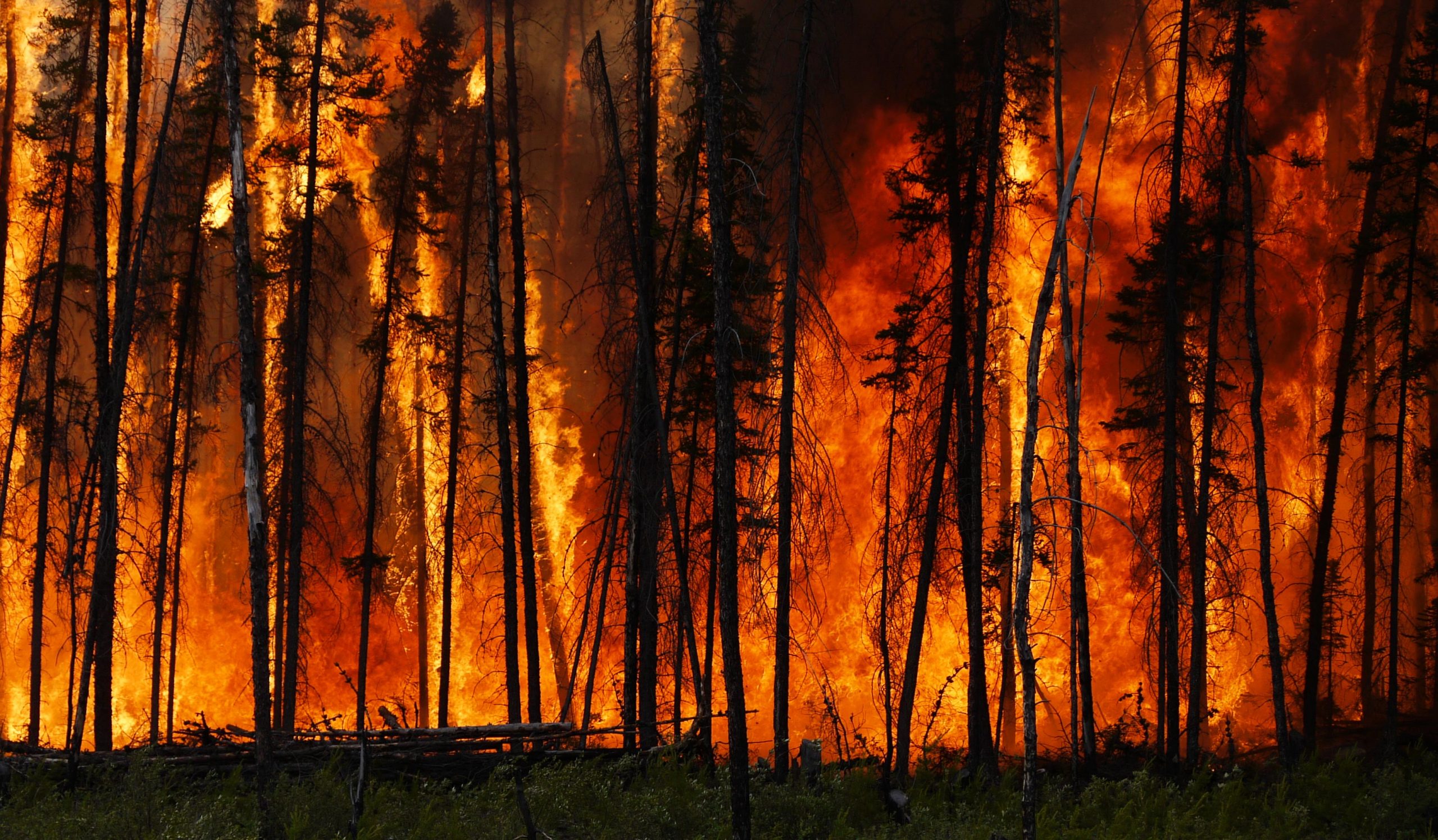
    Boreal Forest Fire in Canada
    Flames rise from an experimental forest fire in Canada’s remote Northwest Territories. Credit: Stefan Doerr via Immageo, CC BY-ND 3.0

    A new study shows that air pollutants from the smoke of fires from as far as Canada and the southeastern U.S. traveled hundreds of miles and several days to reach Connecticut and New York City, where it caused significant increases in pollution concentrations.

    For the study, published today (January 21, 2020) in the European Geosciences Union (EGU) journal Atmospheric Chemistry and Physics, researchers in the lab of Drew Gentner, associate professor of chemical & environmental engineering, monitored the air quality at the Yale Coastal Field Station in Guilford, CT and four other sites in the New York metropolitan area. In August of 2018, they observed two spikes in the presence of air pollutants – both coinciding with New York-area air quality advisories for ozone. The pollutants were the kind found in the smoke of wildfires and controlled agricultural burning. Using three types of evidence – data from the observation sites, smoke maps from satellite imagery, and backtracking 3-D models of air parcels (both the maps and models were produced by the National Oceanic and Atmospheric Administration) – the researchers traced the pollutants’ origin in the first event to fires on the western coast of Canada, and in the second event to the southeastern U.S.
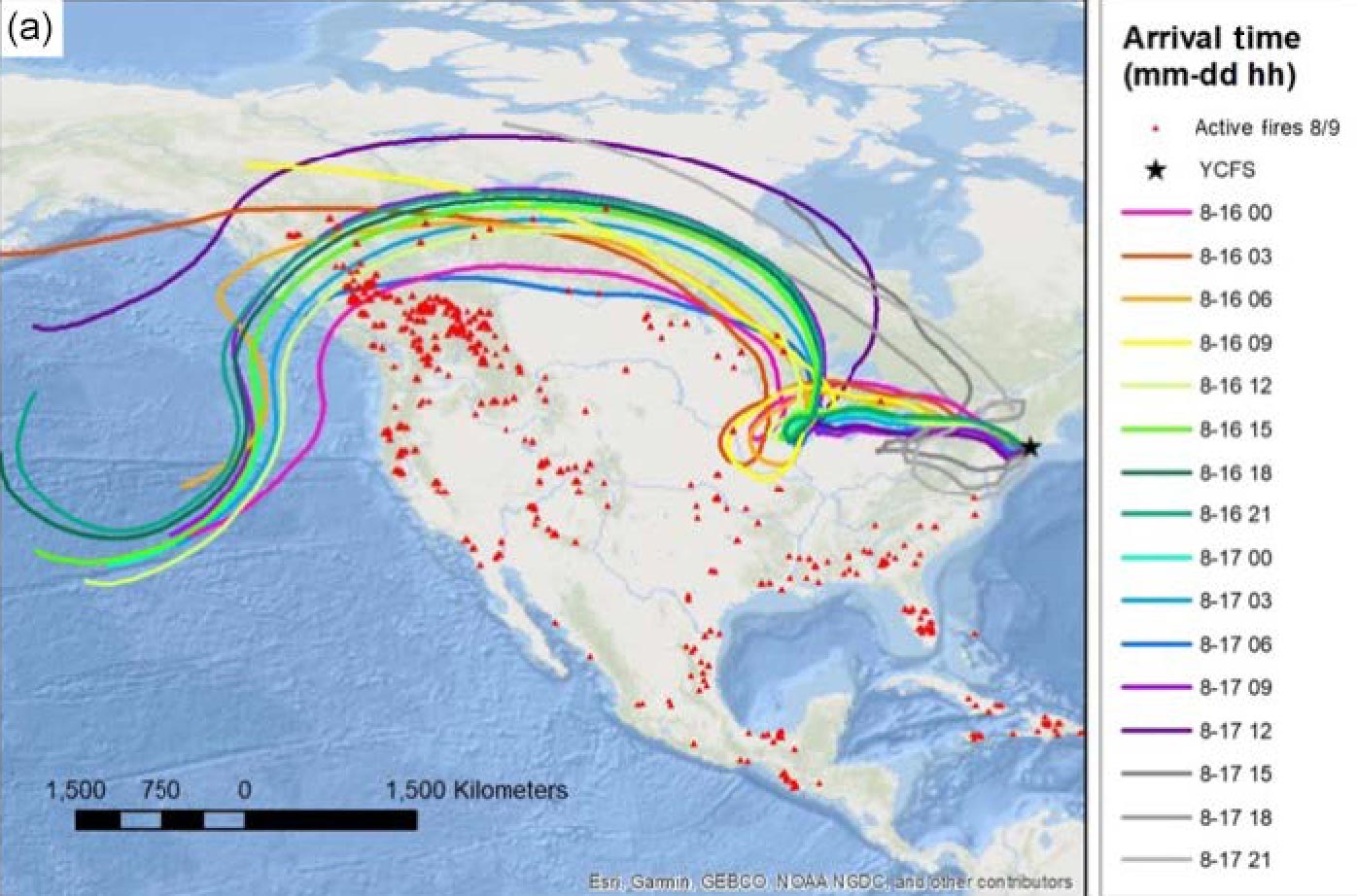
    Backward Trajectory Model of Air
    Backward-trajectory model of air that arrived at the Long Island Sound on August 16-17, 2018. Each line represents the backward trajectory for an air parcel arriving every three hours throughout the course of the day. The location of fires on August 9 (when most trajectories intersect the wildfire zone on the West Coast) is depicted with red triangles. Credit: Rogers et al., Atmos. Chem. Phys., 2019

    Biomass burning, which occurs on a large scale during wildfires and some controlled burns, is a major source of air pollutants that impact air quality, human health, and climate. These events release numerous gases into the atmosphere and produce particulate matter (PM), including black carbon (BC) and other primary organic aerosols (POA) with a diameter of less than 2.5 micrometers. Known as PM2.5, it has been shown to have particularly serious health effects when inhaled.

    While more reactive components are often chemically transformed closer to their place of origin, PM2.5 tends to last longer. In the case of this study, that allowed much of it to travel from the fires to the monitoring sites – a period ranging from a few days to about a week.

    “Given the sensitivity of people to the health effects emerging from exposure to PM2.5, this is certainly something that needs to be considered as policy-makers put together long-term air quality management plans,” Gentner said.
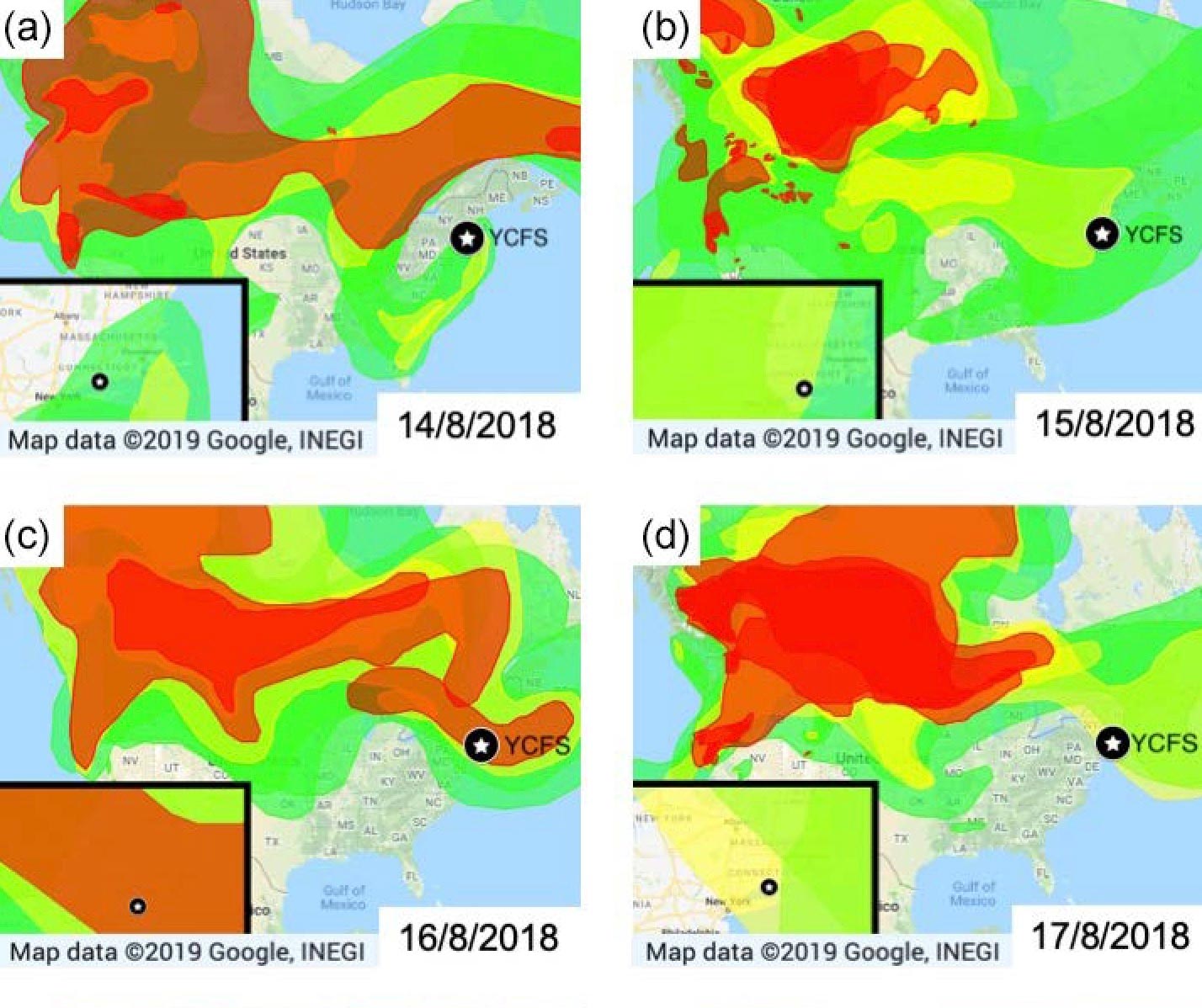
    NOAA Satellite-Based Smoke Maps
    Satellite-based smoke maps (NOAA). Colors indicate the intensity of the smoke plume, with red being the most dense and green the least dense. Insets provide a magnified regional view. Credit: Rogers et al., Atmos. Chem. Phys., 2019

    The impacts of wildfire smoke will likely become increasingly important in the coming years.

    “When people are making predictions about climate change, they’re predicting increases in wildfires, so this sort of pollution is likely going to become more common,” said lead author Haley Rogers, who was an undergraduate student when the study was conducted. “So when people are planning for air pollution and health impacts, you can’t just address local sources.”

    Although the levels of PM2.5 decreased over time and distance, co-author Jenna Ditto, a graduate student in Gentner’s lab, noted that awareness of its presence in the atmosphere is critical to public health.

    “Studies indicate that there are no safe levels of PM2.5, so typically any level of it is worth taking a look at,” she said.

    Reference: “Evidence for impacts on surface-level air quality in the northeastern US from long-distance transport of smoke from North American fires during the Long Island Sound Tropospheric Ozone Study (LISTOS) 2018” by Haley M. Rogers, Jenna C. Ditto and Drew R. Gentner,  21 January 2020, Atmospheric Chemistry and Physics.
    DOI: 10.5194/acp-20-671-2020

    Never miss a breakthrough: Join the SciTechDaily newsletter.
    Follow us on Google and Google News.

    European Geosciences Union Forests Pollution Wildfires
    Share. Facebook Twitter Pinterest LinkedIn Email Reddit

    Related Articles

    “Zombie Fires” in Peatlands, Which Release Devastating Amounts of Carbon, Could Be Dampened by New Findings

    High-Severity Wildfires on the Rise in Northern California’s Coastal Ranges Since 1984

    NOAA-NASA Satellite Captures Fires, Smoke, Sulfur Dioxide, and Ash Across America

    Increased Threat of Fierce Fires and Accelerated Global Warming From Water Loss in Northern Peatlands

    Setting Fires to Avoid Fires: Stanford Finds Approaches to Enable More Prescribed Burns

    Aerosol Spread From Ferocious Australian Fires [Video]

    Fukushima Soil Decontamination: Lessons learned

    Black Carbon Found in the Amazon River – Most From Recent Forest Burnings

    Amazon’s Burning Crisis: Deforestation and Number of Fires Show 2019 Not a ‘Normal’ Year

    2 Comments

    1. kamir bouchareb st on June 5, 2024 3:06 am

      gooooooooooooooood

      Reply
    2. kamir bouchareb st on June 5, 2024 3:11 am

      goood

      Reply
    Leave A Reply Cancel Reply

    • Facebook
    • Twitter
    • Pinterest
    • YouTube

    Don't Miss a Discovery

    Subscribe for the Latest in Science & Tech!

    Trending News

    Scientists Call for a Complete Rethink of Alzheimer’s Treatment

    Scientists Identify Molecular Switch That Lets Exercise Reverse Muscle Aging

    Why Your Most Vivid Dreams Might Be the Key to Deep, Restful Sleep

    A Bright Star Hid a Massive Secret for 50 Years: Mystery of Gamma Cassiopeiae Finally Solved

    Scientists Identify Protein That Slows Key Effects of Aging

    Revolutionary Submarine Mysteriously Disappears Without a Trace – Scientists Are Now Preparing for a Bold Return

    Why Drinking More Water Isn’t Enough To Stop Kidney Stones

    New Study Reveals Surprising Effect of Drinking Coffee at Night

    Follow SciTechDaily
    • Facebook
    • Twitter
    • YouTube
    • Pinterest
    • Newsletter
    • RSS
    SciTech News
    • Biology News
    • Chemistry News
    • Earth News
    • Health News
    • Physics News
    • Science News
    • Space News
    • Technology News
    Recent Posts
    • Mystery Deepens: Astrophysicists Say Dark Matter May Not Be One Thing
    • Life Without a Sun? Scientists Say It May Thrive on Rogue Planet Moons
    • Your BMI Might Be Wrong: Study Finds Millions Are Misclassified
    • More Than Half of U.S. College Students Are Lonely, Major Study Reveals
    • Scientists Reveal Biological Signal Behind Mysterious Alzheimer’s Drug Side Effect
    Copyright © 1998 - 2026 SciTechDaily. All Rights Reserved.
    • Science News
    • About
    • Contact
    • Editorial Board
    • Privacy Policy
    • Terms of Use

    Type above and press Enter to search. Press Esc to cancel.