
Close Menu
    Facebook X (Twitter) Instagram
    SciTechDaily
    • Biology
    • Chemistry
    • Earth
    • Health
    • Physics
    • Science
    • Space
    • Technology
    Facebook X (Twitter) Pinterest YouTube RSS
    SciTechDaily
    Home»Space»Amazing Hubble Image of Globular Cluster NGC 3201
    Space

    Amazing Hubble Image of Globular Cluster NGC 3201

    By SciTechDailyJanuary 22, 2018No Comments2 Mins Read
    Facebook Twitter Pinterest Telegram LinkedIn WhatsApp Email Reddit
    Share
    Facebook Twitter LinkedIn Pinterest Telegram Email Reddit
    New Hubble Image of Globular Cluster NGC 3201
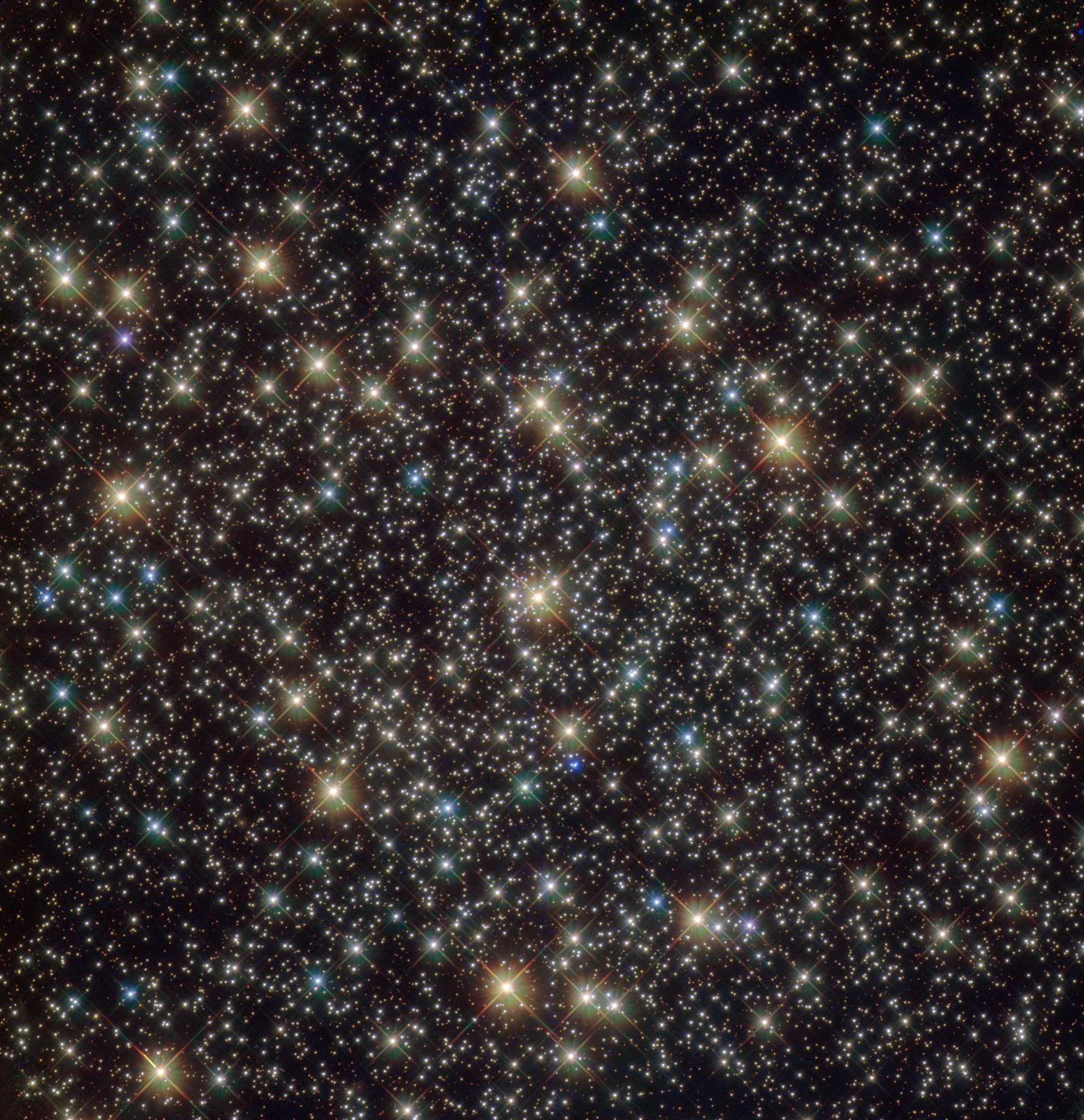
    New Hubble image of the globular cluster NGC 3201. Astronomers recently discovered a black hole lurking at the heart of NGC 3201. Credit: Sarajedini et al.; ESA/Hubble & NASA

    This image from the NASA/ESA Hubble Space Telescope reveals a glistening and ancient globular cluster named NGC 3201 — a gathering of hundreds of thousands of stars bound together by gravity. NGC 3201 was discovered in 1826 by the Scottish astronomer James Dunlop, who described it as a “pretty large, pretty bright” object that becomes “rather irregular” towards its center.

    Globular clusters are found around all large galaxies, but their origin and role in galaxy formation remain tantalizingly unclear. Astronomers recently discovered a black hole lurking at the heart of NGC 3201 — its position was revealed by the strange movements of a star being quickly flung around a massive, invisible counterpart. This sparkling group of stars also has some strange properties which make it unique amongst the over 150 globular clusters belonging to the Milky Way. NGC 3201 has an extremely fast velocity with respect to the Sun and its orbit is retrograde, meaning that it moves speedily in the opposite direction to the galactic center, which it orbits.

    The unusual behavior of this cluster suggests that it may have extragalactic origins, but at some point was captured by the Milky Way’s gravity. However, the chemical makeup of this intriguing cluster tells a different story — the stars within NGC 3201 are chemically very similar to those of other galactic globular clusters, implying that they formed at a similar location and time to their neighbors.

    Whether this mysterious cluster was adopted by our galaxy or has for some reason evolved very differently to the family of clusters it grew up with, it is certainly an unusual astronomical beauty.

    Never miss a breakthrough: Join the SciTechDaily newsletter.
    Follow us on Google and Google News.

    Astronomy Hubble Space Telescope
    Share. Facebook Twitter Pinterest LinkedIn Email Reddit

    Related Articles

    A Morphing Spiral Galaxy Amongst Friends

    Hubble Views Magnificent Lopsided Galaxy NGC 2276

    Hubble Captures Fantastic Detail of Eponymous Spiral Galaxy NGC 691

    Spectacular Image Captured by Hubble Shows a Strangely Contorted Spiral Galaxy

    A Distant Spiral in Virgo: Extraordinary Detail Seen in a Galaxy 150 Million Light-Years Away From Earth

    Magnetic Monsters: Hubble Tracks Down Location of Mysterious Radio Signals From Intergalactic Space

    A Menagerie of Galaxies: Hubble Captures a Cluster With Galaxies of All Shapes and Sizes

    How Habitable Are Planets That Orbit Red Dwarfs – The Most Common Type of Stars in the Galaxy?

    Cosmic Silver Lining: Hubble Spots V565 Surrounded by Four Prominent Diffraction Spikes

    Leave A Reply Cancel Reply

    • Facebook
    • Twitter
    • Pinterest
    • YouTube

    Don't Miss a Discovery

    Subscribe for the Latest in Science & Tech!

    Trending News

    The 4,000-Year-Old City That Defied History’s Rules on Wealth and Power

    The World’s Biggest Population Fear Has Flipped – and It Could Change Everything

    This “Fake” Pill Improved Memory and Physical Performance in Just 3 Weeks

    Scientists Say Frequent Ejaculation May Improve Sperm Quality and Fertility

    Scientists Have Found “The Heaven Sword” After Years of Looking

    Can Time Flow in Reverse? A Quantum Breakthrough Challenges Our Assumptions

    Hidden Alzheimer’s Biomarker Could Change How Doctors Prescribe Hormone Therapy

    Koalas Nearly Vanished 100,000 Years Ago – Long Before Humans Arrived

    Follow SciTechDaily
    • Facebook
    • Twitter
    • YouTube
    • Pinterest
    • Newsletter
    • RSS
    SciTech News
    • Biology News
    • Chemistry News
    • Earth News
    • Health News
    • Physics News
    • Science News
    • Space News
    • Technology News
    Recent Posts
    • 17,000 Brain Scans Reveal Surprising Ethnic Differences in Alzheimer’s Biology
    • New Autism Treatment Strategy Restores Key Brain Receptor Function
    • Younger Generations Are Aging Faster – and It May Be Fueling a Surge in Cancer
    • Scientists Turn Ordinary Sunlight Into UV Light in Major Energy Breakthrough
    • New Discovery Could Unlock Quantum Computers the Size of a Coin
    Copyright © 1998 - 2026 SciTechDaily. All Rights Reserved.
    • Science News
    • About
    • Contact
    • Editorial Board
    • Privacy Policy
    • Terms of Use

    Type above and press Enter to search. Press Esc to cancel.