
Close Menu
    Facebook X (Twitter) Instagram
    SciTechDaily
    • Biology
    • Chemistry
    • Earth
    • Health
    • Physics
    • Science
    • Space
    • Technology
    Facebook X (Twitter) Pinterest YouTube RSS
    SciTechDaily
    Home»Health»Analysis of SARS-CoV-2 Reinfection Risk Shows Omicron COVID Variant Evades Immunity From Prior Infection
    Health

    Analysis of SARS-CoV-2 Reinfection Risk Shows Omicron COVID Variant Evades Immunity From Prior Infection

    By American Association for the Advancement of Science (AAAS)March 15, 2022No Comments2 Mins Read
    Facebook Twitter Pinterest Telegram LinkedIn WhatsApp Email Reddit
    Share
    Facebook Twitter LinkedIn Pinterest Telegram Email Reddit
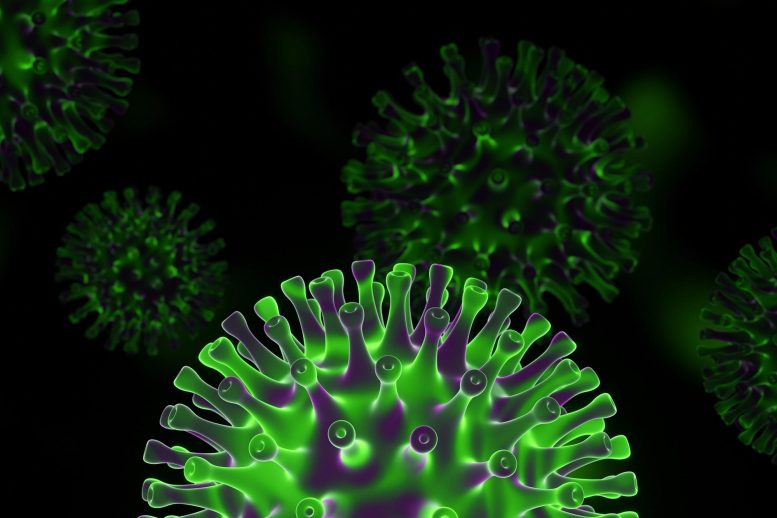
    COVID Virus Omicron Variant
    The Omicron variant of SARS-CoV-2 can bypass immunity gained from previous infections.

    Analysis of SARS-CoV-2 reinfection risk in South Africa reveals differences among variants of concern.

    The Omicron variant of SARS-CoV-2 evades immunity from prior infection, an analysis of routine surveillance data from South Africa indicates.

    Early in November 2021, South African scientists spotted SARS-CoV-2 reinfections consistent with the timing of the emergence of the Omicron variant (B.1.1.529). To address whether circulation of this and also other variants of concern was associated with increased reinfection risk, Juliet Pulliam et al. evaluated a population widely infected by SARS-CoV-2.

    Using a model built to project the expected number of COVID-19 reinfections, Pulliam et al. found that Beta or Delta variants rarely caused reinfection. However, the authors observed reinfections increase above what would be expected after early November 2021, the period of Omicron circulation.

    This is a signature of immune evasion, the authors say, and the timing suggests it was associated with the emergence of the Omicron variant, which exhibits multiple mutations in the Spike protein.

    Reference: “Increased risk of SARS-CoV-2 reinfection associated with emergence of Omicron in South Africa” by Juliet R. C. Pulliam, Cari van Schalkwyk, Nevashan Govender, Anne von Gottberg, Cheryl Cohen, Michelle J. Groome, Jonathan Dushoff, Koleka Mlisana and Harry Moultrie, 15 March 2022, Science.
    DOI: 10.1126/science.abn4947

    Never miss a breakthrough: Join the SciTechDaily newsletter.
    Follow us on Google and Google News.

    American Association for the Advancement of Science COVID-19 Infectious Diseases Public Health
    Share. Facebook Twitter Pinterest LinkedIn Email Reddit

    Related Articles

    COVID-19 Has Revealed Critical Knowledge Gaps on the Transmission of Respiratory Viruses

    Advantages of Intranasal COVID-19 Vaccinations Over Injections

    COVID Variant P.1 Is More Transmissible and More Lethal

    COVID-19: An Analysis of Coronavirus Mutations in More Than 1,000 People

    Where to Sit in a Car and Which Windows to Put Down to Prevent COVID-19 Transmission

    Portable Saliva-Based Smartphone Platform Could Rapidly Expand COVID-19 Testing

    COVID Virus Transmission From Human to Mink, As Well as From Mink to Human Revealed by Whole Genome Sequencing

    Long-Lived Antibodies Detected in Both Blood and Saliva of Patients With COVID-19

    FDA Approved Drug May Help Calm Cytokine Storm in COVID-19

    Leave A Reply Cancel Reply

    • Facebook
    • Twitter
    • Pinterest
    • YouTube

    Don't Miss a Discovery

    Subscribe for the Latest in Science & Tech!

    Trending News

    A Star Near the Milky Way’s Black Hole Is Losing Mass at an Astonishing Rate

    Scientists Solve a Vitamin B12 Mystery With an Unexpected Culprit

    Has the Autism Spectrum Become Too Broad? Leading Scientist Warns of Hidden Consequences

    Rewriting History: Researchers Uncover a Forgotten Amazon Civilization That May Have Housed 3 Million People

    New Research May Change How We Think About Weight Loss Drugs Like Ozempic

    Coffee Drinkers Show Surprising Differences in Fat, Muscle, and Hormones

    New Treatment Targets Gum Disease Without Killing Good Bacteria

    Scientists Discover a 245-Million-Year-Old Reptile With Its Organs Still Preserved

    Follow SciTechDaily
    • Facebook
    • Twitter
    • YouTube
    • Pinterest
    • Newsletter
    • RSS
    SciTech News
    • Biology News
    • Chemistry News
    • Earth News
    • Health News
    • Physics News
    • Science News
    • Space News
    • Technology News
    Recent Posts
    • Quantum Fluctuations Break a Crystal’s Symmetry Rules
    • Researchers Discover a Mysterious New Frog Species in the Amazon
    • Scientists Spotted This Mysterious Congo Monkey 18 Years Ago – Now They Finally Know What It Is
    • Why Does an Irregular Heartbeat Strike 40 Years Early in Some People?
    • Scientists Reveal How ADHD Could Fuel Creative Thinking
    Copyright © 1998 - 2026 SciTechDaily. All Rights Reserved.
    • Science News
    • About
    • Contact
    • Editorial Board
    • Privacy Policy
    • Terms of Use

    Type above and press Enter to search. Press Esc to cancel.