
The pandemic has brought many tricky terms and ideas from epidemiology into everyone’s lives. Two particularly complicated concepts are vaccine efficacy and effectiveness. These are not the same thing. And as time goes on and new variants like omicron emerge, they are changing, too. Melissa Hawkins is an epidemiologist and public health researcher at American University. She explains the way researchers calculate how well a vaccine prevents disease, what influences these numbers and how omicron is changing things.
1. What do vaccines do?
A vaccine activates the immune system to produce antibodies that remain in your body to fight against exposure to a virus in the future. All three vaccines currently approved for use in the U.S. – the Pfizer-BioNTech, Moderna and Johnson & Johnson vaccines – showed impressive success in clinical trials.
2. What is the difference between vaccine efficacy and effectiveness?
All new vaccines must undergo clinical trials in which researchers test the vaccines on thousands of people to examine how well they work and whether they are safe.
Efficacy is the measure of how well a vaccine works in clinical trials. Researchers design the trials to include two groups of people: those who receive the vaccine and those who receive a placebo. They calculate the vaccine’s efficacy by comparing how many cases of the illness occur in each group, vaccinated versus placebo.
Effectiveness, on the other hand, describes how well a vaccine performs in the real world. It is calculated the same way, by comparing illness among vaccinated and unvaccinated people.
Efficacy and effectiveness are usually close to each other but won’t necessarily be the same. How the vaccines work will vary a bit from the trial results once millions of people are getting vaccinated.
Many factors influence how a vaccine performs in the real world. New variants like delta and omicron may change things. The number and age of people enrolled in the trials matter. And the health of those receiving the vaccine is also important.
Vaccine uptake – the proportion of a population that gets vaccinated – can also influence vaccine effectiveness. When a large enough proportion of the population is vaccinated, herd immunity begins to come into play. Vaccines with moderate or even low efficacy can work very well at a population level. Likewise, vaccines with high efficacy in clinical trials, like coronavirus vaccines, may have lower effectiveness and a small impact if there isn’t high vaccine uptake in the population.
The distinction between efficacy and effectiveness is important, because one describes the risk reduction achieved by the vaccines under trial conditions and the other describes how this may vary in populations with different exposures and transmission levels. Researchers can calculate both, but they can’t design a study that will measure both simultaneously.
3. How do you calculate efficacy and effectiveness?
Both Pfizer and Moderna reported that their vaccines demonstrated more than 90% efficacy in preventing symptomatic COVID-19 infection. Stated another way, among those individuals who received the vaccine in the clinical trials, the risk of getting COVID-19 was reduced by 90% compared with those who did not receive the vaccine.
Imagine conducting a vaccine trial. You randomize 1,000 people to receive the vaccine in one group. You randomize another 1,000 to be given a placebo in the other group. Say 2.5% of people in the vaccinated group get COVID-19 compared with 50% in the unvaccinated group. That means the vaccine has 95% efficacy. We determine that because (50% – 2.5%)/50% = .95. So 95% indicates the reduction in the proportion of disease among the vaccinated group. However, a vaccine with 95% efficacy does not mean 5% of vaccinated people will get COVID-19. It’s even better news: Your risk of illness is reduced by 95%.
Vaccine effectiveness is calculated the exact same way but is determined through observational studies. Early on, vaccines were well over 90% effective at preventing severe illness in the real world. But, by their very nature, viruses change, and this can change effectiveness. For example, a study found that by August 2021, when delta was surging, the Pfizer vaccine was 53% effective at preventing severe illness in nursing home residents who had been vaccinated in early 2021. Age, health issues, waning immunity and the new strain all lowered effectiveness in this case.
4. What about the omicron variant?
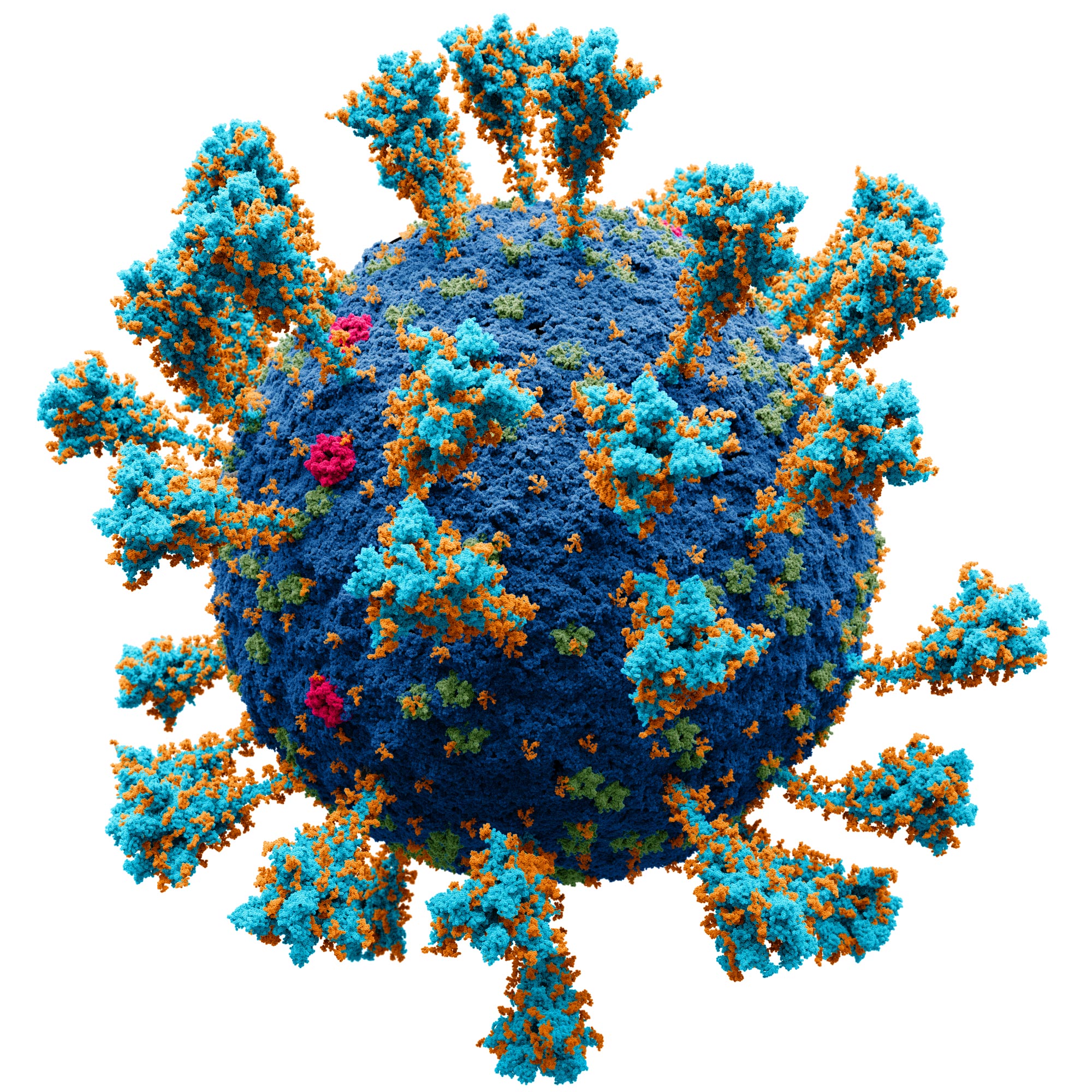
The preliminary data about omicron and vaccines is coming in quickly and is revealing lower vaccine effectiveness. Best estimates suggest vaccines are around 30%-40% effective at preventing infections and 70% effective at preventing severe disease.
A preprint study – one not formally reviewed by other scientists yet – that was conducted in Germany found that antibodies in blood collected from people fully vaccinated with Moderna and Pfizer showed reduced efficacy in neutralizing the omicron variant. Other small preprint studies in South Africa and England showed a significant decrease in how well antibodies target the omicron variant. More breakthough infections are expected, with decreased immune system ability to recognize omicron compared with other variants.
5. Do boosters boost immunity against omicron?
Initial data reinforces that a third dose would help boost immune response and protection against omicron, with estimates of 70%-75% effectiveness.
Pfizer has reported that people who have received two doses of its vaccine are susceptible to infection from omicron, but that a third shot improves antibody activity against the virus. This was based on lab experiments using the blood of people who have received the vaccine.
Booster doses can increase the amount of antibodies and the ability of a person’s immune system to protect against omicron. However, unlike the U.S., much of the world does not have access to booster doses.
6. What does this all mean?
Despite the lowered effectiveness of vaccines against omicron, it is clear that vaccines do work and are among the greatest public health achievements. Vaccines have varying levels of effectiveness and are still useful. The flu vaccine is usually 40%-60% effective and prevents illness in millions of people and hospitalizations in more than 100,000 people in the U.S. annually.
Finally, vaccines protect not only those who are vaccinated, but those who can’t get vaccinated as well. Vaccinated people are less likely to spread COVID-19, which reduces new infections and offers protection to society overall.
Written by Melissa Hawkins, Professor of Public Health, American University.
This article was first published in The Conversation.
Never miss a breakthrough: Join the SciTechDaily newsletter.
Follow us on Google and Google News.
4 Comments
All the coronaviruses and all their variants have different protein spikes, with Delta having one that’s more efficient at getting around the vaccines. Perhaps Omicron will, too. But the real problem is in the virus itself, not its protein shell, and why the most dangerous (MERS, SARS, and Covid-19) are so infectious. My independent research has found multiple one-in-a-million nucleotide sequence matches between all the coronaviruses and the human genome. Those sequences are the same as some of the loops of human tRNA. Using those loops and their amino acid code matches, viruses may be able to fool the nucleus membrane in cells to allow the virus to enter and associate with the human DNA, creating more opportunities for further infection. Our immune system may be compromised and may no longer be able to stop the virus and other diseases from attacking organs throughout the body. Vaccines that attack the virus protein shells while ignoring their contents are doomed to failure from the Darwin effect, but recognizing these loops suggests a possible approach to successful coronavirus vaccines. Only the infection process is considered in my work, not the innate virulence of the virus. For more info, check out this YouTube, Coronavirus – Using Your DNA Against You. https://www.youtube.com/watch?v=8dOIzD6ch8s
Interesting.
The parallels with years of Scaling up from experimental procedures to large scale Industrial manufacturing processes may be useful, as we try and find the most effective Vaccines for putting this Pandemic to bed.
Processes centric approaches may be more effective than product centric approaches, in addressing a problem like Covid 19 , where the potential for mutated versions and Variants of Concern to emerge are extremely high .
The plasticity of these processes to be able to handle the constantly changing Scenario , may be of critical importance. Use of predictive analytics and Artificial Intelligence should be helpful.
Views expressed are personal and not binding on anyone.
I am an Army Civilian working in Japan, and I am unvaccinated. Over the past several months, we have had hundreds of military members get infected, but nobody here in the command wants to talk openly about it because guess what, 99% of ALL of the infected were VACCINATED. Right now, my Battalion looks like a ghost town because so many people are out sick or teleworking so they don’t get sick. When I ask why nobody finds this bizarre and suspicious, I am basically told to stfu. I finally told my commander that the vaccinated are more of a danger to the UNvaccinated than the other way around.We are living in the twilight zone.
Vaccine efficacy is reported as the relative risk reduction, but the absolute risk reduction is more accurate in reporting the size of the reduction in randomized trials. The absolute risk reduction in the Pfizer COVID-19 vaccines is less than 1%.
https://www.mdpi.com/1648-9144/57/3/199