
Close Menu
    Facebook X (Twitter) Instagram
    SciTechDaily
    • Biology
    • Chemistry
    • Earth
    • Health
    • Physics
    • Science
    • Space
    • Technology
    Facebook X (Twitter) Pinterest YouTube RSS
    SciTechDaily
    Home»Space»Discovery Alert: Water Vapor Detected on “Super Neptune” Exoplanet
    Space

    Discovery Alert: Water Vapor Detected on “Super Neptune” Exoplanet

    By NASAJanuary 25, 2022No Comments3 Mins Read
    Facebook Twitter Pinterest Telegram LinkedIn WhatsApp Email Reddit
    Share
    Facebook Twitter LinkedIn Pinterest Telegram Email Reddit
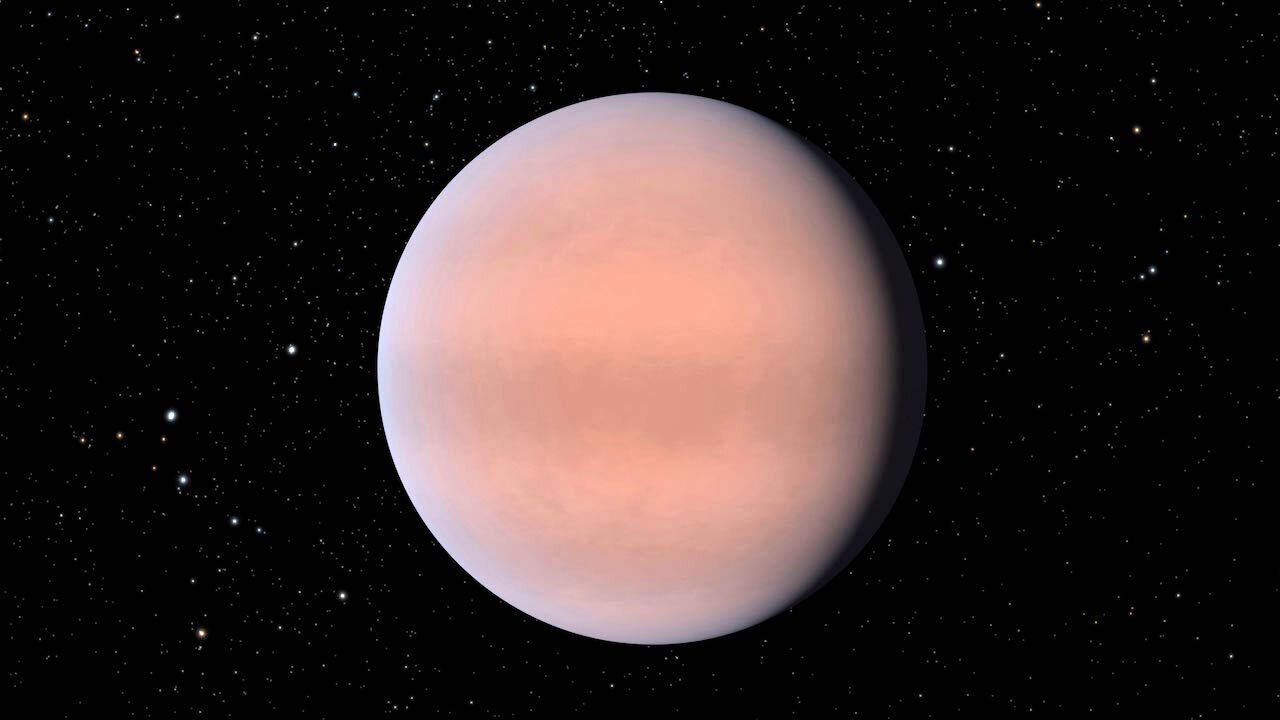
    “Super Neptune” Exoplanet TOI-674 b
    Illustration of a “super Neptune,” TOI-674 b, with an atmosphere that, according to a recent study, includes water vapor. Credit: NASA/JPL-Caltech

    The discovery: Water vapor in the atmosphere of planet TOI-674 b.

    Key facts: This recently discovered planet, a bit bigger than Neptune and orbiting a red-dwarf star about 150 light-years away, places it in an exclusive club: exoplanets, or planets around other stars, known to have water vapor in their atmospheres. Many questions remain, such as how much water vapor its atmosphere holds. But TOI-674 b’s atmosphere is far easier to observe than those of many exoplanets, making it a prime target for deeper investigation.

    Details: The planet’s distance, size, and relationship to its star make it especially accessible to spaceborne telescopes. At 150 light-years, it’s considered “nearby” in astronomical terms. The star itself, relatively cool and less than half as big around as our Sun, can’t be seen from Earth with the naked eye, but this too translates into an advantage for astronomers. As the comparatively large planet – in a size-class known as “super Neptune” – crosses the face of its smallish star, starlight shining through its atmosphere can be more easily analyzed by our telescopes. Those equipped with special instruments called spectrographs ­– including the just-launched James Webb Space Telescope – can spread this light into a spectrum, revealing which gases are present in the planet’s atmosphere.

    The discovery grew from a partnership between the tried-and-true Hubble Space Telescope and TESS, NASA’s Transiting Exoplanet Survey Satellite, launched in 2018. The planet was first found by TESS, then its light spectrum was measured by Hubble. Data from the now-retired Spitzer Space Telescope also helped astronomers tease out some of the planet’s atmospheric components. If the Webb telescope, once it’s up and running, is turned on TOI-674 b, it should be able to examine the planet’s atmosphere in far more detail.

    Only three other Neptune-sized exoplanets have had aspects of their atmospheres revealed so far, though the advent of telescopes like Webb promises a golden age in the study of exoplanet atmospheres.

    Fun facts: The new planet can claim membership in another exclusive group: inhabitants of the so-called “Neptune Desert.” TOI-674 b orbits its small star so tightly that a “year” on this planet, once around the star, takes less than two days. But among the thousands of exoplanets confirmed in our galaxy so far, a strange pattern has emerged: Planets in the size-class between Neptune and Jupiter are extremely rare in orbits of three days or less. The rarity of such planets, and the analysis of those that do turn up, could provide important clues to the formation of planetary systems in general – including our own.

    The discoverers: An international team of scientists, led by Jonathan Brande of the University of Kansas, contributed to the new study of water vapor on TOI-674 b, which has been submitted to an academic journal. They included researchers from the NASA Ames Research Center and from IPAC and other research centers at Caltech.

    Never miss a breakthrough: Join the SciTechDaily newsletter.
    Follow us on Google and Google News.

    Astronomy Exoplanet NASA Planets Popular
    Share. Facebook Twitter Pinterest LinkedIn Email Reddit

    Related Articles

    Perpendicular Planet: A 90° Orbit Over Twin Suns Leaves Scientists Stunned

    A Century-Old Cosmic Mystery Solved – Four Hidden Planets Found Near Earth

    In the “Hot Neptune Desert,” a Rare Planet Offers Clues to Cosmic Mysteries

    New Earth-Sized Planet Discovered Orbiting a Star That Will Live 100 Billion Years

    NASA Discovery Alert: A “Super-Earth” in the Habitable Zone Only 137 Light-Years Away

    Cyclones in Space? See How Hubble Uncovered Extreme Weather on a Distant Planet

    Cold Planets Exist Throughout the Milky Way – Even in the Galactic Bulge

    Discovery Alert: A “Cool” Neptune-Like Planet – With Plenty of Atmosphere?

    Hubble Discovers a Strange Exoplanet That Resembles the Long-Sought “Planet Nine”

    Leave A Reply Cancel Reply

    • Facebook
    • Twitter
    • Pinterest
    • YouTube

    Don't Miss a Discovery

    Subscribe for the Latest in Science & Tech!

    Trending News

    Collapsing Plasma May Hold the Key to Cosmic Magnetism

    This Breakthrough Solar Panel Generates Power From Both Sunlight and Raindrops

    Scientists Uncover New Metabolic Effects Beyond Weight Loss of Mounjaro

    Scientists Discover Cancer Tumors Are “Addicted” to This Common Antioxidant

    1,800 Miles Down: Scientists Uncover Mysterious Movements at the Edge of Earth’s Core

    Scientists Discover Hidden “Good Fats” in Green Rice That Could Transform Nutrition

    Your Child’s Clothes Could Contain Toxic Lead, Study Finds

    Researchers Break a 150-Year-Old Math Law With a Surprising Donut Discovery

    Follow SciTechDaily
    • Facebook
    • Twitter
    • YouTube
    • Pinterest
    • Newsletter
    • RSS
    SciTech News
    • Biology News
    • Chemistry News
    • Earth News
    • Health News
    • Physics News
    • Science News
    • Space News
    • Technology News
    Recent Posts
    • Quantum Batteries Edge Closer to Reality With New Breakthrough
    • AI Is Rewriting History – With Outdated Neanderthal Facts
    • Physicists Observe Matter in Two Places at Once in Mind-Bending Quantum Experiment
    • Stanford Scientists Discover Hidden Brain Circuit That Fuels Chronic Pain
    • Johns Hopkins Scientists Develop Nasal DNA Vaccine for Tuberculosis
    Copyright © 1998 - 2026 SciTechDaily. All Rights Reserved.
    • Science News
    • About
    • Contact
    • Editorial Board
    • Privacy Policy
    • Terms of Use

    Type above and press Enter to search. Press Esc to cancel.