

Survey conducted in Germany, Austria, and Switzerland suggests that COVID-19 lockdown measures exacerbated chronic pain, particularly among women.
COVID-19 lockdown measures appear to have had drastically different effects on men and women living with chronic pain, with women experiencing greater pain severity, according to new research being presented at Euroanaesthesia, the annual meeting of the European Society of Anaesthesiology and Intensive Care (ESAIC), held online this year.
The difference between women and men could be linked to the extra care responsibilities and emotional response generated by the pandemic, researchers say.
Previous research suggests that high-stress situations including war and the aftermath of terrorist attacks can exacerbate chronic pain. During COVID-19 lockdowns around the world, vulnerable groups were particularly hard hit by increased isolation, loneliness, anxiety, and financial uncertainty as well as being unable to access usual care. However, the psychosocial consequences of COVID-19 on people with chronic pain has not been fully studied.
Chronic Pain and Gender Inequalities During COVID
“Our research suggests that the pandemic may have exacerbated chronic pain problems and some gendered inequalities,” says lead author Dr Kordula Lang-Illievich from the Medical University of Graz in Austria. “With chronic pain affecting around 20% of the EU adult population, it is vital to understand how people living with chronic pain are being affected by the pandemic and to develop pain management interventions that clearly target women.”
To investigate how COVID-19 lockdown restrictions in Germany, Austria, and Switzerland impacted people with chronic pain, researchers invited adults taking part in self-help groups who had experienced chronic pain for at least 1 year to complete a web-based survey. Participants were asked about pain intensity (measured using the Visual Analogue Scale 0–100, with 0 being no pain) before and during the COVID-19 lockdown. They were also questioned about pharmacological and non-pharmacological pain management, physical activity, social and psychological factors.
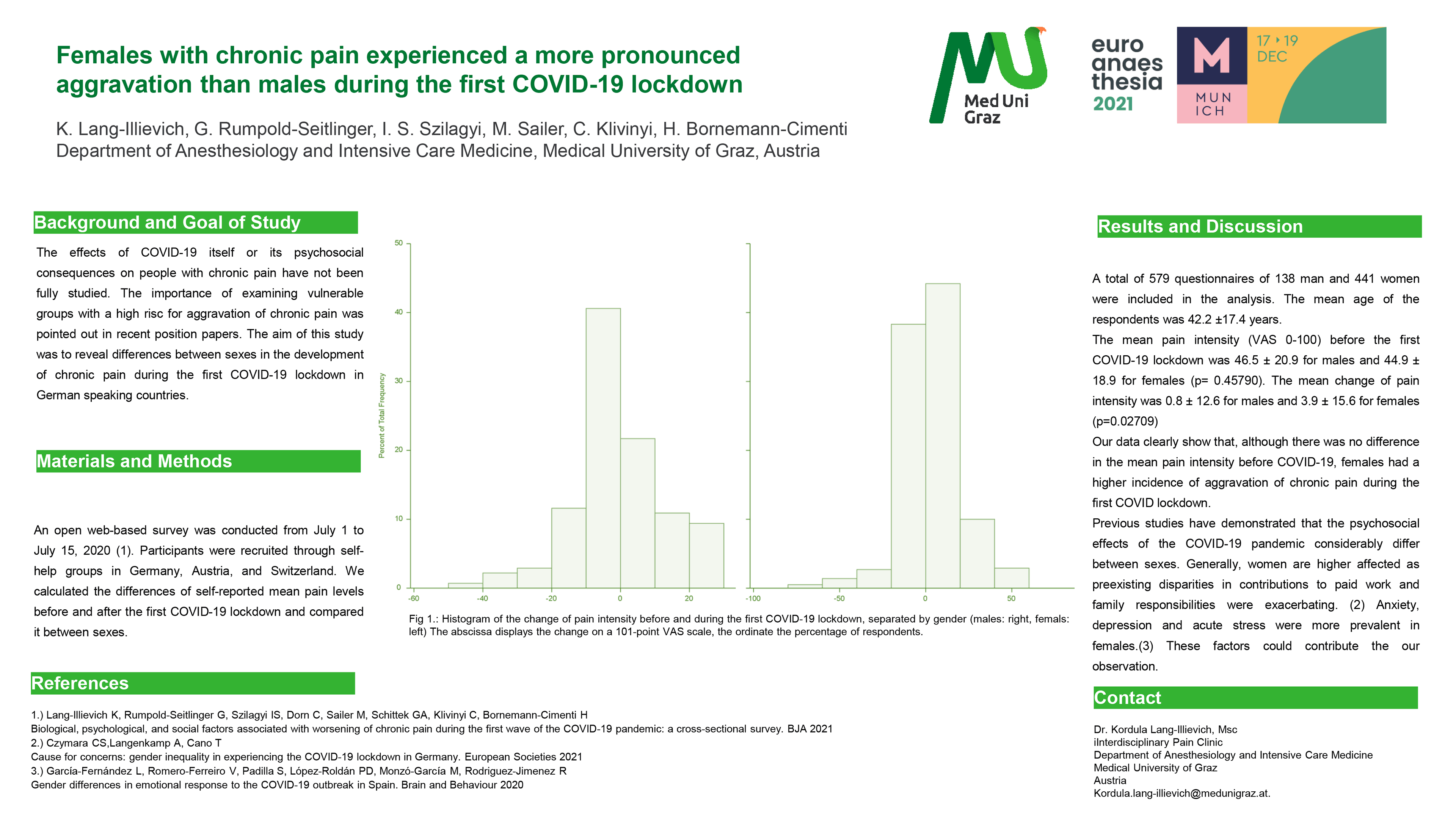
Of the 579 responses received between July 1 and July 15, 2020, 138 were from men and 441 from women (average age 42 years), most were from Germany (56%), Austria (33%), and Switzerland (11%). The researchers calculated the differences in self-reported average pain levels before and after the first COVID-19 lockdown and compared levels between sexes.
Responses indicated that women with chronic pain perceived increased pain severity during the first lockdown, compared to their typical pain levels prior to lockdown. While average pain intensity score (VAS 0-100) before the first COVID-19 lockdown was similar in men (46.5) and women (45), the average change in pain intensity was much lower in men (0.8) than women (3.9).
Explaining Women’s Higher Pain Aggravation
“Although reported pain intensity between men and women was similar before COVID-19, our data clearly show that women experienced a higher aggravation of chronic pain during the first lockdown,” says Lang-Illievich. “This is likely to reflect the disproportionate impact of lockdowns on women, especially the extra caregiving responsibilities, rise in domestic violence, and their increased vulnerability to anxiety, depression, and acute stress—all of which would be expected to impact pain symptoms.”
Meeting: Euroanaesthesia
The authors note several limitations of the study, including the over-representation of young women, single individuals, and higher education levels, as well as the retrospective self-reporting. The survey was also restricted to German speaking countries, so a generalization of the data and their interpretation is not possible.
Never miss a breakthrough: Join the SciTechDaily newsletter.
Follow us on Google and Google News.