
Unveiled Within the DNA of Unicellular Organisms Lie Thousands of Enigmatic Viruses
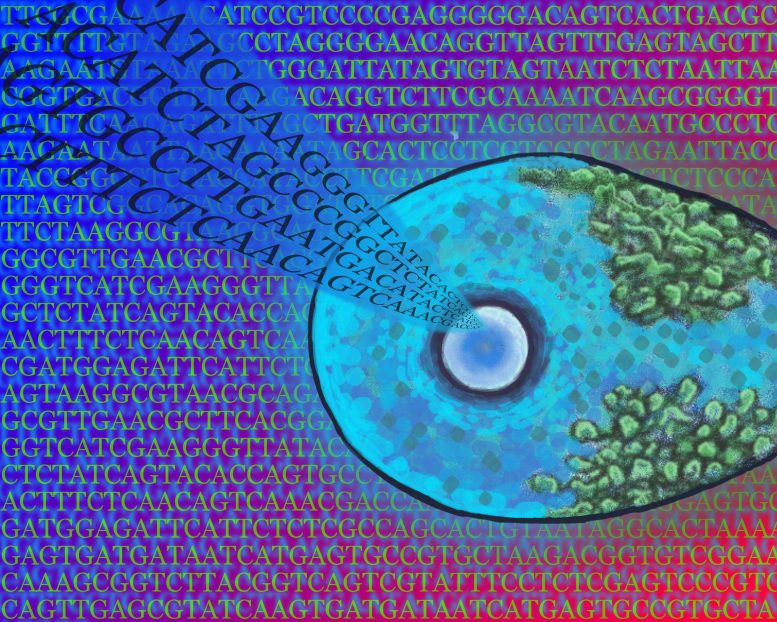
Researchers at the University of Innsbruck, utilizing the high-performance computing cluster known as “Leo,” have identified more than 30,000 new viruses embedded within the DNA of unicellular organisms. Remarkably, they discovered that up to 10% of microbial DNA can consist of built-in viruses.

Dr. Christopher Bellas, Marie-Sophie Plakolb, and Prof. Ruben Sommaruga from the Department of Ecology were carrying out an extensive analysis of complex unicellular microbes when they stumbled upon this extraordinary finding. They discovered that these hitherto unknown viruses were encoded directly into the microbe’s genetic structure. This “hidden” viral DNA could potentially enable the creation of fully functional viruses within the host cell.
“We were very surprised by how many viruses we found through this analysis,” says Bellas. “In some cases, up to 10% of a microbe’s DNA turned out to consist of hidden viruses.” These viruses do not appear to harm their hosts. On the contrary, some may even protect them. Many appear to be similar to so-called virophages. These viruses infect and destroy other, harmful viruses that infect their host cell.
The study, financed by the Austrian Science Fund (FWF), was published in the renowned journal Proceedings of the National Academy of Sciences (PNAS) and was carried out in collaboration with researchers from the Max Planck Institute for Medical Research and the University of Groningen.
Viruses as Protectors
From bacteria to humans, all life forms are continuously infected with viruses. Some are constantly present, but only occasionally trigger symptoms, such as the herpes virus in humans. Others hide even deeper, becoming part of their host’s DNA. This study found that many of the Earth’s abundant single-celled eukaryotic (complex) organisms are packed with viruses. These organisms are found everywhere, and include abundant algae in lakes and oceans, amoebae in soil, as well as human parasites.
“Why so many viruses are found in the genomes of microbes is not yet clear,” says Bellas. “Our strongest hypothesis is that they protect the cell from infection by dangerous viruses.” Many eukaryotic single-celled organisms are infected by “giant viruses”, a group of viruses that can be as large as bacteria. These infections kill the host as they create new copies of the giant virus. However, when a virophage resides in the host cell, it ‘reprograms’ the giant virus to build virophages. As a result, the giant virus can sometimes be fended off and the host cell population is saved from destruction.

The DNA of the newly discovered viruses is similar to virophage DNA. Therefore, it is probable that the host microbes protect themselves from giant viruses through these built-in viruses.
DNA From an Alpine Lake
The research project was originally based on a new group of viruses that Bellas and Sommaruga discovered in the water of the Gossenköllesee in Tyrol, Austria, in 2021. “Initially, we wanted to find the origin of the new ‘Polinton-like viruses’ with our study,” explains Bellas. “However, we did not know which organisms are usually infected by these viruses. That’s why we conducted a large-scale study to test all microbes whose DNA sequences are known.”
The huge data set that the researchers examined only contains DNA sequences, i.e. a sequence of the letters ATGC from which all genes are encoded. Nevertheless, the data set consists of several hundred gigabytes.
The sequences of viruses, tiny by comparison, could only be found in this large amount of data thanks to state-of-the-art technology. With the high-performance computer cluster “Leo” of the University of Innsbruck, the data set could be analyzed quickly. DNA sequences from microbes were also read using the new Oxford Nanopore technology. With this technology, DNA is passed through tiny pores in a membrane. Each base – A, G, C, or T – interrupts an electric current and thus generates a signal from which the DNA sequence can be read.
In the end, the researchers found much more than the viruses they were looking for. This unexpected discovery will inspire more research to study the roles that these viruses play.
Reference: “Large-scale invasion of unicellular eukaryotic genomes by integrating DNA viruses” by Christopher Bellas, Thomas Hackl, Marie-Sophie Plakolb, Anna Koslová, Matthias G. Fischer and Ruben Sommaruga, 10 April 2023, Proceedings of the National Academy of Sciences.
DOI: 10.1073/pnas.2300465120
The study was funded by the Austrian Science Fund.
Never miss a breakthrough: Join the SciTechDaily newsletter.
Follow us on Google and Google News.