

Researchers traced the genetic history of aurochs, revealing ancient migrations, distinct populations, and the impact of climate and domestication on cattle’s ancestors.
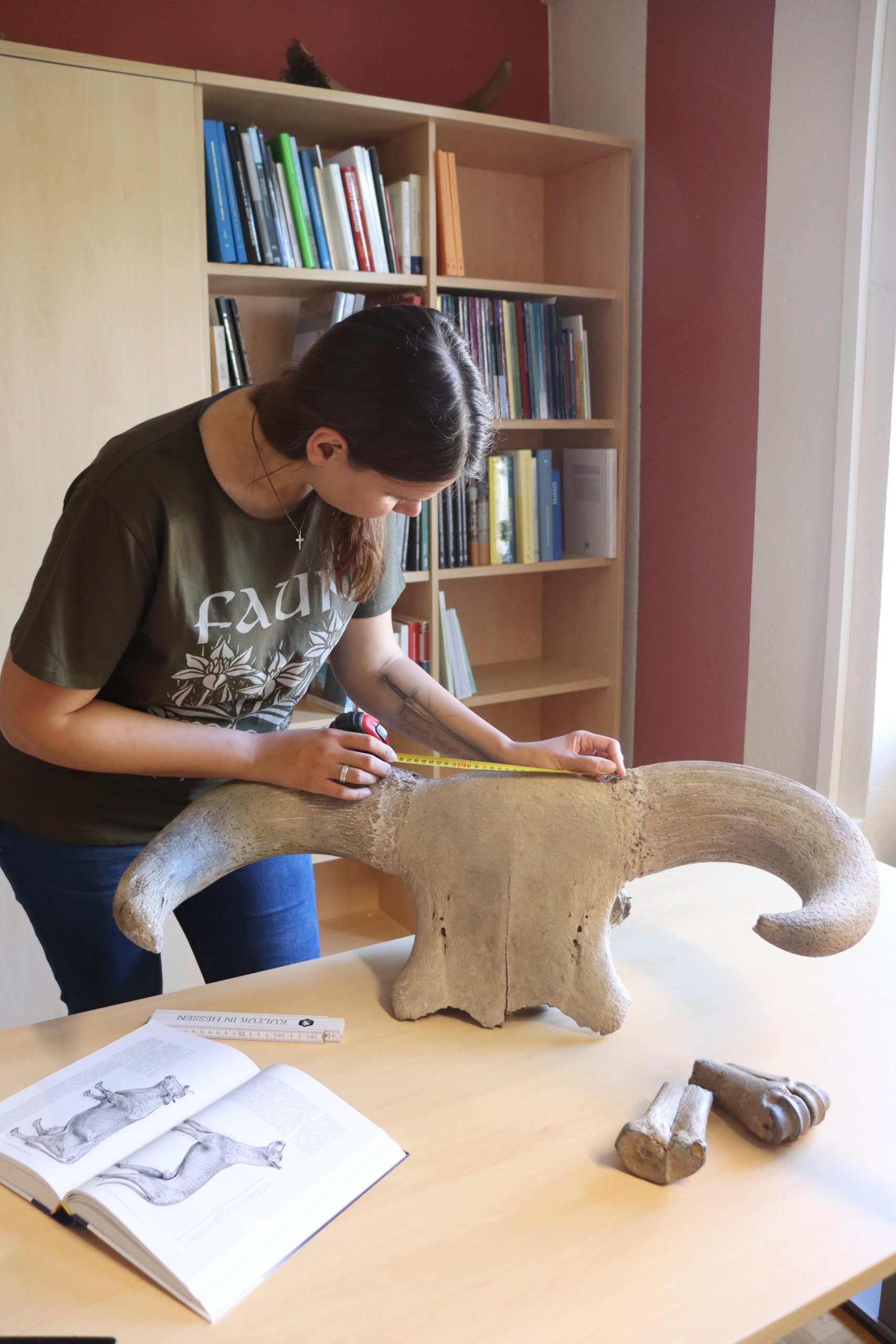
Geneticists at Trinity College Dublin, along with an international research team, have unraveled the ancient history of aurochs—the creatures central to some of the most iconic early human art—by analyzing 38 genomes extracted from bones spanning 50,000 years and stretching from Siberia to Britain.
The aurochs roamed in Europe, Asia, and Africa for hundreds of thousands of years. Adorned as paintings on many a cave wall, their domestication to create cattle gave us a harnessed source of muscle, meat, and milk. Such was the influence of this domestication that today their descendants make up a third of the world’s mammalian biomass.
Dr. Conor Rossi, Trinity, first author of the article that has just been published in the leading international journal Nature, said: “The aurochs went extinct approximately 400 years ago, which left much of their evolutionary history a mystery. However, through the sequencing of ancient DNA, we have gained detailed insight into the diversity that once thrived in the wild as well as enhanced our understanding of domestic cattle.”
Origins and Migration Patterns of Aurochs
Although fossils of aurochs found in Europe date back 650,000 years ago, about the time archaic species of human, appeared in the continent, animals from the east and west extremes of Eurasia share a much more recent common ancestry, pointing toward a replacement around 100,000 years ago, probably by migrations out of a southern Asian homeland.
In an echo of human prehistory, this replacement was not complete, with traces of earlier ancestry surviving in European aurochs.
Dr. Mikkel Sinding, co-author and postdoctoral researcher in the Department of Biology, University of Copenhagen, said: “We normally think of the European aurochs as one common form or type, but our analyses suggest there were three distinct aurochs populations alone in Europe – a Western European, an Italian, and a Balkan. There was thus a greater diversity in the wild forms than we had ever imagined.”
Climate Change’s Impact on Aurochs Genetics
Intriguingly, climate change also wrote its signature in aurochs genomes in two ways:
First, European and north Asian genomes separated and diverged at the beginning of the last ice age, around 100,000 years ago, and did not seem to mix until the world warmed up again at its end. And second, genome-estimated population sizes dropped in the glacial period, with a more pronounced hard time endured by European herds. These lost the most diversity when they retreated to separated refugia in southern parts of the continent before repopulating it again afterward.
The most pronounced drop in genetic diversity occurs between the period when the aurochs of southwest Asia were domesticated in the north of the Fertile Crescent, just over 10,000 years ago, to give the first cattle. Remarkably only a handful of maternal lineages (as seen via mitochondrial DNA which is handed down via mothers to their offspring) come through this process into the cattle gene pool.
“Although Caesar exaggerated when he said it was like an elephant, the wild ox must have been a highly dangerous beast and this hints that its first capture and taming must have happened with only a very few animals,” said Dan Bradley, Professor in Trinity’s School of Genetics and Microbiology, who led the study.
“However, the narrow genetic base of the first cattle was augmented as they first traveled with their herders west, east, and south. It is clear that there was early and pervasive mating with wild aurochs bulls, leaving a legacy of the four separate preglacial aurochs ancestries that persists among the domestic cattle of today.”
Reference: “The genomic natural history of the aurochs” by Conor Rossi, Mikkel-Holger S. Sinding, Victoria E. Mullin, Amelie Scheu, Jolijn A. M. Erven, Marta Pereira Verdugo, Kevin G. Daly, Marta Maria Ciucani, Valeria Mattiangeli, Matthew D. Teasdale, Deborah Diquelou, Aurélie Manin, Pernille Bangsgaard, Matthew Collins, Tom C. Lord, Viktor Zeibert, Roberto Zorzin, Michael Vinter, Zena Timmons, Andrew C. Kitchener, Martin Street, Ashleigh F. Haruda, Kristina Tabbada, Greger Larson, Laurent A. F. Frantz, Birgit Gehlen, Francesca Alhaique, Antonio Tagliacozzo, Mariagabriella Fornasiero, Luca Pandolfi, Nadezhda Karastoyanova, Lasse Sørensen, Kirill Kiryushin, Jonas Ekström, Maria Mostadius, Aurora Grandal-d’Anglade, Amalia Vidal-Gorosquieta, Norbert Benecke, Claus Kropp, Sergei P. Grushin, M. Thomas P. Gilbert, Ilja Merts, Viktor Merts, Alan K. Outram, Erika Rosengren, Pavel Kosintsev, Mikhail Sablin, Alexey A. Tishkin, Cheryl A. Makarewicz, Joachim Burger and Daniel G. Bradley, 30 October 2024, Nature.
DOI: 10.1038/s41586-024-08112-6
Never miss a breakthrough: Join the SciTechDaily newsletter.
Follow us on Google and Google News.