
Close Menu
    Facebook X (Twitter) Instagram
    SciTechDaily
    • Biology
    • Chemistry
    • Earth
    • Health
    • Physics
    • Science
    • Space
    • Technology
    Facebook X (Twitter) Pinterest YouTube RSS
    SciTechDaily
    Home»Space»Ancient River Systems on Mars Seen in Unprecedented Detail
    Space

    Ancient River Systems on Mars Seen in Unprecedented Detail

    By Katie Pavid, Natural History MuseumAugust 3, 2020No Comments4 Mins Read
    Facebook Twitter Pinterest Telegram LinkedIn WhatsApp Email Reddit
    Share
    Facebook Twitter LinkedIn Pinterest Telegram Email Reddit
    Mars Global Surveyor
    Mars, as seen by Mars Global Surveyor in 2003. Credit: NASA/JPL-Caltech/MSSS

    A satellite has revealed ancient Martian rivers in more detail than ever before.

    Researchers have spent decades looking for evidence of ancient water on Mars. As technology has progressed, more evidence has come to light that rivers, lakes, and even oceans were once abundant on the red planet.

    Modern Mars is icy and dusty and unlikely to have much liquid water on the surface, if any at all. But billions of years ago, Mars was warmer and could have had enough liquid water to support life. In fact, experts think Mars is one of the most likely places we will find evidence of extraterrestrial life.
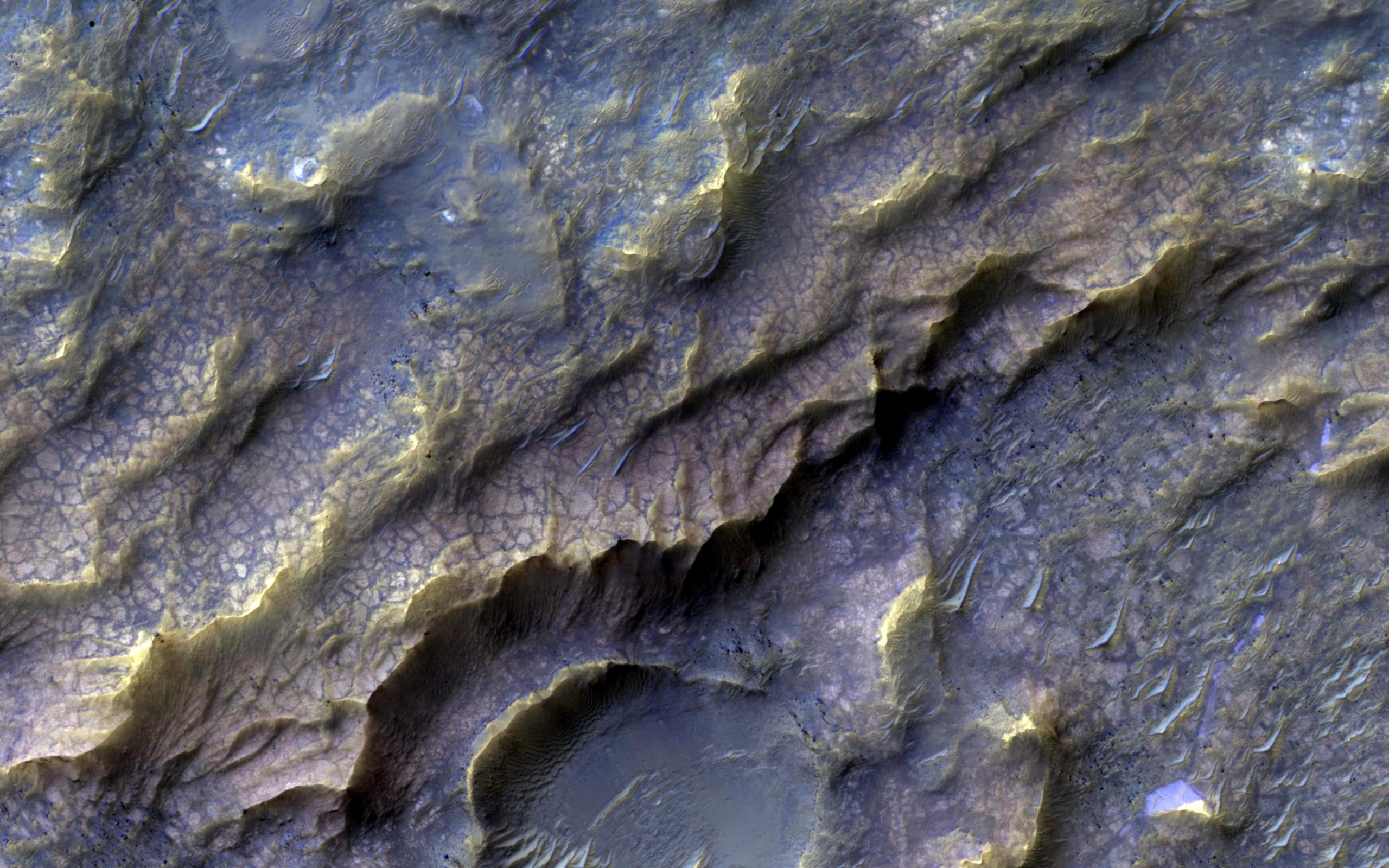
    Martian Surface Rock
    This NASA image shows a Martian surface created by rock interacting with water. The nature of the water responsible for the alteration, and how it interacted with the rock to form the clay remains poorly understood. Not surprisingly, the study of such altered rocks on Mars is an area of active investigation. Credit: NASA.

    A high-resolution satellite has captured detailed images of a rocky Martian cliff face revealing that it was formed by rivers more than 3.7 billion years ago. That is roughly the same time that life was starting to begin on Earth.

    It’s the first time that scientists have been able to examine these kinds of rocks up close.

    Geologists Dr. Francesco Salese and William McMahon from Utrecht University, the Netherlands, were supported by an international team including Dr. Matt Balme at the Open University and Dr. Joel Davis, a postdoctoral researcher at the Museum. Their findings are published in the journal Nature Communications.

    Joel says, “We’ve never seen an outcrop with this amount of detail on it that we can definitely say is so old. This is one more piece of the puzzle in the search for ancient life on Mars, providing novel insight into just how much water occupied these ancient landscapes.”

    The team examined images of taken by NASA’s High-Resolution Imaging Science Experiment (HiRISE) on the Mars Reconnaissance Orbiter spacecraft. The images were taken inside the enormous Hellas impact crater in the southern Martian hemisphere, one of the largest impact craters in the solar system.
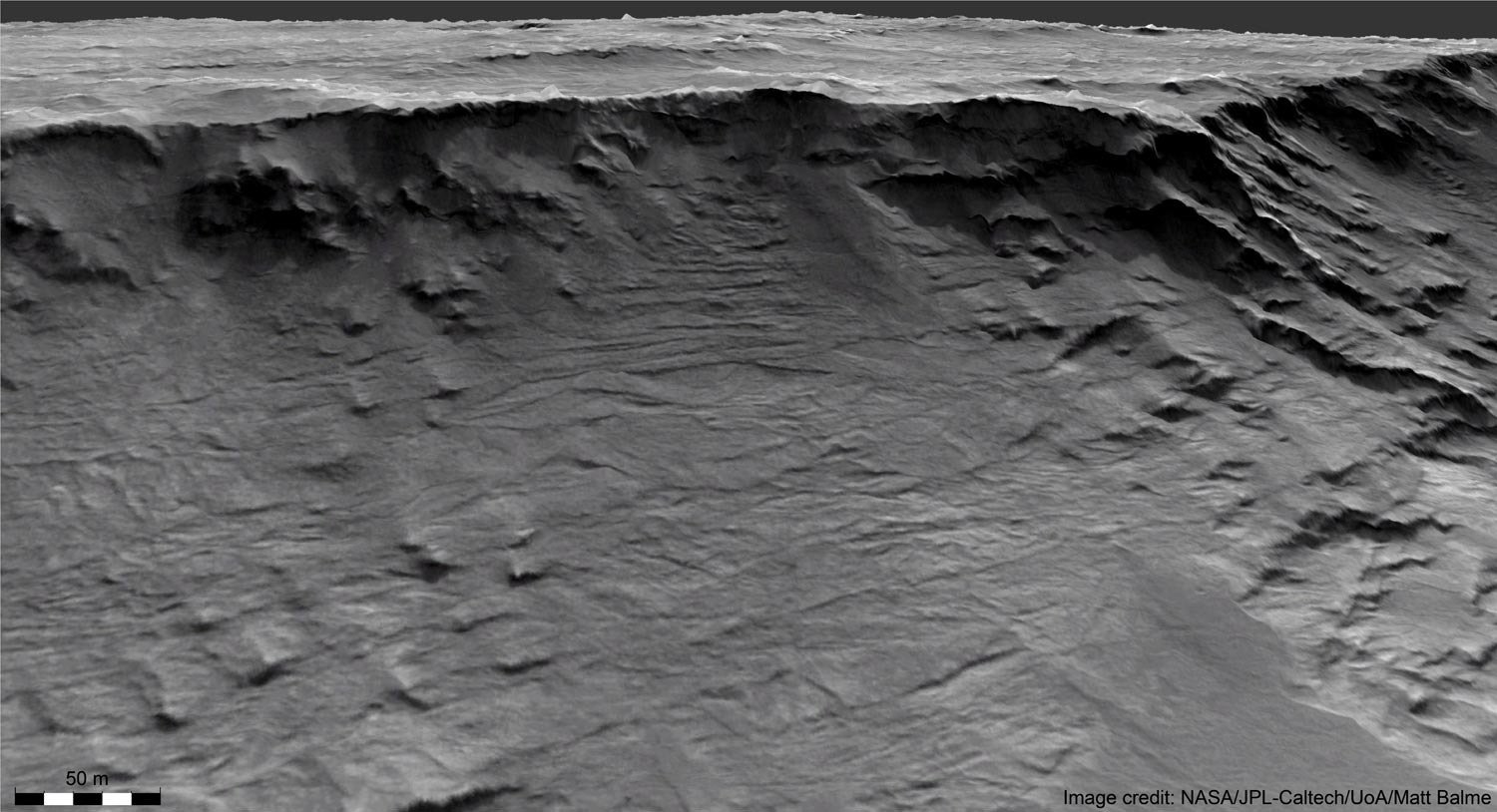
    Channels Hellas Basin Mars
    The satellite image of the exposed Martian cliff face. Channel-forms preserved in sedimentary strata in the Hellas Basin on Mars. These well-exposed channels are archived evidence of long-lived rivers active on the Martian surface over 3.7 billion yrs ago. Credit: NASA JPL-Caltech UoA Matt Balme & William McMahon

    A 200-meter-thick stack of layered rocks is visible within the cliff walls, shown in enough detail that Joel and his colleagues could be sure they are sedimentary rocks, formed by running water. The rivers would have continuously shifted their gullies, creating sandbanks.

    The images also show that the river processes that formed these rocks occurred over a very long time period.

    Joel explains, “The rivers that formed these rocks weren’t just a one-off event — they were probably active for tens to hundreds of thousands of years.”

    This evidence bolsters hope that sedimentary rocks from this period could be ideal for the search for evidence of past life on Mars.

    William McMahon, co-lead author of the paper, says, ‘Here on Earth, sedimentary rocks have been used by geologists for generations to place constraints on what conditions were like on our planet millions or even billions of years ago.

    “Now we have the technology to extend this methodology to another terrestrial planet, Mars, which hosts an ancient sedimentary rock record that extends even further back in time than our own.”
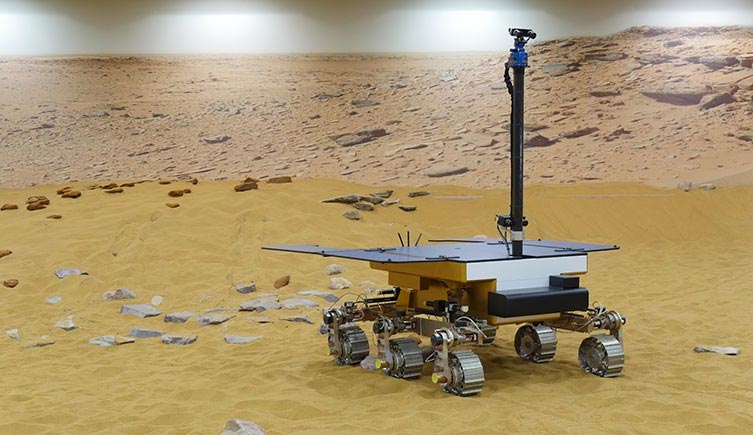
    ExoMars Rover Prototype Bruno
    The ExoMars rover prototype Bruno. ExoMars 2020 will be the first mission to take core samples from deep within the Martian surface. Credit: Natural History Museum

    ExoMars

    In 2022, the European Space Agency (ESA) is due to launch the Rosalind Franklin ExoMars Rover, which will explore similar terrains to determine whether there has ever been life on Mars, and to better understand the history of water on the planet.

    Joel and his colleagues at the Museum will help the ESA team to interpret the rover’s findings. These new images are a great sign that the rover could be successful in its mission.

    Read Reading Martian Rocks in Unparalleled Detail to Find Ancient Water on Mars for more on this research.

    Reference: “Sustained fluvial deposition recorded in Mars’ Noachian stratigraphic record” by Francesco Salese, William J. McMahon, Matthew R. Balme, Veronique Ansan, Joel M. Davis and Maarten G. Kleinhans, 5 May 2020, Nature Communications.
    DOI: 10.1038/s41467-020-15622-0

    Never miss a breakthrough: Join the SciTechDaily newsletter.
    Follow us on Google and Google News.

    ExoMars Mars Natural History Museum
    Share. Facebook Twitter Pinterest LinkedIn Email Reddit

    Related Articles

    From Earth to Mars: Rosalind Franklin’s Century of Science

    ExoMars Robotic Explorer: Mars Exploration Revival

    In Search for Life on Mars, NASA Takes First Step to Allow Computers to Decide What to Tell Us

    Unique Green Glow Spotted on Mars – First Time Around a Planet Other Than Earth

    Rigorous Sterilization for Planetary Protection

    ExoMars Rover Launch Postponed Until 2022 Due to Coronavirus and Additional Testing

    Chemistry Lab on ExoMars Rover Will Seek Evidence of Life on Mars

    ESA and Russian Space Mission Steps Up the Search for Life on Mars

    First Images from ExoMars Mission

    Leave A Reply Cancel Reply

    • Facebook
    • Twitter
    • Pinterest
    • YouTube

    Don't Miss a Discovery

    Subscribe for the Latest in Science & Tech!

    Trending News

    Beyond Pain Relief: Scientists Discover a Protein That Could Stop Osteoarthritis in Its Tracks

    Scientists Discover Why Alcohol Prevents the Liver From Healing, Even After You Quit

    Scientists Stunned As Volcano Removes Methane From the Air

    Scientists Discover Signs Africa May Be Splitting Apart Beneath Zambia

    Common Blood Pressure Drug Supercharges Cancer Treatment in Surprising New Study

    540-Million-Year-Old Fossils Reveal a Huge Surprise About Early Life on Earth

    Scientists Reverse Stroke Damage Using Stem Cells in Breakthrough Study

    Eating One Egg a Day Could Cut Alzheimer’s Risk by 27%

    Follow SciTechDaily
    • Facebook
    • Twitter
    • YouTube
    • Pinterest
    • Newsletter
    • RSS
    SciTech News
    • Biology News
    • Chemistry News
    • Earth News
    • Health News
    • Physics News
    • Science News
    • Space News
    • Technology News
    Recent Posts
    • Physicists Observe Strange Quantum Rotation Effect That Defies Intuition
    • Europe Was Never a Giant Dark Forest, New 20-Million-Year Study Reveals
    • Scientists Discover Bizarre 100-Million-Year-Old Insect With Giant Claws
    • New Study Challenges What We Know About Consciousness and the Brain
    • Scientists Discover Ancient “Language Switches” Hidden in Human DNA
    Copyright © 1998 - 2026 SciTechDaily. All Rights Reserved.
    • Science News
    • About
    • Contact
    • Editorial Board
    • Privacy Policy
    • Terms of Use

    Type above and press Enter to search. Press Esc to cancel.