
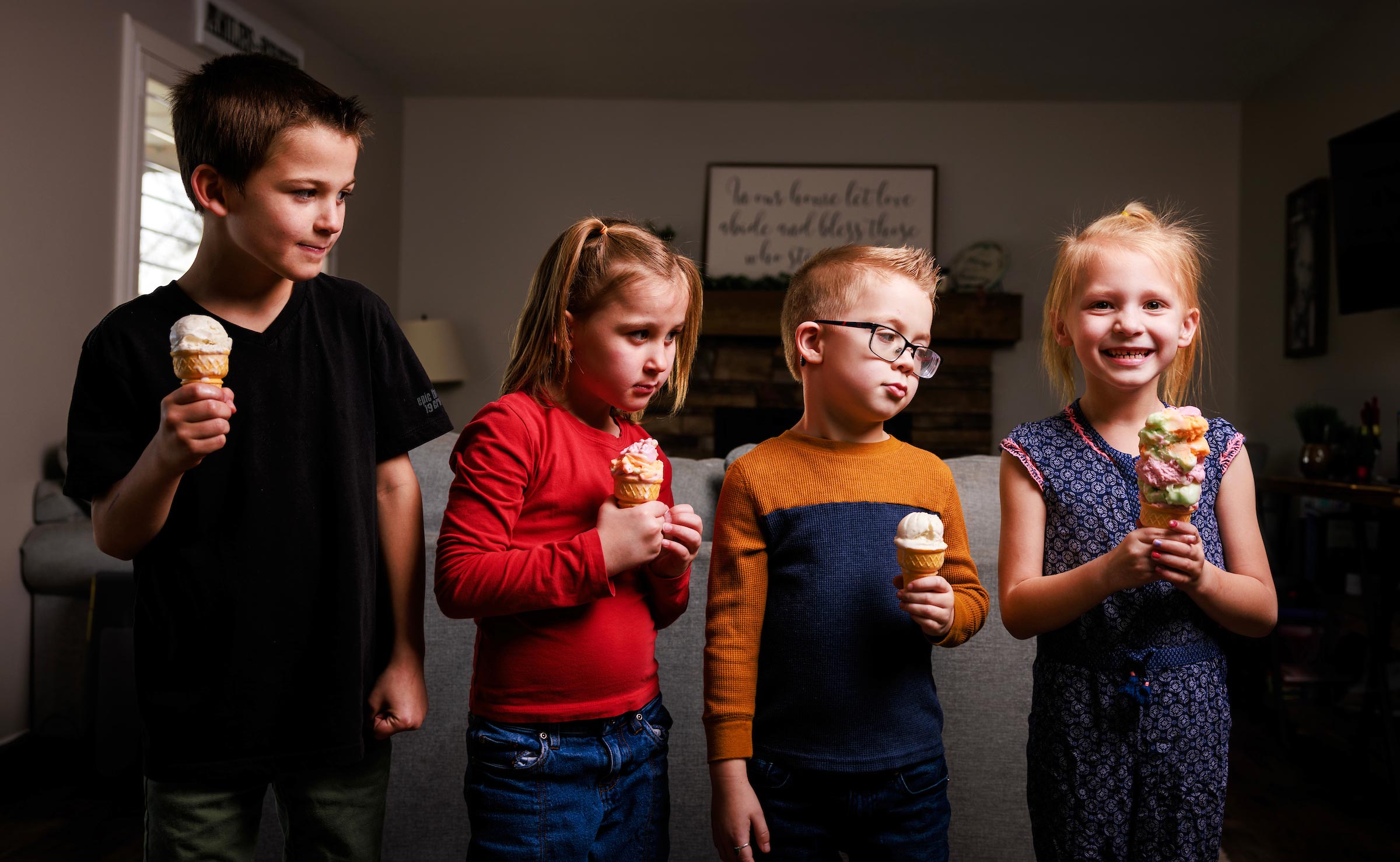
Study reveals parents tend to favor younger siblings, daughters, and the more agreeable — often without realizing it.
BYU’s latest research delves into sibling rivalries and parental favoritism, revealing that parents tend to favor younger siblings and daughters. It highlights the significance of personality in shaping parental attitudes and the crucial role of recognizing favoritism to enhance sibling relations and individual well-being.
Unraveling Sibling Rivalry and Parental Favoritism
Siblings have a special bond formed through shared experiences, family traditions, and the occasional disagreement. However, many brothers and sisters share a common question: who’s the favorite? New research from Brigham Young University (BYU) offers insight into this age-old rivalry, suggesting that parents may unconsciously favor their children based on factors like birth order, personality, and gender.
According to a study led by Alex Jensen, a professor at BYU’s School of Family Life, younger siblings tend to receive more parental attention and positive reinforcement. On the other hand, older siblings are often given more independence, with parents becoming less controlling as they mature.
“It is helpful to take the findings from this study and be aware of the patterns that could be happening in your family,” Jensen said. “When parents are aware, they can make small adjustments that benefit everyone.”
Gender and Personality Influences in Parental Treatment
The study, published in Psychological Bulletin, discovered parents tend to favor daughters slightly more than sons, although only parents tend to recognize the bias — children did not.
Personality also plays a big role. Children who are agreeable and responsible, regardless of birth order or gender, generally receive more favorable treatment as well.
“Most parents probably connect more easily with one child over another, whether that be due to personality, birth order, gender or other things like shared interests,” Jensen said. “Watch for those patterns within yourself. Pay attention to how your children react to things that could be perceived as favoritism.”
Addressing Sibling Dynamics for Family Well-Being
Jensen says it’s important to understand that these dynamics aren’t only about sibling rivalry — they’re about well-being. His other research shows that children who feel less favored by their parents are more likely to experience poor mental health and engage in problematic behavior at home or school.
“Keep an eye out for things that seem unfair. Your children will let you know if they think something is unfair. Pay attention to them when they make that known,” Jensen said. “Either they are missing perspective and understanding, or you need to make some changes in your parenting. Make sure you are open to the latter.”
To conduct the study, Jensen and his colleagues examined data from more than 19,000 individuals, drawing from a wide range of published and unpublished sources. The research provides a broad view of how parental preferences manifest and how they can influence children throughout their lives.
Practical Insights for Strengthening Family Bonds
“Sometimes parents get so concerned about treating their kids the same that they may overlook individual needs,” Jensen noted. “We’re not suggesting parents feel guilty; instead, parents can look at this research and use it as encouragement to look at places where they can improve, without going to extremes.”
Jensen says he’s hopeful that the study sheds light on family dynamics that are often felt but rarely discussed. Favoritism, whether intentional or unintentional, can shape sibling relationships and individual well-being. By recognizing these patterns, parents can foster stronger family bonds in meaningful ways.
“The simple answers are perhaps the best. Be patient with yourself and with your children,” Jensen said. “Spend time together. Do things together that you like to do. Do things together that your children like to do. Work together, serve others together, worship together. Relationships take time and time together doing a variety of things will have many positive benefits.”
Reference: “Parents favor daughters: A meta-analysis of gender and other predictors of parental differential treatment” by A. C. Jensen and M. A. Jorgensen-Wells, 2025, Psychological Bulletin.
DOI: 10.1037/bul0000458
Never miss a breakthrough: Join the SciTechDaily newsletter.
Follow us on Google and Google News.