
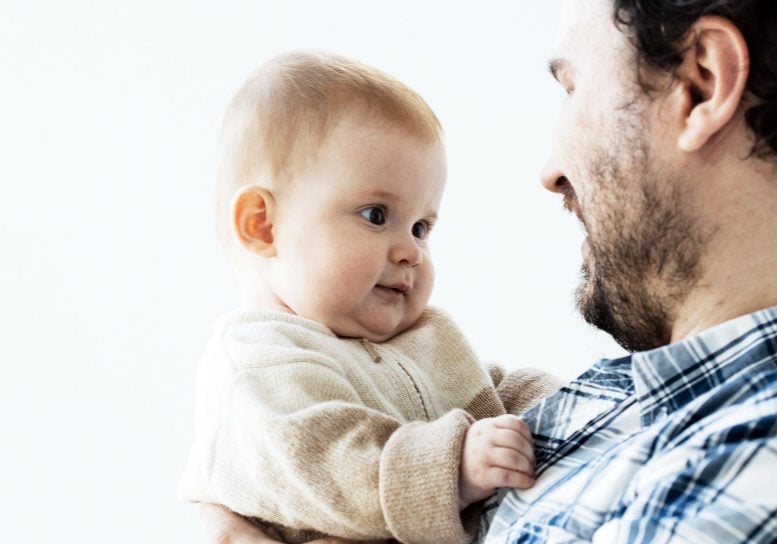
There are no differences in the desire for more children or the ideal family, according to recent research by Dr. Geva Shenkman Lachberg and his colleagues at Reichman University’s Baruch Ivcher School of Psychology.
New research conducted by Dr. Geva Shenkman Lachberg and colleagues investigates the determinants of parents’ desire for more children, as well as whether heterosexual parents want more children than same-sex parents. The study also looked at if there are any differences in the desire for additional children between lesbian mothers and homosexual fathers. Dr. Shenkman Lachberg and his colleagues polled 72 lesbian mothers through donor insemination (36 couples), 78 homosexual dads through surrogacy (39 couples), and 72 heterosexual parents (36 couples) on their desire to parent more children and their preferred number of children.
According to the findings, there are no differences between the groups in terms of either their desire for additional children or their desired family size. The study’s findings also identified the factors that lesbians, gay men, and heterosexual couples consider when deciding whether to have additional children. The current study is the first of its type to look at how lesbians, gays, and heterosexuals who are already parents vary in their desire for more children.
Israel has one of the highest fertility rates in the Western world, with an average family size of 3.1 children, compared to 1.5 in most European nations. Israel is also regarded as a powerhouse in the field of in vitro fertilization (IVF), with the greatest number of fertility clinics in proportion to its population. In a family-centered culture that encourages high birth rates, the question arises: What factors contribute to the desire to have more children? And what is the ideal number of children in a family?
Challenging Preconceived Hypotheses About Parenting Desires
The main research hypothesis was that, as was the case in previous surveys of lesbians, gays, and heterosexuals without children, lesbians and gays would report a lesser desire to be parents of more children compared to heterosexuals, as well as a smaller ideal family size. This is in light of an awareness of the difficulties involved in LGBT parenting. Previous studies have also shown that heterosexuals without children report a greater desire to be parents than childless lesbians and gays.
The findings of the present study demonstrate that, contrary to the researchers’ hypothesis, there is no difference between same-sex parents and heterosexual parents when it comes to their desire for more children, nor do they differ in their ideal number of children in the family (in the three types of families surveyed, the ideal number was around three children, similar to the national average). The researchers also showed that, regardless of the parents’ sexual orientation, a greater desire for more children was significantly correlated with the parents’ younger age, a low level of affinity to religion, a lower attribution of responsibility to children for misbehavior, and a low discrepancy between their actual and ideal number of children.
Breaking the Glass Ceiling in Family Dynamics
The explanation offered by the researchers for this lack of differences is that in Israel, which promotes childbirth and family, lesbians and gays who became parents “broke the glass ceiling” with regard to family. After becoming parents, the societal pressure to have more children appears to be the same, regardless of sexual orientation.
Dr. Geva Shenkman Lachberg, Baruch Ivcher School of Psychology, Reichman University: “In recent years, more and more lesbians and gays are becoming parents. In Israel, it has been suggested that parenting in general (regardless of sexual orientation) is the ‘entry ticket to the social consensus.’ However, until now, no study has been conducted comparing lesbian or gay parents with heterosexual parents in terms of their desire for more children or their ideal number of children, as we did here.”
Religion and Parenting Desires Among LGBT Families
An interesting point that arose from the study is that a low affinity to religion was associated with a greater desire for more children. Previous studies have shown the opposite, that a strong attachment to religion is related to a desire for more children.
The researchers explain this by saying that most of the previous studies that have found a connection between religiosity and the desire to have more children were conducted among heterosexuals and that when it comes to a sample that includes lesbians and gays, it seems that religion, which often does not support their lifestyle, may actually conflict with LGBT identity or LGBT families. Correspondingly, a lower level of importance attributed to religion was associated with a greater desire for more children.
Studies in Israel and around the world have been conducted comparing lesbians, gays, and heterosexuals without children regarding their desire to become parents in the future. These studies have shown quite consistently that lesbians and gays report a desire to parent, though at a lower level than heterosexuals.
The main explanations offered for this were that same-sex parents are aware of the high economic and legal costs associated with fertility treatments, surrogacy, and adoption, are concerned about social stigma regarding their parenthood, and assess their chances of success in becoming parents to be lower in comparison with heterosexuals. Another common explanation is that heterosexuals are under stronger social pressure to be parents than lesbians and gays.
Reference: “The desire for more children among Israeli lesbian, gay, and heterosexual couples who became parents through assisted reproduction” by Geva Shenkman Lachberg, Nicola Carone, Salvatore D’Amore, Bénédicte Mouton and Henny Bos, December 2022, Journal of Family Psychology.
DOI: 10.1037/fam0001024
The study was funded by Reichman University.
Never miss a breakthrough: Join the SciTechDaily newsletter.
Follow us on Google and Google News.
1 Comment
Didn’t include anyone in the third world? Didn’t include any mosIems? Didn’t include the low income uneducated? Hmmmmmm