
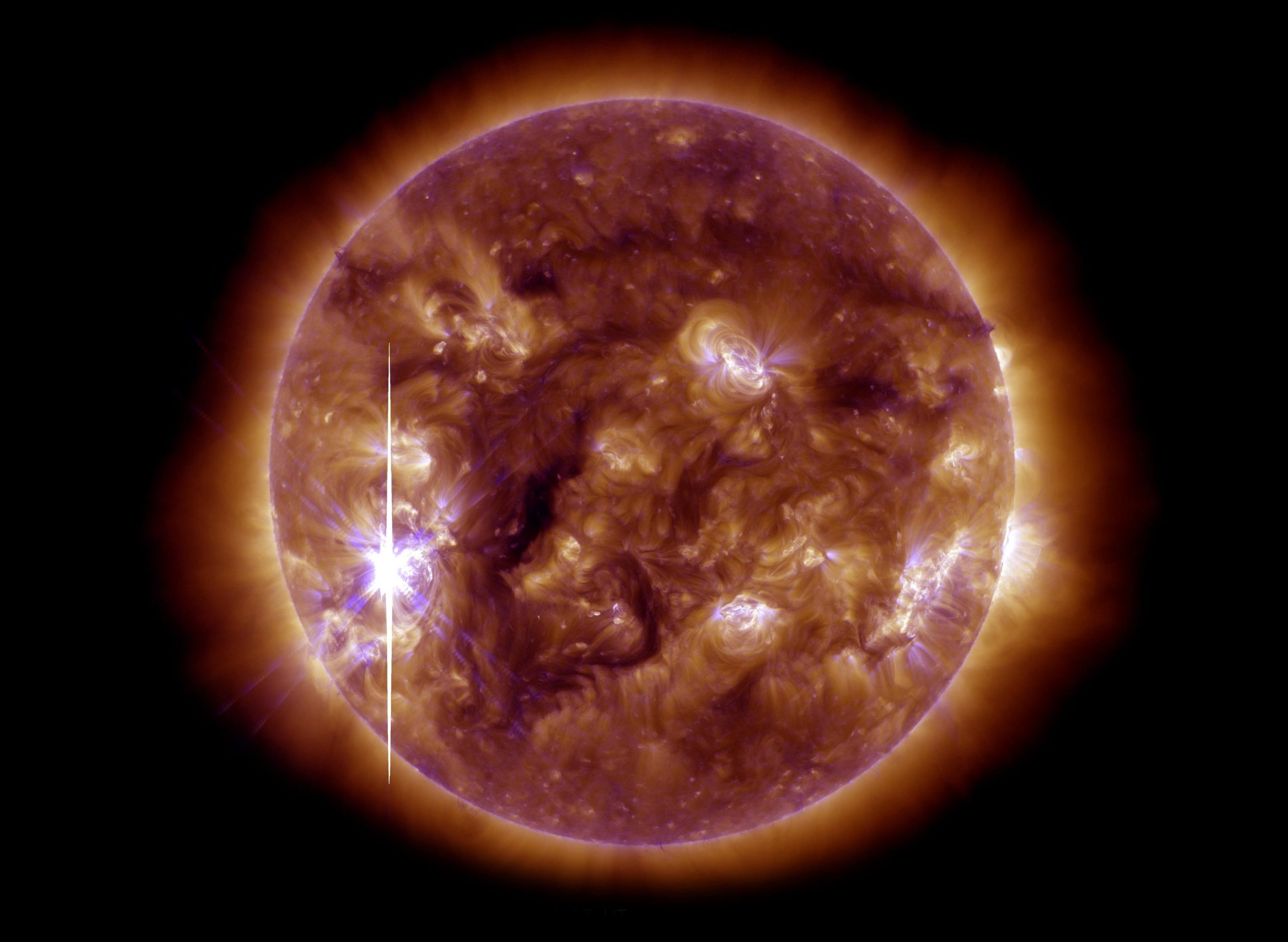
University of Chicago scientists teach a neural net to find baby star flares.
Like its human counterparts, a young star is cute but prone to temper flares—only a star’s are lethal. A flare from a star can incinerate everything around it, including the atmospheres of any nearby planets starting to form.
Finding out how often such young stars erupt can help scientists understand where to look for habitable planets. But until now, locating such flares involved poring over thousands of measurements of star brightness variations, called “light curves,” by eye.
Scientists with the University of Chicago and the University of New South Wales, however, thought this would be a task well suited for machine learning. They taught a type of artificial intelligence called a neural network to detect the telltale light patterns of a stellar flare, then asked it to check the light curves of thousands of young stars; it found more than 23,000 flares.
Published on October 23, 2020, in the Astronomical Journal and the Journal of Open Source Software the results offer a new benchmark in the use of AI in astronomy, as well as a better understanding of the evolution of young stars and their planets.
“When we say young, we mean only a million to 800 million years old,” said Adina Feinstein, a UChicago graduate student and first author on the paper. “Any planets near a star are still forming at this point. This is a particularly fragile time, and a flare from a star can easily evaporate any water or atmosphere that’s been collected.”
NASA’s TESS telescope, aboard a satellite that has been orbiting Earth since 2018, is specifically designed to search for exoplanets. Flares from faraway stars show up on TESS’s images, but traditional algorithms have a hard time picking out the shape from the background noise of star activity.
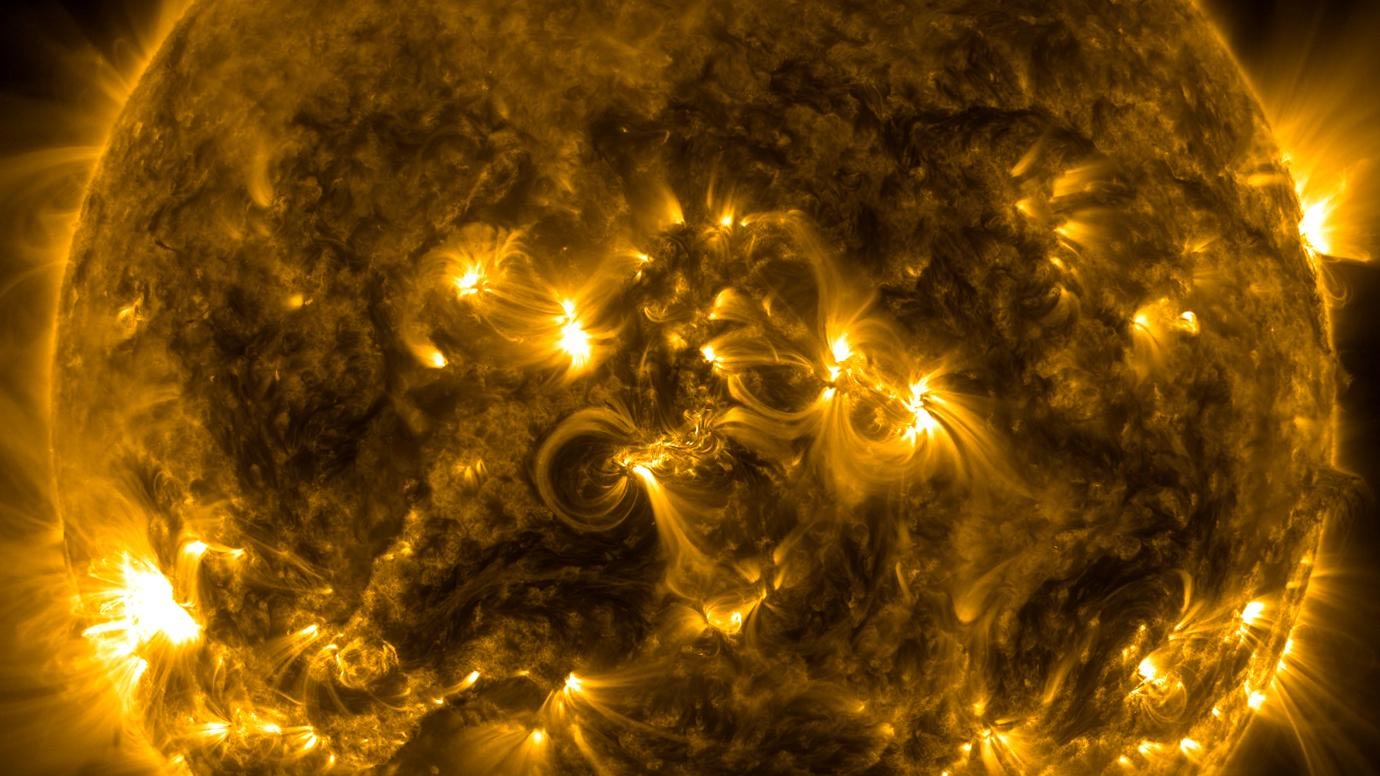
But neural networks are particularly good at looking for patterns—like Google’s AI picking cats out of internet images—and astronomers have increasingly begun to look to them to classify astronomical data. Feinstein worked with a team of scientists from NASA, the Flatiron Institute, Fermi National Accelerator Laboratory, the Massachusetts Institute of Technology and the University of Texas at Austin to pull together a set of identified flares and not-flares to train the neural net.
“It turned out to be really good at finding small flares,” said study co-author and former UChicago postdoctoral fellow Benjamin Montet, now a Scientia Lecturer at the University of New South Wales in Sydney. “Those are actually really hard to find with other methods.”
Once the researchers were satisfied with the neural net’s performance, they turned it loose on the full set of data of more than 3,200 stars.
They found that stars similar to our sun only have a few flares, and those flares seem to drop off after about 50 million years. “This is good for fostering planetary atmospheres—a calmer stellar environment means the atmospheres have a better chance of surviving,” Feinstein said.
This can help scientists pinpoint the most likely places to look for habitable planets elsewhere in the universe.
In contrast, cooler stars called red dwarfs tended to flare much more frequently. “Red dwarfs have been seen to host small rocky planets; If those planets are being bombarded when they’re young, this could prove detrimental for retaining any atmosphere,” she said.
The results help scientists understand the odds of habitable planets surviving around different types of stars, and how atmospheres form. This can help them pinpoint the most likely places to look for habitable planets elsewhere in the universe.
They also investigated the connection between stellar flares and star spots, like the kind we see on our own sun’s surface. “The spottiest our sun ever gets is maybe 0.3% of the surface,” Montet said. “For some of these stars we’re seeing, the surface is basically all spots. This reinforces the idea that spots and flares are connected, as magnetic events.”
The scientists next want to adapt the neural net to look for planets lurking around young stars. “Currently we only know of about a dozen younger than 50 million years, but they’re so valuable for learning how planetary atmospheres evolve,” Feinstein said.
Reference: “Flare Statistics for Young Stars from a Convolutional Neural Network Analysis of TESS Data” by Adina D. Feinstein, Benjamin T. Montet, Megan Ansdell, Brian Nord, Jacob L. Bean, Maximilian N. Günther, Michael A. Gully-Santiago, and Joshua E. Schlieder, 23 October 2020, The Astronomical Journal.
DOI: 10.3847/1538-3881/abac0a
Other UChicago-affiliated scientists on the study included visiting assistant research professor Brian Nord and Assoc. Prof. Jacob Bean.
Never miss a breakthrough: Join the SciTechDaily newsletter.
Follow us on Google and Google News.