
Close Menu
    Facebook X (Twitter) Instagram
    SciTechDaily
    • Biology
    • Chemistry
    • Earth
    • Health
    • Physics
    • Science
    • Space
    • Technology
    Facebook X (Twitter) Pinterest YouTube RSS
    SciTechDaily
    Home»Space»Astro-Botany Breakthrough: Earth’s Smallest Plant Takes On Hypergravity
    Space

    Astro-Botany Breakthrough: Earth’s Smallest Plant Takes On Hypergravity

    By European Space Agency (ESA)January 15, 2024No Comments5 Mins Read
    Facebook Twitter Pinterest Telegram LinkedIn WhatsApp Email Reddit
    Share
    Facebook Twitter LinkedIn Pinterest Telegram Email Reddit
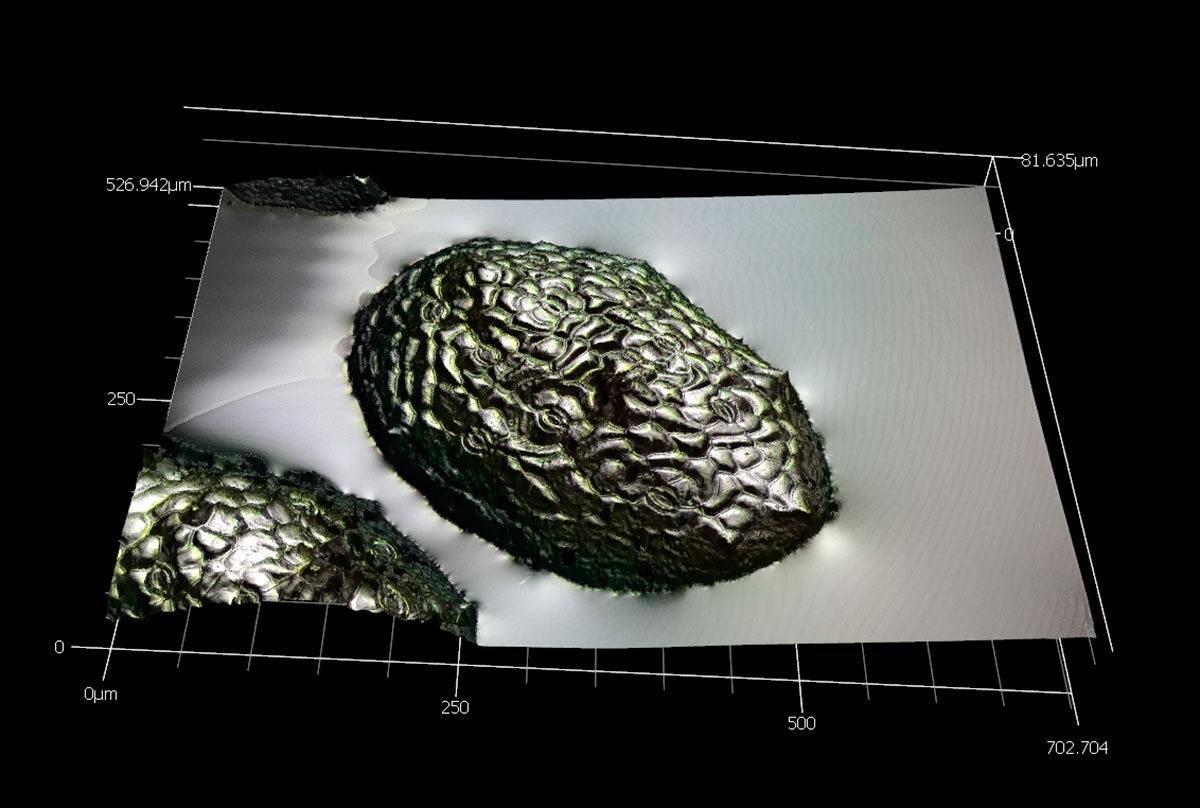
    Microscopic Image of Watermeal Plant After Hypergravity Exposure
    Confocal Laser Scanning Microscope image of approximately 1mm-diameter watermeal plants after hypergravity exposure by a team from Mahidol University in Thailand, using ESA’s Large Diameter Centrifuge through the ESA-UNOOSA HyperGES programme. This image was acquired by ESA’s adjacent Materials and Electrical Components Laboratory. Credit: ESA-G

    Researchers are testing watermeal, the smallest flowering plant, in hypergravity conditions to assess its potential as an astronaut food source and oxygen producer. Their findings could significantly impact space agriculture.

    The smallest flowering plant on Earth might become a nutritious foodstuff for astronauts in the future, as well as a highly efficient source of oxygen. To help test their suitability for space, floating clumps of watermeal – individually the size of pinheads – were subjected to 20 times normal Earth gravity aboard ESA’s Large Diameter Centrifuge by a team from Mahidol University in Thailand.

    Based at ESA’s ESTEC technical center in the Netherlands, the LDC is an 8 m-diameter four-arm centrifuge that gives researchers access to a range of hypergravity up to 20 times Earth gravity for weeks or months at a time.
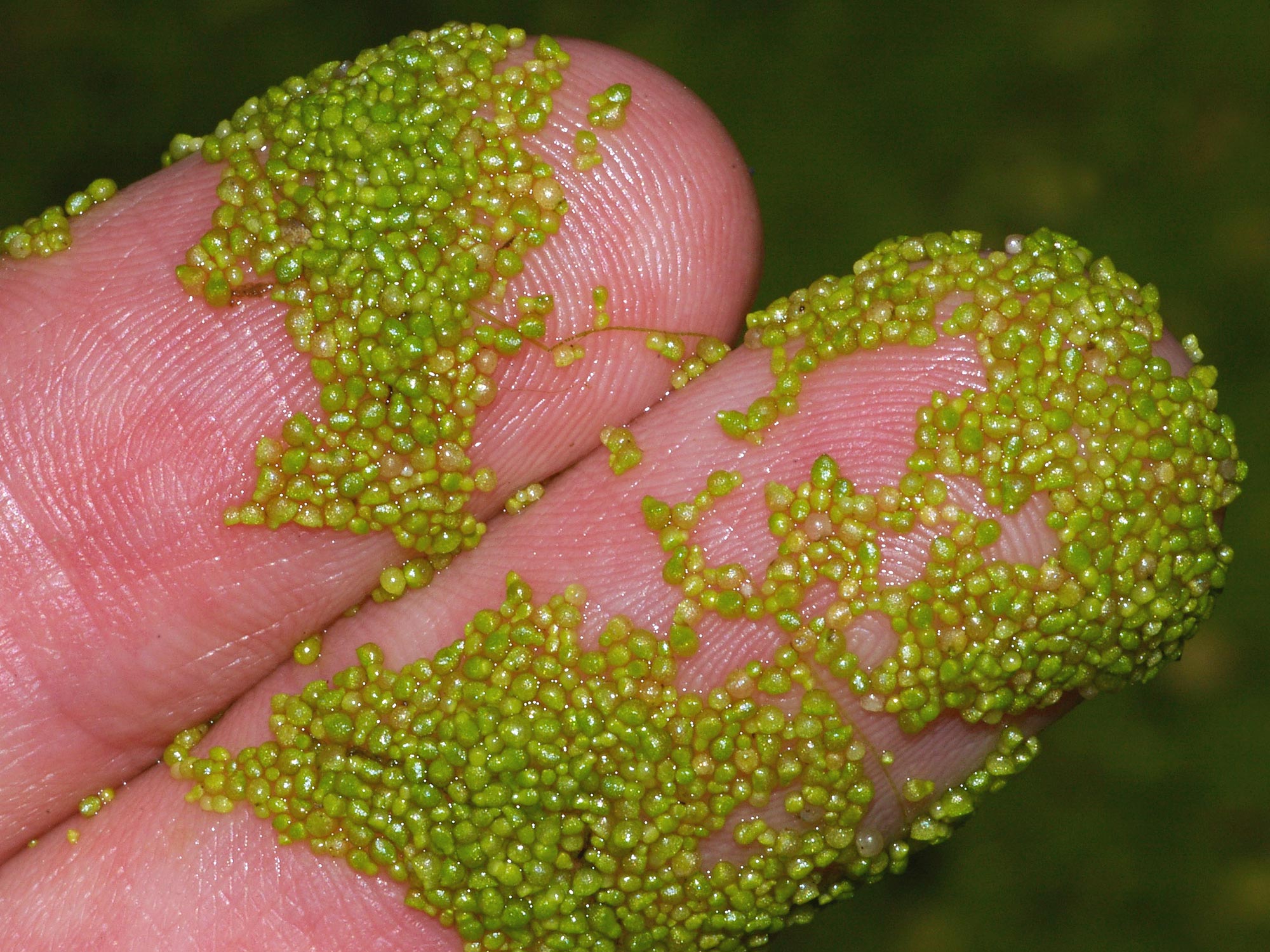
    Watermeal on Human Fingers
    Watermeal on human fingers. Every single speck of less than 1 mm is an individual plant. Credit: Christian Fischer, CC BY-SA 3.0

    Access to the LDC was arranged through HyperGES, part of the Access to Space for All initiative sponsored by ESA and the United Nations Office of Outer Space Affairs, UNOOSA.

    At its fastest, the centrifuge rotates at up to 67 revs per minute, with its six gondolas placed at different points along its arms weighing in at 130 kg, and each capable of accommodating 80 kg of payload.

    Watermeal is the smallest flowering plant on Earth – smaller even than the more familiar duckweed. Like duckweed, watermeal is an aquatic plant, which floats atop Thai and Asian water bodies.
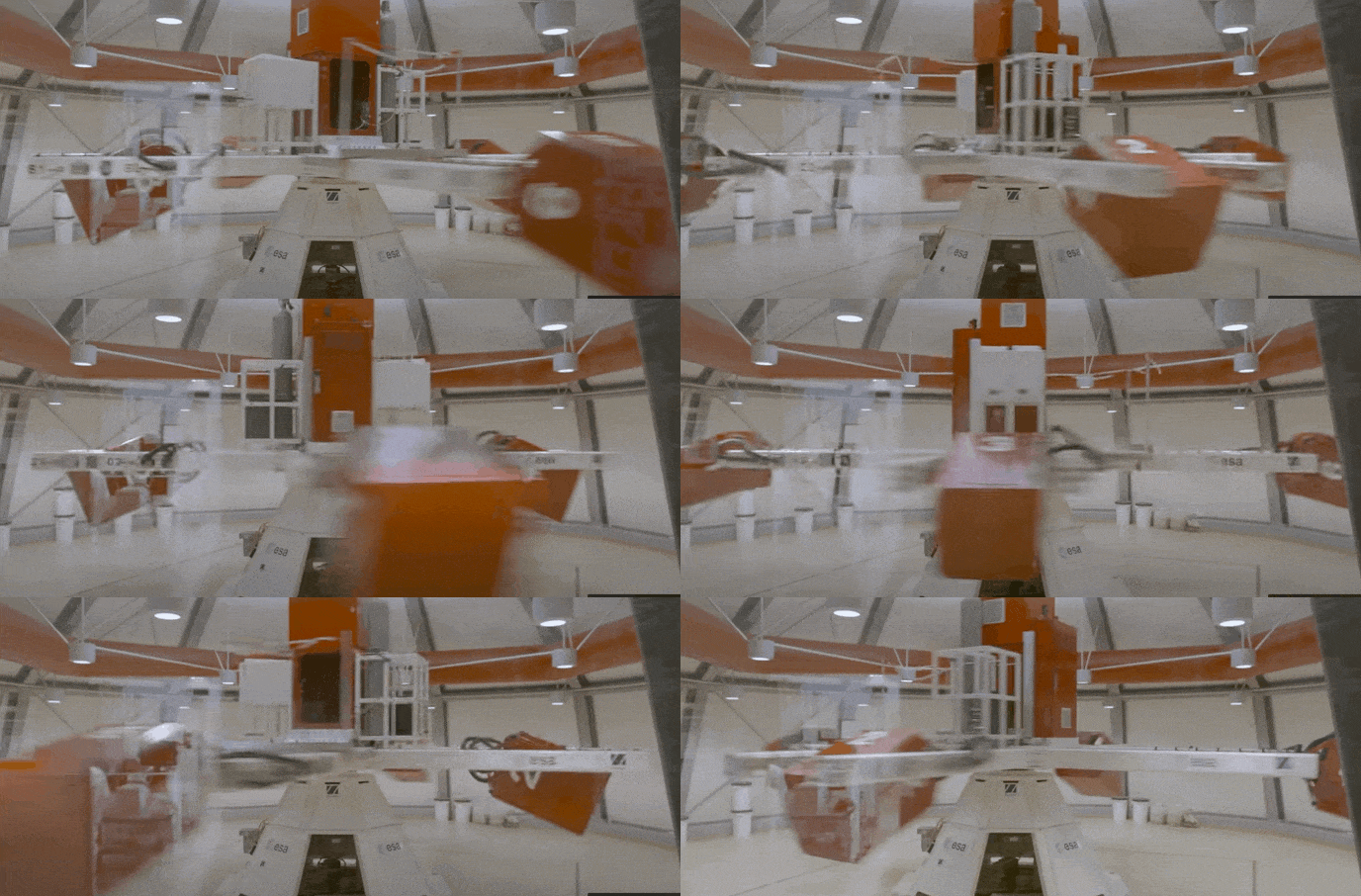
    Large Diameter Centrifuge
    ESA’s Large Diameter Centrifuge is an 8-m diameter four-arm centrifuge that gives researchers access to a range of hypergravity up to 20 times Earth gravity for weeks or months at a time. Credit: ESA

    Tatpong Tulyananda, heading the Mahidol University team, explains: “We became interested in watermeal because we wanted to model how plants respond to changing gravity levels. Because watermeal doesn’t have any roots, stems or leaves, it is basically just a sphere floating on a body of water. That means we can focus directly on the effects that gravity shifts will have on its growth and development.

    “In addition, it produces a lot of oxygen through photosynthesis. And watermeal is also a good protein source, which has been consumed in our country for a long time – used with fried egg to soup, or eaten as part of a salad. You consume 100% of the plant when you eat it, so it holds promise in terms of space-based agriculture.”
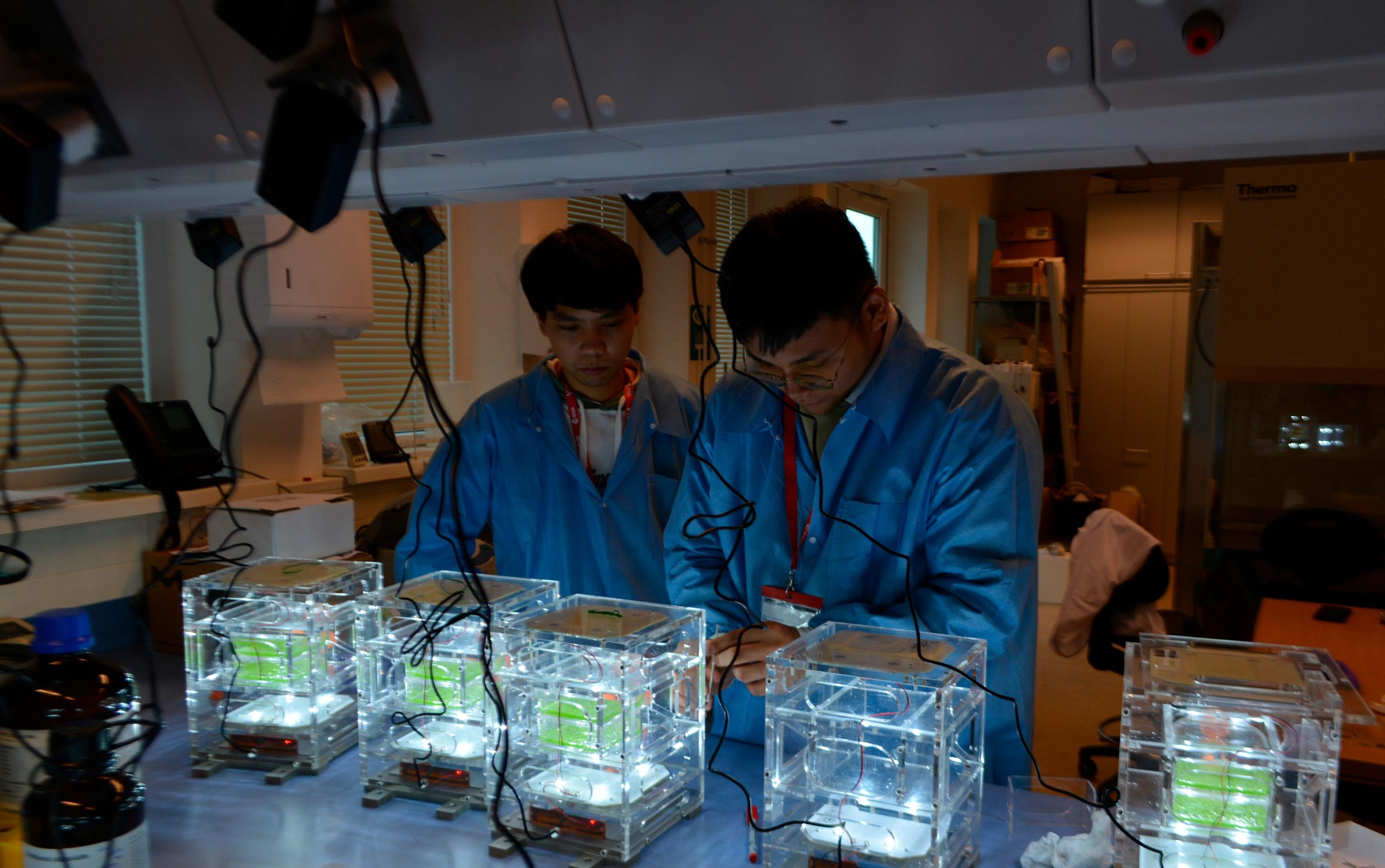
    Thailand Team Preparing Watermeal for LDC
    Watermeal samples were placed into boxes equipped with LEDs that mimic natural sunlight. These boxes were then within a centrifuge gondola, and then left to grow while spinning at 20 g. Credit: ESA-J. van Loon

    Up until now, the team has been studying watermeal using clinostats, which continuously shift their orientation of the gravity vector with respect to the sample in order to simulate microgravity conditions.

    “So far, we have seen little to no difference between plant growth at 1g and simulated microgravity, but we want to extend our observations to get an idea of how the plants react and adapt across the whole range of gravity environments. Another advantage of watermeal is that it is quite a short-lived plant, so we can study its entire life cycle within five to 10 days.”
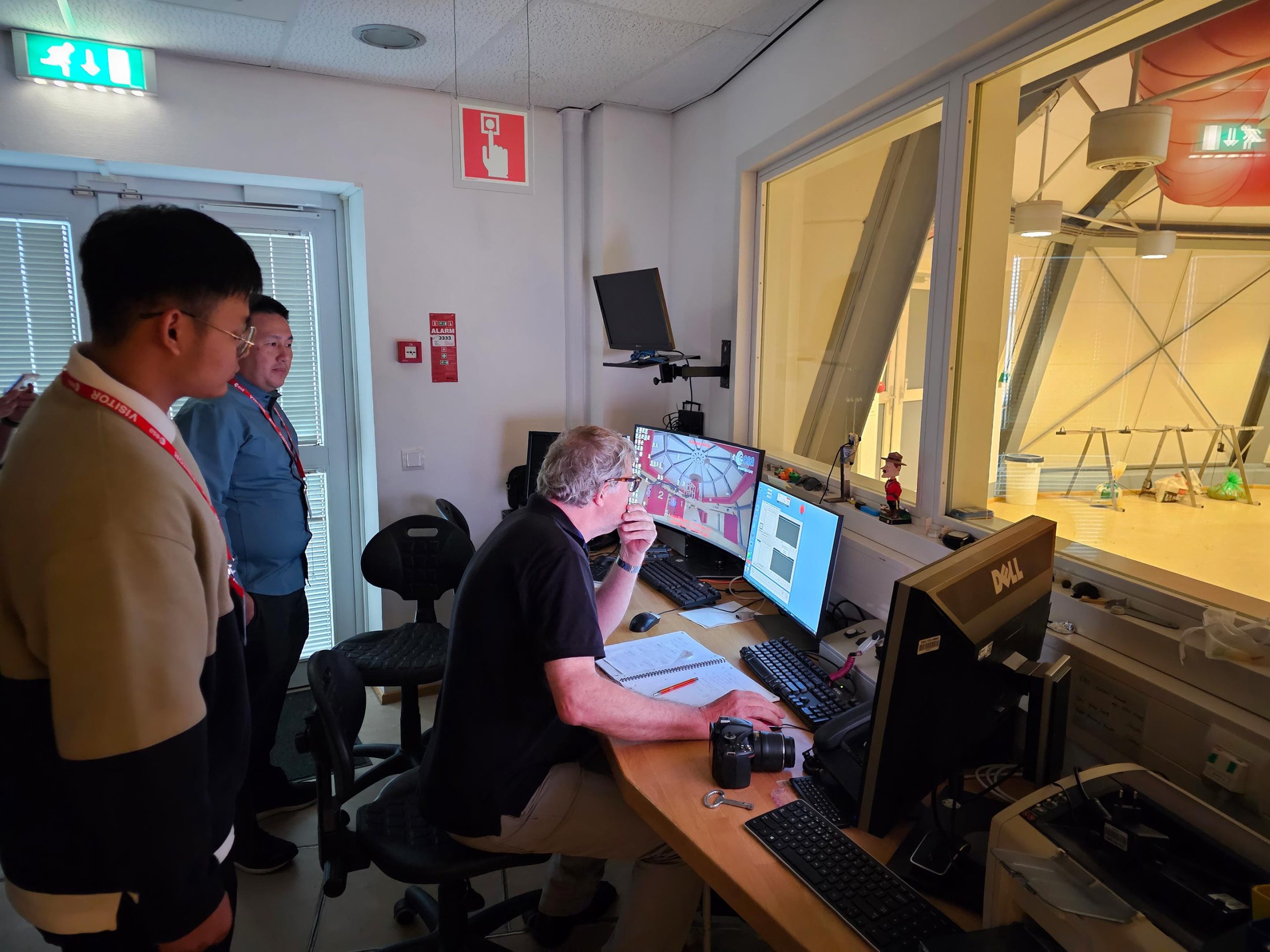
    Observing Large Diameter Centrifuge Spin Session
    Thai researchers are examining watermeal under extreme gravity to determine its viability for space agriculture and oxygen production. Credit: Mahidol University-T. Tulyananda

    Watermeal samples were placed into boxes equipped with LEDs that mimic natural sunlight. These boxes were then within a centrifuge gondola, then left to grow while spinning at 20 g.

    “Our two weeks of experimentation give us access to two generations of watermeal overall,” adds Tatpong. “What we do next is examine the plants directly, then render extracts into a solid pellet form that we will take home to study. Then we can put these samples through detailed chemical analysis to gain insights into the broad spectrum of watermeal’s hypergravity response.”
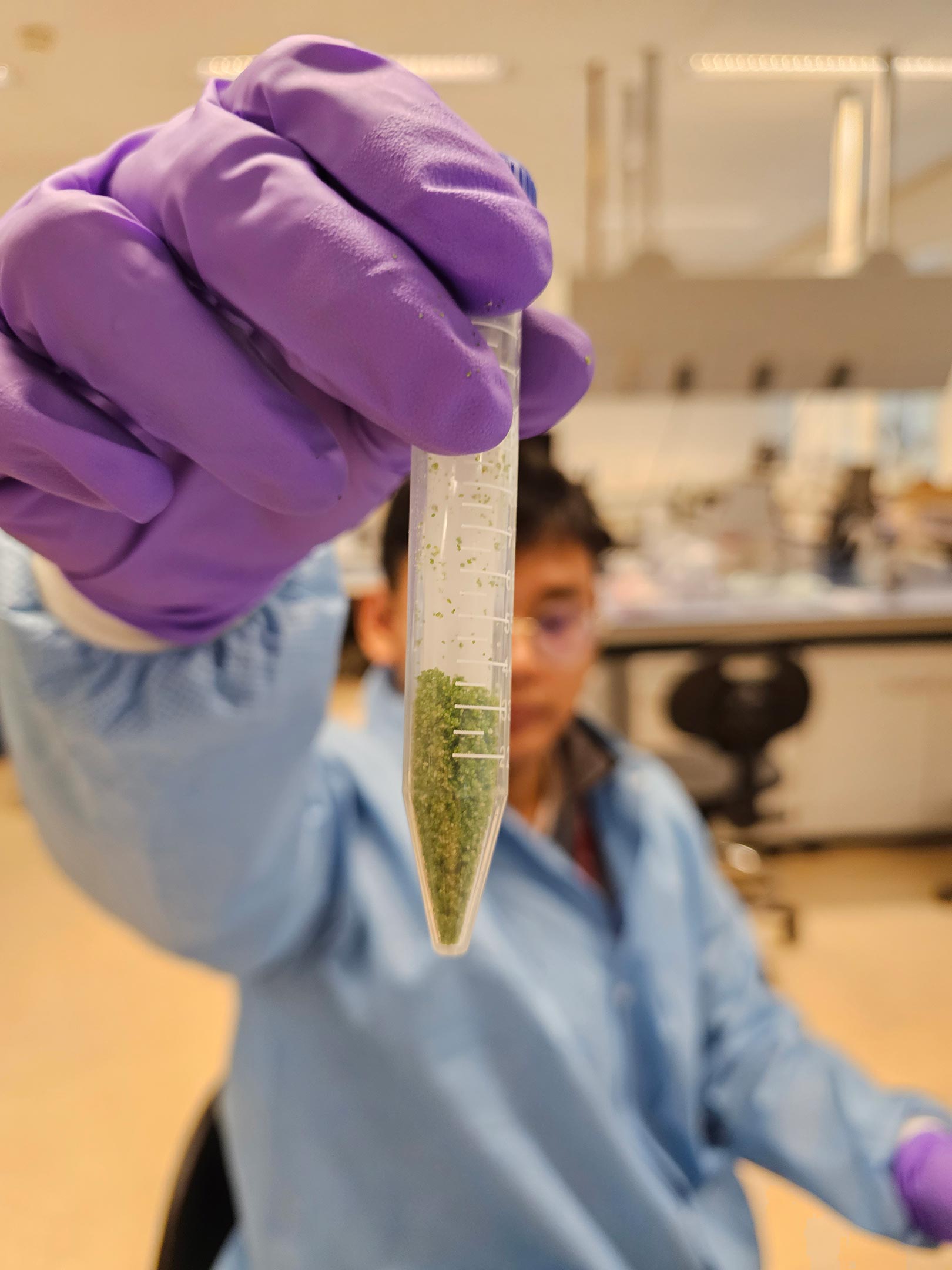
    Watermeal Sample for Study
    Once the watermeal has gone through its hypergravity study, the Mahidol University team then examined them directly, before rendering extracts into a solid pellet form to be taken home to study. Credit: Mahidol University-T. Tulyananda

    While using the LDC, the team also made full use of ESA’s Life Support & Physical Sciences Instrumentation Laboratory facilities as well as the adjacent Materials and Electrical Components Laboratory to prepare their experiments and finalize samples to bring home.

    An all-female team from Universidad Católica Boliviana ‘San Pablo’ in Bolivia is next in line to make use of the LDC, planning to test how hypergravity promotes the breakup of human red blood cells.

    Never miss a breakthrough: Join the SciTechDaily newsletter.
    Follow us on Google and Google News.

    European Space Agency Plant Science
    Share. Facebook Twitter Pinterest LinkedIn Email Reddit

    Related Articles

    Hubble Captures New Image of Messier 9

    New Images of Orion Nebula Show Young Stars Hidden in Gas and Dust Clouds

    Ultra-Fast Outflows are Common Features of Black-Hole-Powered Galaxies

    Researchers Discover First Intermediate-Mass Black Hole

    New Planck Mission Images Show Strange Haze and Cold Gas

    ESA’s Vega Rocket Has Launched on Its Maiden Voyage, Carries 9 Satellites

    ESA’s Mars Express MARSIS Radar Explores Martian Oceans

    ESA’s Hershel Space Telescope Captures Incredible Views of Eagle Nebula

    Hubble Reaches New Milestone: 10,000th Scientific Paper Published

    Leave A Reply Cancel Reply

    • Facebook
    • Twitter
    • Pinterest
    • YouTube

    Don't Miss a Discovery

    Subscribe for the Latest in Science & Tech!

    Trending News

    Scientists Discover How Coffee Impacts Memory, Mood, and Gut Health

    Why Did the Neanderthals Disappear? Scientists Reveal Humans Had a Hidden Advantage

    Physicists Propose Strange Experiment Where Time Goes Quantum

    Magnesium Magic: New Drug Melts Fat Even on a High-Fat, High-Sugar Diet

    Weight-Loss Drugs Like Ozempic May Come With an Unexpected Cost

    Mezcal “Worm” in a Bottle Mystery: DNA Testing Reveals a Surprise

    New Research Reveals That Your Morning Coffee Activates an Ancient Longevity Switch

    This Is What Makes You Irresistible to Mosquitoes

    Follow SciTechDaily
    • Facebook
    • Twitter
    • YouTube
    • Pinterest
    • Newsletter
    • RSS
    SciTech News
    • Biology News
    • Chemistry News
    • Earth News
    • Health News
    • Physics News
    • Science News
    • Space News
    • Technology News
    Recent Posts
    • Blue Origin’s New Moon Lander Passes a Crucial Test for NASA Missions
    • NASA Fires Up Record-Breaking Plasma Thruster for Future Mars Missions
    • This Popular Supplement May Boost Your Brain, Not Just Your Muscles
    • What Happened in Childhood Could Be Causing Your Gut Issues Today
    • Scientists Say This Simple Supplement May Actually Reverse Heart Disease
    Copyright © 1998 - 2026 SciTechDaily. All Rights Reserved.
    • Science News
    • About
    • Contact
    • Editorial Board
    • Privacy Policy
    • Terms of Use

    Type above and press Enter to search. Press Esc to cancel.