

Even minimal excess information can hinder effective decision-making according to new research at Stevens Institute of Technology.
When faced with challenging choices, individuals often instinctively seek out extensive information. However, recent research published in the journal Cognitive Research: Principles and Implications suggests that this could actually be a problem: this influx of facts and details tends to impair, rather than enhance, the quality of their decision-making.
“It’s counterintuitive, because we all like to think we use information wisely to make smart decisions,” said Farber Chair Associate Professor Samantha Kleinberg, the paper’s lead author and a computer scientist at Stevens Institute of Technology. “But the reality is that when it comes to information, more isn’t necessarily better.”
Simple Models vs. Real-World Scenarios
To study how people make decisions, researchers typically create simple diagrams — or causal models — that show how different factors logically interact with each other to yield specific outcomes.
When it comes to describing abstract hypothetical scenarios, like how aliens square off at a dance party, most people can reason effectively about such models because they do not have any biases or preconceptions about alien dance-offs. People make good decisions because they focus on the information that they are given.
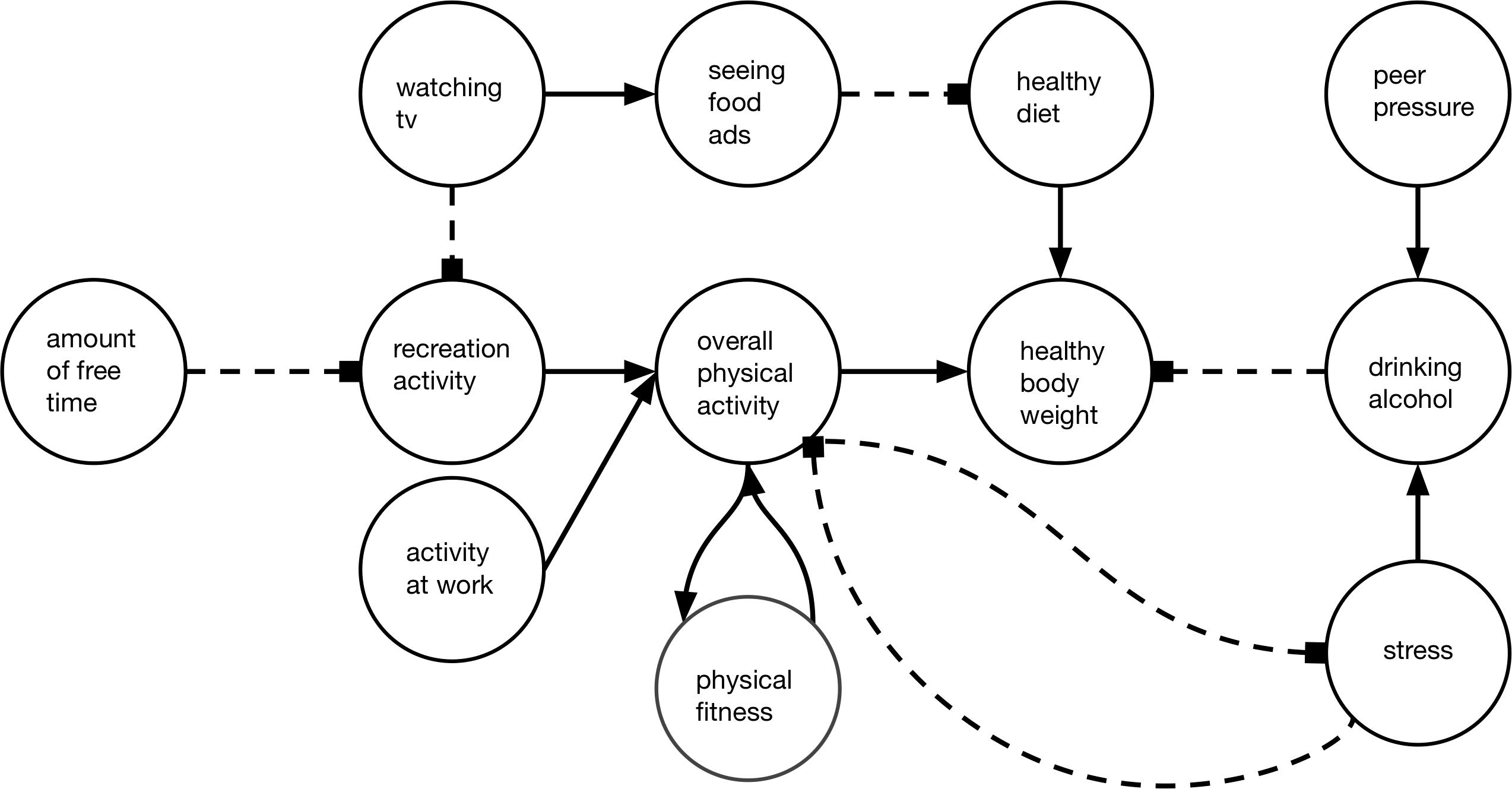
But Kleinberg’s work shows that when it comes to everyday scenarios, like figuring out how to make healthy decisions around nutrition, for example, people’s ability to reason effectively all but evaporates.
“We think people’s prior knowledge and beliefs distract them from the causal model in front of them,” explained Kleinberg. “If I’m reasoning about what to eat, for instance, I might have all kinds of preconceptions about the best things to eat — and that makes it harder to effectively use the information that I’m presented.”
The Challenge of Everyday Decisions
To verify that hypothesis and building upon their 2020 study, Kleinberg and co-author Jessecae Marsh, a cognitive psychologist at Lehigh University, conducted a series of experiments exploring how people’s decision-making varies when they’re presented with different kinds of causal models across a wide range of real-life topics, from buying a house and managing body weight to picking a college and increasing voter turnout. It quickly became apparent that people know how to use causal models but even a very simple model quickly became all but useless when just a little additional detail, beyond the information that’s strictly necessary to make a good decision, is added to the mix.
“What’s really remarkable is that even a tiny amount of surplus information has a big negative effect on our decision-making,” said Kleinberg. “If you get too much information, your decision-making quickly becomes as bad as if you’d gotten no information at all.”
If a causal model shows that eating salty food raises your blood pressure, but also shows extraneous information such as drinking water makes you less thirsty, for instance, it becomes much harder for people to make effective choices about the best way to maintain their health. When Kleinberg’s team highlighted the salient causal information, however, people’s ability to make good decisions quickly returns.
“That’s significant because it shows that the problem isn’t just that people are overwhelmed by the sheer quantity of information — it’s more that they’re struggling to figure out which parts of the model they should be paying attention to,” said Kleinberg.
Implications in Public Health and Beyond
This work has significant implications in fields like public health because it means that educational messages need to be simmered down to their most essential parts and carefully presented in order to have a positive impact. “If you’re giving people a laundry list of things to consider when they’re deciding whether to wear a facemask or get a COVID test or what to eat or drink, then you’re actually making it harder for them to make good decisions,” said Kleinberg.
Even when Kleinberg and Marsh gave participants the option of receiving more or less information, those who asked for more information made poorer decisions than those who asked for less. “If you give people the opportunity to overthink, even when they ask for additional information,” said Kleinberg, “things go poorly. People need simple and carefully targeted causal models in order to make good decisions.”
One approach to aid decision-making might be to use AI chatbots to tailor health information or nutritional advice to individuals on a case-by-case basis — essentially feeding a complex causal model into the AI model, and letting it detect and highlight only the specific information that’s most relevant to a particular individual.
Reference: “Less is more: information needs, information wants, and what makes causal models useful” by Samantha Kleinberg and Jessecae K. Marsh, 30 August 2023, Cognitive Research: Principles and Implications.
DOI: 10.1186/s41235-023-00509-7
The study was funded by the James S. McDonnell Foundation and the National Science Foundation.
Never miss a breakthrough: Join the SciTechDaily newsletter.
Follow us on Google and Google News.
2 Comments
So lower-information voters might make smarter choices? Won’t the Democrats be surprised.
I think the idea that too much information muddies the water is hogwash. Education is key to the understanding relevance.
It is rationalization that is reinforced by more ‘facts’ that is the real problem when emotions conflict with objectivity.