
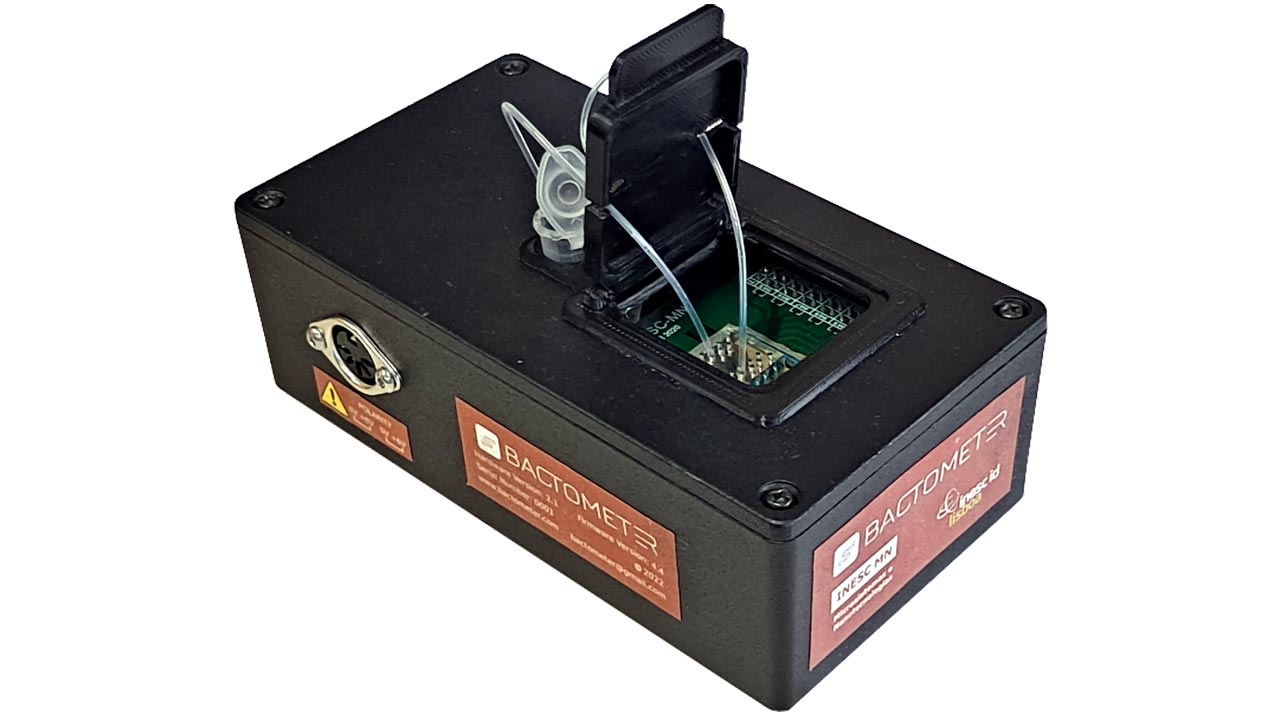
Bactometer, developed over 15 years of research, is a rapid biological detector targeting antimicrobial resistance in hospitals. Combining magnetic methods with machine learning, it promises to curb the spread of multidrug-resistant bacteria, significantly improving patient outcomes.
Bactometer is a biological detector designed to bolster the fight against antimicrobial resistance in hospital environments.
It serves as an accurate screening system, comparable to advanced methods such as PCR.
Not only can the device produce results in under an hour, but it is also user-friendly, requiring no prior experience akin to the COVID test. Its cost aligns with that of laboratory cultures, a commonly used yet less precise method in this domain.
Technical Overview
The Bactometer’s innovative features stem from the incorporation of magnetic methods and “artificial intelligence” (machine learning), a departure from the optical methods prevalent in most current technologies.
In terms of techniques it combines the following two:
- Cell detection;
- Nucleic acid (DNA, RNA) analysis.
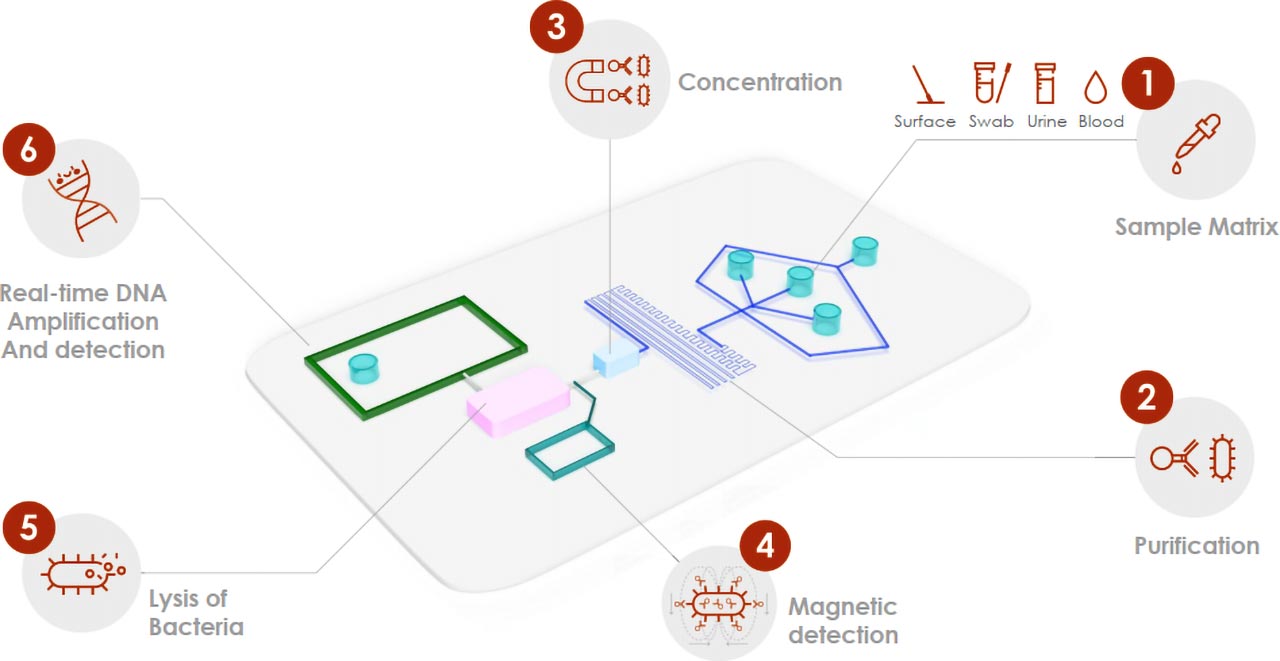
The employment of magnetic technology makes the device impervious to sample background interferences as there is no presence of magnetic content in biological matrices. Additionally, the magnetic labeling process eliminates the standard time-consuming sample preparation. The sample goes through an automatic sample preparation module were the target bacteria is captured and concentrated, followed by a bacteria detection step. The last stage involves bacterial lysis, followed by a patented technique to trap analytes on the sensor area, thereby enhancing our limit of detection.
Bactometer was created thanks to the research that has been developed at INESC for the last 15 years (INESC MN and INESC ID), as the device integrates technologies resulting from this long research work.
The project was initiated and monitored by IST professors: Prof. Paulo Freitas, Prof. Susana Cardoso, Prof. Moisés Piedade, Prof. Jorge Fernandes, and Prof. Gonçalo Tavares.
Magnomics start-up members Dr. Filipe Cardoso, Dr. José Germano, Dr. Verónica Romão, and Sofia Martins also contributed to the device development.
The start…
Portugal 2022 eAwards
Bactometer project won a 10.000€ prize at ‘Portugal 2022 eAwards’, awarded by the NTT DATA FOUNDATION. It represented Portugal in the Global eAwards final, held in Madrid (24 -26 October 2022). Although it wasn’t the winner, it was among the 15 winning projects from Europe and Latin America which is an important achievement.
HiTech training
The project team participated in the 14-week HiTech commercialization program. This program is aimed at research teams seeking guidance to bring the technologies developed in the research activities to the market.
This training was essential for the project’s jump start, allowing the definition of the business plan and the validation of the location of greatest impact for the initial phase of the device’s entry into the market – Intensive Care Units (ICU).
EIT Health RIS Innovation
In January 2023 it was one of the winners of the EIT Health RIS Innovation Call’ program which will allow the continuity of the project. This program offers access to funding, mentoring, training services, and networking opportunities to health innovators from the Regional Innovation Scheme countries.
Team and Skills
The project team is composed of 4 elements:
- Diogo Caetano (Electrical and Computer Engineering PhD, from IST)
- Ruben Afonso (completing Electrical and Computer Engineering PhD, IST)
- Débora Albuquerque (completing Biomedical Engineering PhD, IST)
- Ana Rita Soares (Technological Physics PhD, from IST).
Each one has its own focus and responsibilities within the project:
Diogo Caetano – Design of high-precision acquisition systems for sensors (magnetic, in the case of the Bactometer).
Ruben Afonso – Development of hardware to interface with sensors.
Débora Albuquerque – Detection of contagious diseases using nucleic acid detection.
Ana Rita Soares – development of the magnetic Bactometer sensors, in microfluidics and in the biological labeling of the target analytes.
Saving Lives
It is estimated that multidrug-resistant bacteria cause about 4.5 million hospital infections every year in Europe. Every day, patients colonized with multidrug-resistant bacteria who are seen in the Intensive Care Units of hospitals for treatment of other acute conditions introduce these microorganisms into the hospital environment. These microorganisms develop more resistance and infect 1/5 of hospitalized patients.
Bactometer will allow rapid and efficient identification of the strain of bacteria and its resistance mechanisms, reducing the current waiting time of 48-72h (with the laboratory culture method) to less than 1h.
With the collection of this information in a shorter period of time, it will be possible to provide the patient in a timely manner, increased aseptic care (eventual isolation), and limit the prophylactic use/abuse of antibiotics that has greatly contributed to the increase of the problem. When used at the entrance in ICUs and long-term care facilities, Bactometer can be a tool to quickly and accurately diagnose AMR infections, allowing for isolation measurements to be implemented in these organizations before they are able to spread to other patients. With less contact, there is less chance of bacteria spreading, leading to a reduction in total number of infections, and consequently, fewer extra hospital days. A study performed in 2020, showed that by decreasing the spread of AMR to lower incidences, we could decrease extra hospital days by more than 40%.
These benefits may extend to society, both in terms of the health and quality of life of the users, and in terms of economy, as it may result in savings in technical and human resources. This project is a good example of how technology can contribute to solving social and health problems.
The device is currently being tested at CHULN (University Hospital Center Lisbo Norte – Santa Maria Hospital) in partnership with ISAMB (Institute of Environmental Health).
Never miss a breakthrough: Join the SciTechDaily newsletter.
Follow us on Google and Google News.