
Rising Sea Temperatures Threaten Multi-Host Parasites, Disrupting Ecosystem Dynamics.
Over 100 years of preserved fish specimens provide a unique look at parasite population trends over time. A study from the University of Washington reveals a decrease in fish parasites from 1880 to 2019, a period in which their habitat, Puget Sound (the mainland U.S.’s second-largest estuary), experienced significant warming.
A study recently published in the Proceedings of the National Academy of Science, the world’s largest and longest record of wildlife parasite numbers, indicates that parasites may be highly susceptible to climate change.
“People generally think that climate change will cause parasites to thrive, that we will see an increase in parasite outbreaks as the world warms,” said lead author Chelsea Wood, a UW associate professor of aquatic and fishery sciences. “For some parasite species that may be true, but parasites depend on hosts, and that makes them particularly vulnerable in a changing world where the fate of hosts is being reshuffled.”
While some parasites have a single host species, many parasites travel between host species. Eggs are carried in one host species, the larvae emerge and infect another host and the adult may reach maturity in a third host before laying eggs.
For parasites that rely on three or more host species during their lifecycle — including more than half the parasite species identified in the study’s Puget Sound fish — analysis of historic fish specimens showed an 11% average decline per decade in abundance. Of 10 parasite species that had disappeared completely by 1980, nine relied on three or more hosts.
“Our results show that parasites with one or two host species stayed pretty steady, but parasites with three or more hosts crashed,” Wood said. “The degree of decline was severe. It would trigger conservation action if it occurred in the types of species that people care about, like mammals or birds.”
Parasites and Their Role in Ecosystems
And while parasites inspire fear or disgust — especially for people who associate them with illness in themselves, their kids or their pets — the result is worrying news for ecosystems, Wood said.
“Parasite ecology is really in its infancy, but what we do know is that these complex-lifecycle parasites probably play an important role in pushing energy through food webs and in supporting top apex predators,” Wood said. She is one of the authors of a 2020 report laying out a conservation plan for parasites.
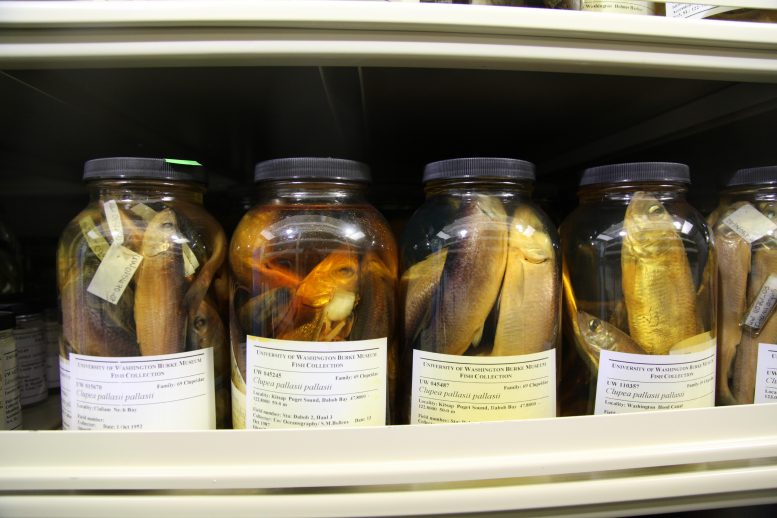
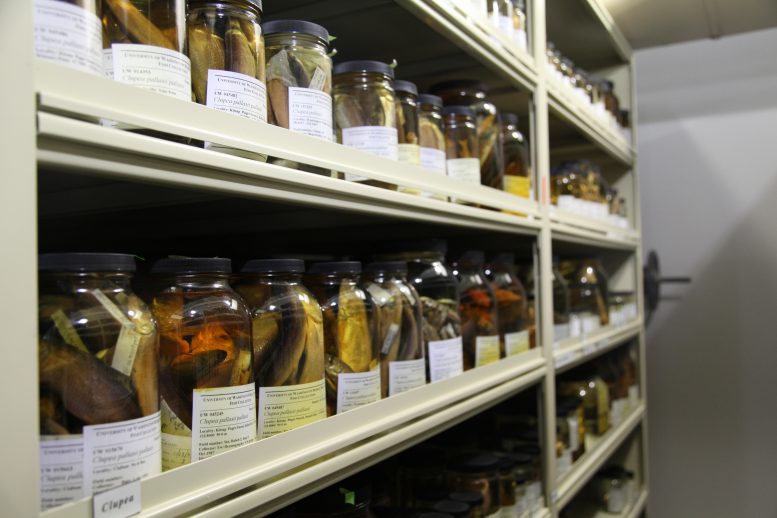
Wood’s study is among the first to use a new method for resurrecting information on parasite populations of the past. Mammals and birds are preserved with taxidermy, which retains parasites only on skin, feathers, or fur. But fish, reptile, and amphibian specimens are preserved in fluid, which also preserves any parasites living inside the animal at the time of its death.
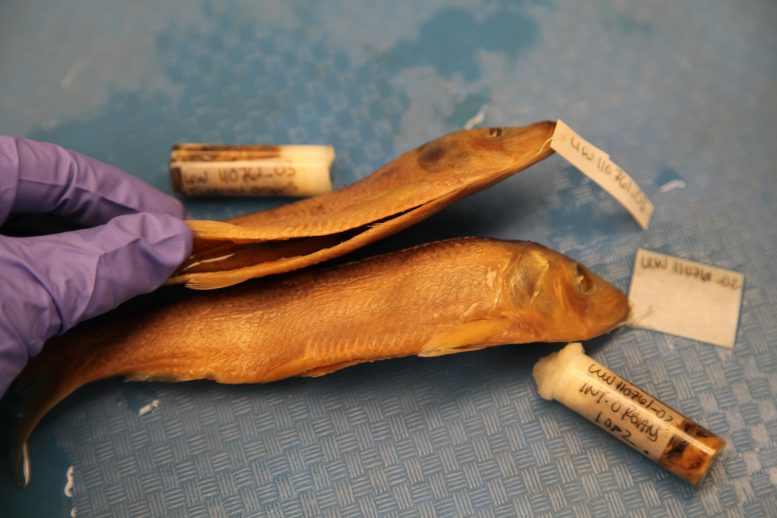
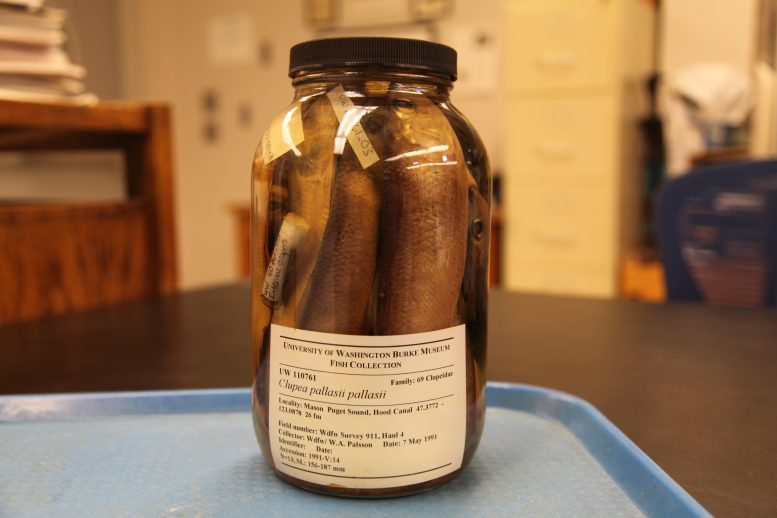
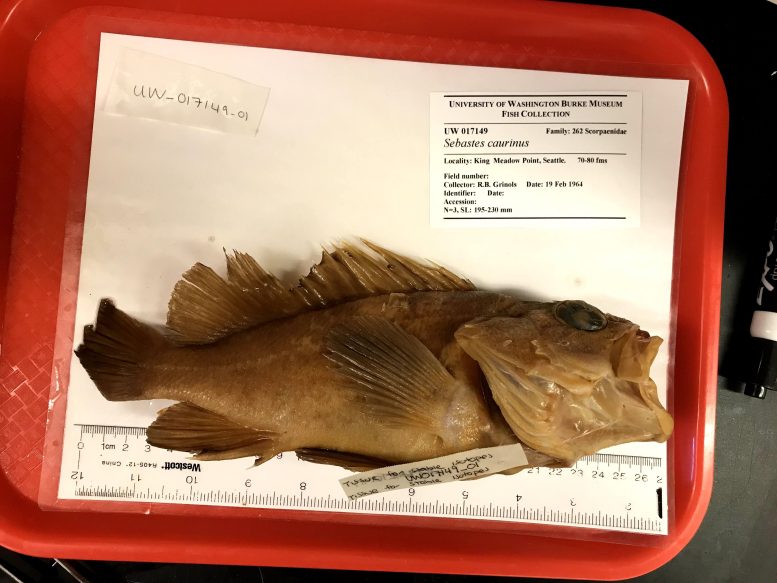
The study focused on eight species of fish that are common in the behind-the-scenes collections of natural history museums. Most came from the UW Fish Collection at the Burke Museum of Natural History and Culture. The authors carefully sliced into the preserved fish specimens and then identified and counted the parasites they discovered inside before returning the specimens to the museums.
“It took a long time. It’s certainly not for the faint of heart,” Wood said. “I’d love to stick these fish in a blender and use a genomic technique to detect their parasites’ DNA, but the fish were first preserved with a fluid that shreds DNA. So what we did was just regular old shoe-leather parasitology.”
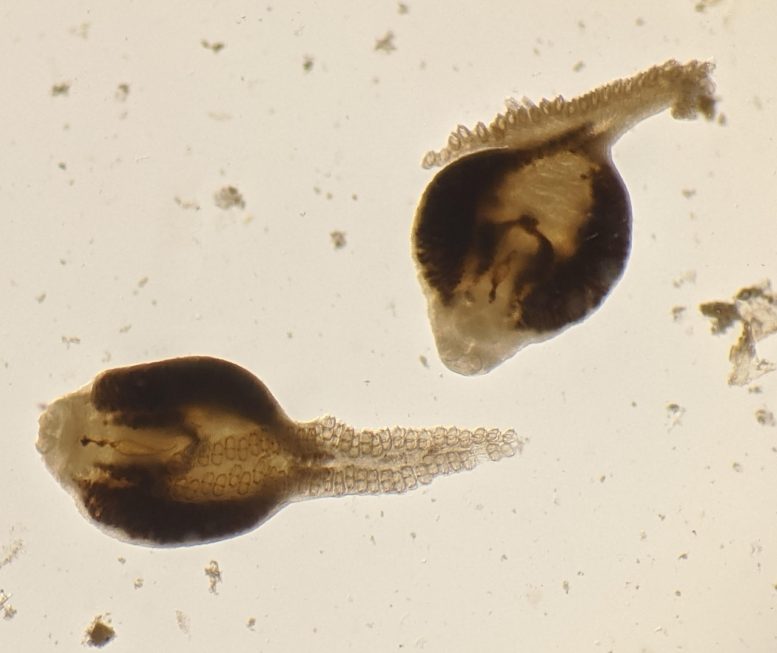
Among the multi-celled parasites they found were arthropods, or animals with an exoskeleton, including crustaceans, as well as what Wood describes as “unbelievably gorgeous tapeworms:” the Trypanorhyncha, whose heads are armed with hook-covered tentacles. In total, the team counted 17,259 parasites, of 85 types, from 699 fish specimens.
Rising Temperatures and Parasite Declines
To explain the parasite declines, the authors considered three possible causes: how abundant the host species was in Puget Sound; pollution levels; and temperature at the ocean’s surface. The variable that best explained the decline in parasites was sea surface temperature, which rose by 1 degree Celsius (1.8 degrees Fahrenheit) in Puget Sound from 1950 to 2019.
A parasite that requires multiple hosts is like a delicate Rube Goldberg machine, Wood said. The complex series of steps they face to complete their lifecycle makes them vulnerable to disruption at any point along the way.
“This study demonstrates that major parasite declines have happened in Puget Sound. If this can happen unnoticed in an ecosystem as well studied as this one, where else might it be happening?” Wood said. “I hope our work inspires other ecologists to think about their own focal ecosystems, identify the right museum specimens, and see whether these trends are unique to Puget Sound, or something that is occurring in other places as well.
“Our result draws attention to the fact that parasitic species might be in real danger,” Wood added. “And that could mean bad stuff for us — not just fewer worms, but less of the parasite-driven ecosystem services that we’ve come to depend on.”
Reference: “A reconstruction of parasite burden reveals one century of climate-associated parasite decline” by Chelsea L. Wood, Rachel L. Welicky, Whitney C. Preisser, Katie L. Leslie, Natalie Mastick, Correigh Greene, Katherine P. Maslenikov, Luke Tornabene, John M. Kinsella and Timothy E. Essington, 9 January 2023, Proceedings of the National Academy of Sciences.
DOI: 10.1073/pnas.2211903120
The study was funded by the National Science Foundation, the UW-based Cooperative Institute for Climate, Ocean, and Ecosystem Studies, the Alfred P. Sloan Foundation, the University of Washington and the Washington Research Foundation.
Never miss a breakthrough: Join the SciTechDaily newsletter.
Follow us on Google and Google News.
1 Comment
Why should temperature be the controlling factor when there is a difference in parasitism between single-host and multiple-host parasites? It seems a more likely explanation is that a crucial link in the multiple-host chain is broken by something like over-fishing. The correlation with temperature may be a spurious correlation brought about by an increasing human population resulting in over-fishing. All increase over time and are therefore correlated.
The claimed temperature increase in Puget Sound is a little strange. It is the same order of magnitude as the global air temperature increase. Water has a higher thermal inertia than air, however.
I hope that when “other ecologists … think about their own focal ecosystems,” they also think about how to demonstrate that it is a true correlation with a cause and effect relationship, and not a spurious correlation.