

Close Menu
    Facebook X (Twitter) Instagram
    SciTechDaily
    • Biology
    • Chemistry
    • Earth
    • Health
    • Physics
    • Science
    • Space
    • Technology
    Facebook X (Twitter) Pinterest YouTube RSS
    SciTechDaily
    Home»Health»Balanced Meal Timing: A Recipe for Enhanced Cognitive Health
    Health

    Balanced Meal Timing: A Recipe for Enhanced Cognitive Health

    By Higher Education PressMay 1, 2023No Comments4 Mins Read
    Facebook Twitter Pinterest Telegram LinkedIn WhatsApp Email Reddit
    Share
    Facebook Twitter LinkedIn Pinterest Telegram Email Reddit
    Intermittent Fasting Concept
    Research reveals a correlation between the temporal patterns of energy intake (TPEI) and cognitive function in middle-aged and older adults. The study found that compared to those with an “evenly-distributed” pattern of energy intake, individuals with unbalanced TPEIs, particularly those skipping breakfast, had significantly lower cognitive function scores over a ten-year period. This suggests that maintaining balanced TPEIs could potentially benefit cognitive health, highlighting the need for optimal TPEIs in preventing cognitive decline.

    A research study indicates a correlation between meal timing patterns and cognitive function, revealing that balanced energy intake throughout the day, as opposed to skipping meals like breakfast, helps maintain cognitive health in middle-aged and older adults.

    Globally, there are approximately 55 million people who suffer from dementia, and the incidence of the disease has steadily increased. This population is expected to triple by 2050, particularly in low- and middle-income countries. Dementia affects not only the quality of life of individuals, but also adds significant economic burdens to families and society.

    Epidemiological studies have shown a correlation between the temporal distribution of energy intake during a day (TPEI) and the risk of various chronic diseases such as diabetes and hypertension. However, evidence regarding the relationship between TPEI and cognitive function at the population level is relatively lacking.

    Previous studies in animal models have shown that the disruption in meal timing can cause alterations in clock rhythms in the hippocampus, thereby affecting cognitive function. According to a short-term intervention trial of 96 young adults, dividing equal amounts of food into four meals between 9 am and 3 pm could improve cognitive function compared to eating twice between 9 am and 3 pm. However, long-term study is lacking about the TPEIs and cognitive function.
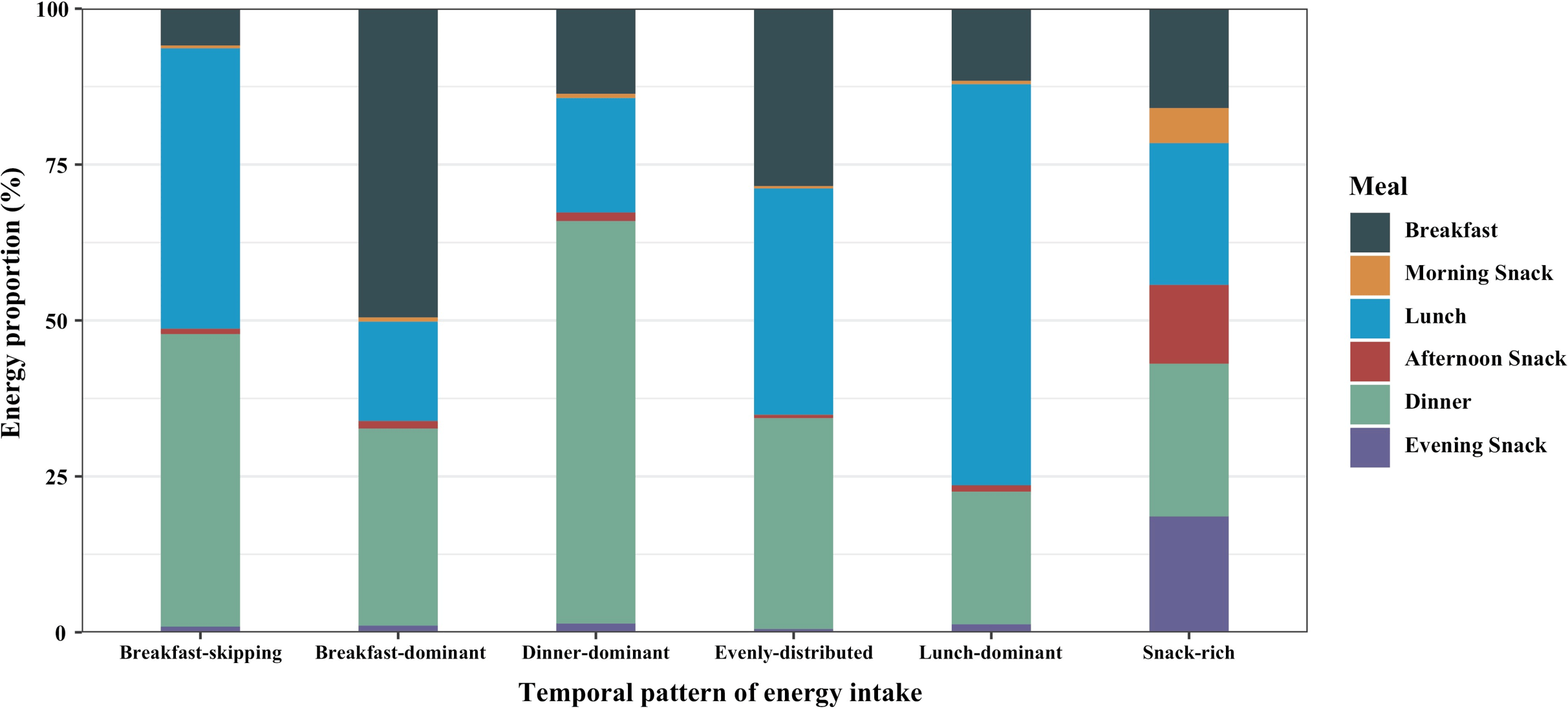
    Cognitive Health May Benefit From Balanced Meal Timing
    Temporal patterns of energy intake among participants in the China Health and Nutrition Study. Credit: Hui Chen, Yang Tao, Min-Dian Li, Yuxuan Gu, Jiaxi Yang, You Wu, Dongmei Yu, Changzheng Yuan

    Recently, Drs. Changzheng Yuan and Dongmei Yu at Zhejiang University published a paper in Life Metabolism entitled “Temporal patterns of energy intake and cognitive function and its decline: a community-based cohort study in China” Based on the China Nutrition Health Survery (CHNS) public database, a total of 3,342 participants were included in this study, who were middle-aged and older adults (mean age 62 years) from nine provinces in China with a baseline age ≥ 55 years.

    The researchers used: 1) A data-driven k-means algorithm to identify six patterns of TPEIs, including “evenly-distributed” pattern, “breakfast-dominant” pattern, “lunch-dominant” pattern, “dinner-dominant” pattern, “snack-rich” pattern, and “breakfast-skipping” pattern; 2) Cognitive function was assessed using the modified Telephone Interview for Cognitive Status (TICS-m), comprising immediate and delayed word recalls (20 points), backward counting (2 points), and serial-7 subtraction test (5 points). The total global cognitive score ranged from 0 to 27, with a higher score representing a better cognitive function; 3) The correlation of TPEIs to cognitive function over 10 years was assessed using linear mixed models (LMMs), which was adjusted for age, gender, residence, total energy, physical activity, smoking status, alcohol consumption, household income, education level, and body mass index (BMI).

    The result showed that, compared with those with “evenly-distributed” pattern, the long-term cognitive function scores were significantly lower in those who had unbalanced TPEIs, especially those with “breakfast-skipping” pattern. Thus, maintaining balanced TPEIs has potentially positive effects on cognitive health, whereas skipping breakfast may significantly increase the risk of cognitive decline in middle-aged and older adults. In conclusion, this study highlights the importance of optimal TPEIs in cognitive function.

    Reference: “Temporal patterns of energy intake and cognitive function and its decline: a community-based cohort study in China” by Hui Chen, Yang Tao, Min-Dian Li, Yuxuan Gu, Jiaxi Yang, You Wu, Dongmei Yu and Changzheng Yuan, 7 July 2022, Life Metabolism.
    DOI: 10.1093/lifemeta/loac011

    Funding: Key Laboratory of Intelligent Preventive Medicine of Zhejiang Province, National Natural Science Foundation of China, Zhejiang University Education Foundation Global Partnership Fund 

    Never miss a breakthrough: Join the SciTechDaily newsletter.
    Follow us on Google and Google News.

    Dementia Food Science Nutrition
    Share. Facebook Twitter Pinterest LinkedIn Email Reddit

    Related Articles

    This Everyday Food Was Linked to Better Brain Health

    Mediterranean Diet May Reduce Risk of Dementia by Up to 23%

    Mediterranean Diet Linked With 23% Lower Risk of Dementia

    Eating Just One Serving of Processed Meat a Day Could Increase Dementia Risk by 44%

    The Combination of Foods You Eat Together May Raise Dementia Risk

    Harvard Studies Show Improvements in U.S. Diet Lower Premature Deaths

    Harvard Reveals Quality and Quantity of Key Crops is Changing

    Study Finds That “Whole Grain” Foods Aren’t Always a Healthy Choice

    Study Suggests Whole Fruit May Prompt Kids to Make Healthier Choices

    Leave A Reply Cancel Reply

    • Facebook
    • Twitter
    • Pinterest
    • YouTube

    Don't Miss a Discovery

    Subscribe for the Latest in Science & Tech!

    Trending News

    Largest-Ever Study Finds Medicinal Cannabis Ineffective for Anxiety, Depression, PTSD

    250-Million-Year-Old Egg Solves One of Evolution’s Biggest Mysteries

    Living With Roommates Might Be Changing Your Gut Microbiome Without You Knowing

    Century-Old Cleaning Chemical Linked to 500% Increased Risk of Parkinson’s Disease

    What if Your Memories Never Happened? Physicists Take a New Look at the Boltzmann Brain Paradox

    One of the Universe’s Largest Stars May Be Getting Ready To Explode

    Scientists Discover Enzyme That Could Supercharge Ozempic-Like Weight Loss Drugs

    Popular Sweetener Linked to DNA Damage – “It’s Something You Should Not Be Eating”

    Follow SciTechDaily
    • Facebook
    • Twitter
    • YouTube
    • Pinterest
    • Newsletter
    • RSS
    SciTech News
    • Biology News
    • Chemistry News
    • Earth News
    • Health News
    • Physics News
    • Science News
    • Space News
    • Technology News
    Recent Posts
    • Scientists Prove There Are Just Six Degrees of Separation in a Social Network
    • Bee Bacteria Could Fix a Major Flaw in Plant-Based Milk
    • Scientists Discover a Surprising Way To Make Bread Healthier and More Nutritious
    • Natural Compounds Boost Bone Implant Success While Killing Bacteria and Cancer Cells
    • After 60 Years, Scientists Uncover Unexpected Brain Effects of Popular Diabetes Drug Metformin
    Copyright © 1998 - 2026 SciTechDaily. All Rights Reserved.
    • Science News
    • About
    • Contact
    • Editorial Board
    • Privacy Policy
    • Terms of Use

    Type above and press Enter to search. Press Esc to cancel.