
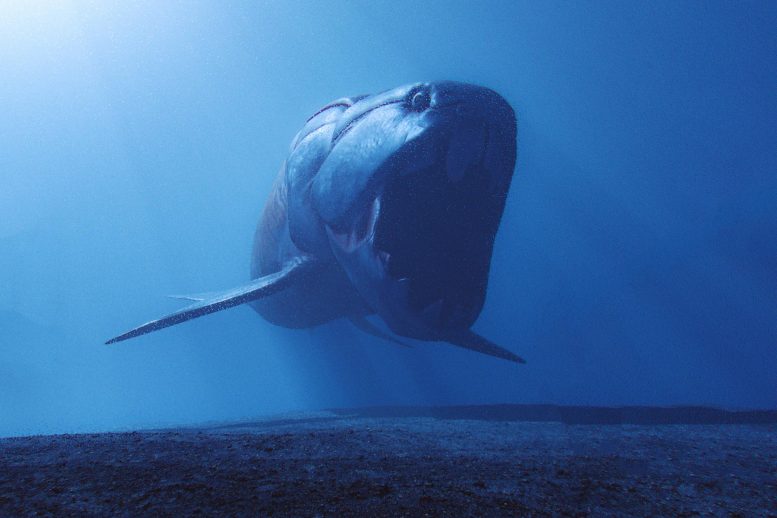
In a new study, it was discovered that previous methods for estimating the size of late Devonian arthrodire placoderms, such as Dunkleosteus, were inaccurate. These fish had larger mouths relative to their body length than sharks, making them capable of attacking larger prey.
A new study by Case Western Reserve University PhD student Russell Engelman published in PeerJ Life & Environment attempts to address a persistent problem in paleontology – what were the size of Dunkleosteus and other late Devonian arthrodire placoderms. Arthrodire placoderms are extinct fishes with had armor covering their head and part of their torso, but like sharks the rest of their skeleton was made of cartilage, meaning most of their body did not preserve when they became fossilized.
Previous size estimates for Dunkleosteus were largely based on this animal’s mouth and jaws, but these methods were never tested to see if they reliably estimated the size of placoderms. This study sought to test these methods by using data from modern sharks and other fishes and testing if they accurately predicted body size in Dunkleosteus and smaller arthrodire placoderms known from complete remains. Because these smaller species are known from complete remains, they could be used to test whether previous methods accurately predicted body size in arthrodires.
“Length estimates of 5–10 m have been cited for Dunkleosteus for years,” Engelman said, “but no one seems to have checked these methods statistically or tested if they produce reliable or reasonable results in arthrodires.”
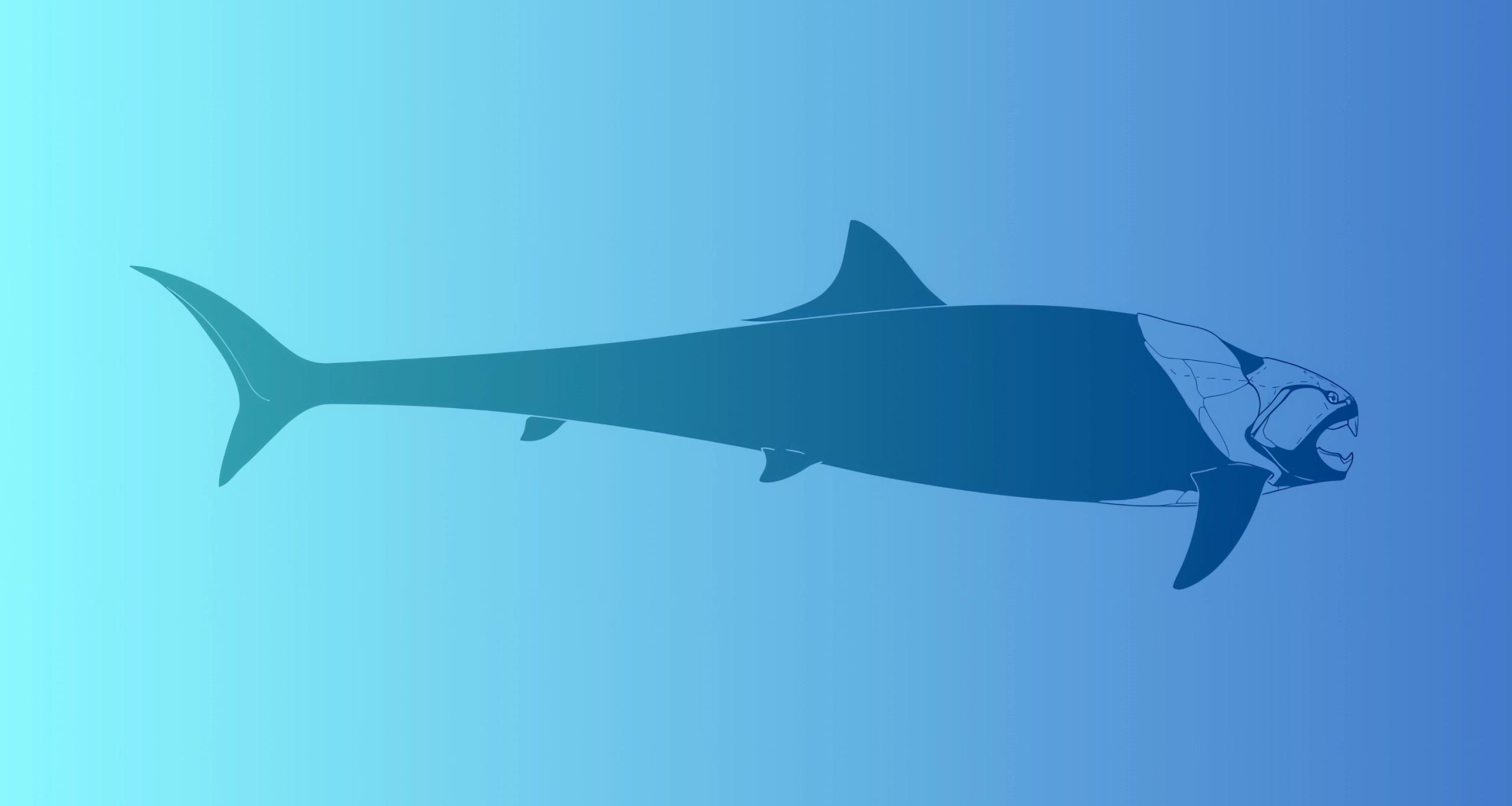
It turned out that mouth measurements of sharks did not accurately predict the body size of arthrodires. Complete arthrodires always had larger mouths at the same body length as sharks, and this caused mouth measurements of complete arthrodires to produce body length estimates 2–2.5 times their actual size. Dunkleosteus had an unusually large mouth even among arthrodires, further calling into question if the mouth and jaw parts of these smaller forms can be used to estimate the size of this Devonian giant.
Previously estimated lengths for Dunkleosteus also resulted in a biologically illogical body shape when applied to the known dimensions of the fossils. If previous lengths were accurate, the resulting fish would have had an extremely small, shrunken head and hyper-elongate torso even more longer than the proportions seen in most eels, at odds with a previous study published in PeerJ suggesting a shorter body more similar to pelagic sharks. The long shape implied by earlier studies would have also made the animal’s gills so small relative to its body the fish would have likely suffocated. No other arthrodires showed such extreme proportions, even though estimates based on mouth dimensions suggested they should, suggesting these prior length estimates are highly unlikely for Dunkleosteus.
Mouth Size and Feeding Behavior
Overall, this suggests mouth dimension in sharks cannot be used to predict the length of arthrodires and most previously cited lengths for large members of this group are overestimates, in agreement with the conclusions of a previous study by the same author. Arthrodires simply have much larger mouths relative to their body length than sharks, with relative mouth widths more similar to predatory catfishes.
“Dunkleosteus has often been assumed to function like a great white shark,” Engelman said, “but as we learn more about this fish it might be more accurate to describe it as a mix of shark, grouper, viperfish, tuna, and piraiba [a type of giant predatory Amazonian catfish, well known to fans of Animal Planet’s River Monsters].”
However, although it may be disappointing that these giant Devonian fishes were not as giant as once thought, the recognition these animals have large mouths is still important. As apex predators of the Devonian, accurately estimating the body length and proportions of arthrodires is critical for reconstructing their life habits and the ecology of the Devonian in general. In fact, despite frequently being reconstructed based on sharks, this study notes the large mouths of arthrodires suggest arthrodires could attack much larger prey relative to their body size than living sharks. This suggests while arthrodires have often been reconstructed based on comparisons with sharks, the two may have behaved more differently than previously thought.
“Mouth size is probably the biggest factor in determining the largest prey a fish can eat,” Engelman said, “the results of this study suggest arthrodires were hitting far above their weight class.”
Reference: “Giant, swimming mouths: oral dimensions of extant sharks do not accurately predict body size in Dunkleosteus terrelli (Placodermi: Arthrodira)” by Russell Engelman, 10 April 2023, PeerJ.
DOI: 10.7717/peerj.15131
Never miss a breakthrough: Join the SciTechDaily newsletter.
Follow us on Google and Google News.