
Close Menu
    Facebook X (Twitter) Instagram
    SciTechDaily
    • Biology
    • Chemistry
    • Earth
    • Health
    • Physics
    • Science
    • Space
    • Technology
    Facebook X (Twitter) Pinterest YouTube RSS
    SciTechDaily
    Home»Space»Black Hole Swallows Much Smaller Mysterious Astrophysical Object
    Space

    Black Hole Swallows Much Smaller Mysterious Astrophysical Object

    By Australian National UniversityJuly 1, 20204 Comments3 Mins Read
    Facebook Twitter Pinterest Telegram LinkedIn WhatsApp Email Reddit
    Share
    Facebook Twitter LinkedIn Pinterest Telegram Email Reddit
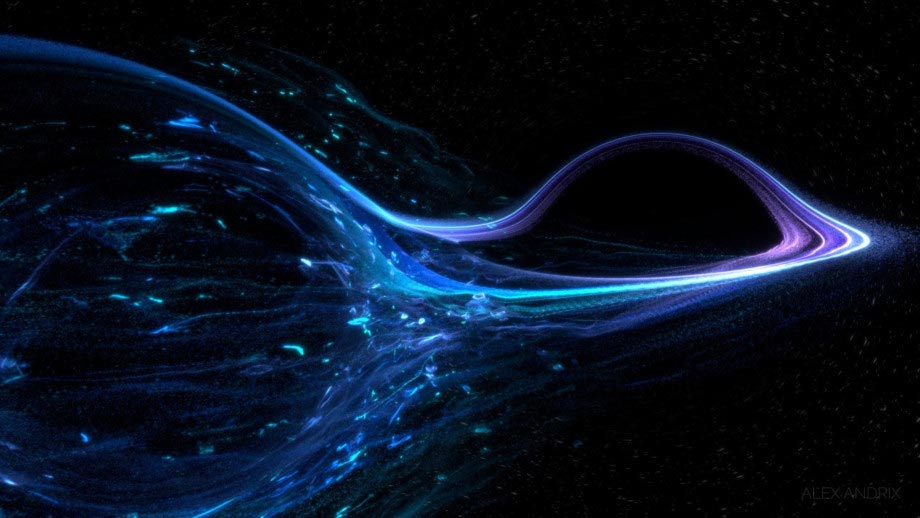
    Black Hole Collision Artist Impression
    Artist’s impression of black hole collision. Credit: Alex Andrix. NB: The streams and lensing around the compact objects are an artistic impression.

    A black hole around 23 times the size of the Sun has swallowed a mysterious, much smaller astrophysical object, according to new research announced today by the LIGO and Virgo gravitational wave observatories, including scientists from The Australian National University (ANU).

    The gravitational waves from this surprising event were detected by the LIGO and Virgo detectors on August 14, 2019, with the signal coming from a distance of around 800 million light-years.

    Researchers think the mystery object is most likely either the lightest black hole or possibly the heaviest neutron star ever discovered.

    Neutron stars are formed during the explosion of a giant star and are the smallest and densest type of star in the Universe.

    But the object’s mass makes it especially “intriguing.”

    “There is a mass gap between the mass of known neutron stars which are less massive and black holes which are more massive,” Professor Susan Scott from the ANU Research School of Physics said.

    “This object falls within that mass gap, making it either the heaviest neutron star or the lightest black hole ever discovered.”

    The mass of the mysterious object, at 2.6 solar masses, is similar to that of the object formed from the first-ever observation by LIGO and Virgo in 2017 of two neutron stars colliding, which is thought to be a black hole.

    The ANU SkyMapper Telescope scanned the area of space where the event occurred, but couldn’t find any visual clues.

    “Finding light from this event would have been the smoking gun that proved we had just made the first-ever observation of the merger of a black hole with a neutron star,” Professor Scott said, who is also the Leader of the General Relativity Theory and Data Analysis Group at ANU and a Chief Investigator with the ARC Centre of Excellence for Gravitational Wave Discovery (OzGrav).

    “But due to the very unequal masses of the colliding objects and because this event was so far away, the absence of any visual clues is consistent with either a binary black hole merger or the merger of a black hole with a neutron star.”

    The ‘ripples’ from the event also add further weight to a well-known scientific theory, according to OzGrav postdoctoral researcher Dr. Terry Mcrae from ANU.

    “The theory of general relativity predicts changes in the gravitational waves produced when very different-sized objects are involved in a collision. This event confirms that prediction,” Dr. Mcrae said.

    “This further cements general relativity as the most successful theory in physics of the modern era.”

    For more on this research:

    • Mystery Astronomical Object in ‘Mass Gap’ Discovered by LIGO-Virgo Gravitational-Wave Observatory
    • Astronomers Stunned by Black Hole With a Puzzling Companion
    • Astronomers Find Mystery Object in Mass Gap
    • Gravitational Wave Astronomers Find Mystery Object in Mass Gap

    Reference: “GW190814: Gravitational Waves from the Coalescence of a 23 Solar Mass Black Hole with a 2.6 Solar Mass Compact Object” by R. Abbott, et. al., 23 June 2020, Astrophysical Journal Letters.
    DOI: 10.3847/2041-8213/ab960f

    Never miss a breakthrough: Join the SciTechDaily newsletter.
    Follow us on Google and Google News.

    Astrophysics Australian National University Black Hole Gravitational Waves LIGO Popular Virgo Collaboration
    Share. Facebook Twitter Pinterest LinkedIn Email Reddit

    Related Articles

    Tracing Ripples in the Fabric of Spacetime to Reveal the Origins of Merging Black Holes

    Researchers Find the Origin and Maximum Mass of Massive Black Holes Observed by Gravitational Wave Detectors

    Monumental Collision of “Impossible” Black Holes Detected for the First Time

    Lopsided “David and Goliath” Black Hole Merger With an Oddball Origin Story

    Massive “Bang” in LIGO and Virgo Gravitational-Wave Detectors: Fabric of Space-Time Shaken by Binary Black Hole Merger

    Gravitational Wave Astronomers Find Mystery Object in Mass Gap

    Astronomers Stunned by Black Hole With a Puzzling Companion: “An Unexpected and Really Exciting Discovery!”

    New Possible Explanation of Strange Black Hole Merger Revealed

    LIGO and Virgo Detect Gravitational Waves from Binary Black Hole Merger

    4 Comments

    1. norman rust on July 2, 2020 6:24 pm

      I can not help wondering that all visible matter of density forms in space forms sphere and gravity is omnidirectional attraction and I can not find any credible evidence that black holes exist is there actual observable evidence that leaves no doubt? The matter disappears like in a magician black hat. Why don’t black holes show up on the COBE picture that shows uniformity in all directions?

      Reply
    2. Michael John Grobler on July 2, 2020 11:46 pm

      The introduction is incorrect. It’s not 23 times the size of the sun. Then it would have been a HUGE blackhole. It’s 23 times more massive. Big difference.

      Reply
    3. Malaz Atassi on July 5, 2020 6:23 pm

      Very nice informations,,my full appreciation,,

      Reply
    4. Cherye Norris on July 8, 2020 2:50 am

      It seems to me those black holes have Big appetites!!! All they Do is eat!!!

      Reply
    Leave A Reply Cancel Reply

    • Facebook
    • Twitter
    • Pinterest
    • YouTube

    Don't Miss a Discovery

    Subscribe for the Latest in Science & Tech!

    Trending News

    Your Blood Pressure Reading Could Be Wrong Because of One Simple Mistake

    Astronomers Stunned by Ancient Galaxy With No Spin

    Physicists May Be on the Verge of Discovering “New Physics” at CERN

    Scientists Solve 320-Million-Year Mystery of Reptile Skin Armor

    Scientists Say This Daily Walking Habit May Be the Secret to Keeping Weight Off After Dieting

    New Therapy Rewires the Brain To Restore Joy in Depression Patients

    Giant Squid Detected off Western Australia in Stunning Deep-Sea Discovery

    Popular Sugar-Free Sweetener Linked to Liver Disease, Study Warns

    Follow SciTechDaily
    • Facebook
    • Twitter
    • YouTube
    • Pinterest
    • Newsletter
    • RSS
    SciTech News
    • Biology News
    • Chemistry News
    • Earth News
    • Health News
    • Physics News
    • Science News
    • Space News
    • Technology News
    Recent Posts
    • Hidden Warm Water Beneath Antarctica Could Rapidly Raise Global Sea Levels
    • Scientists Revive Ancient Chemistry Trick To Engineer Next-Generation Glass
    • Scientists Use AI To Supercharge Ultrafast Laser Simulations by More Than 250x
    • Scientists Just Found a Surprising Way To Destroy “Forever Chemicals”
    • Popular Supplement Ingredient Linked to Shorter Lifespan in Men
    Copyright © 1998 - 2026 SciTechDaily. All Rights Reserved.
    • Science News
    • About
    • Contact
    • Editorial Board
    • Privacy Policy
    • Terms of Use

    Type above and press Enter to search. Press Esc to cancel.