
Close Menu
    Facebook X (Twitter) Instagram
    SciTechDaily
    • Biology
    • Chemistry
    • Earth
    • Health
    • Physics
    • Science
    • Space
    • Technology
    Facebook X (Twitter) Pinterest YouTube RSS
    SciTechDaily
    Home»Health»Boosting Neuron Formation To Restore Memory in Alzheimer’s Disease
    Health

    Boosting Neuron Formation To Restore Memory in Alzheimer’s Disease

    By Rockefeller University PressAugust 28, 2022No Comments3 Mins Read
    Facebook Twitter Pinterest Telegram LinkedIn WhatsApp Email Reddit
    Share
    Facebook Twitter LinkedIn Pinterest Telegram Email Reddit
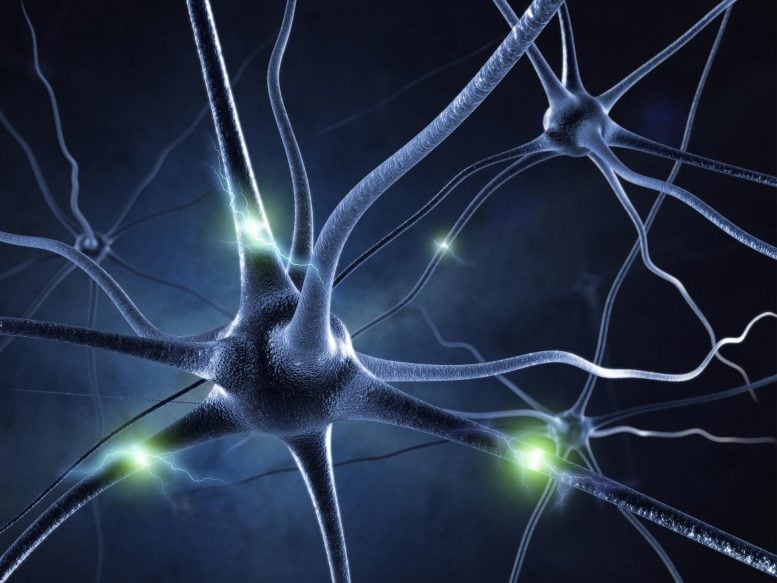
    Neurons Brain Signals
    Researchers have discovered that boosting neuron formation restores memory in mice with Alzheimer’s disease.

    Boosting neuron production in Alzheimer’s mice restores memory, indicating that enhancing neurogenesis may offer a new treatment approach for Alzheimer’s disease.

    Scientists have discovered that increasing the production of new neurons in mice with Alzheimer’s disease (AD) rescues the animals’ memory defects. The study shows that new neurons can incorporate into the neural circuits that store memories and restore their normal function. This suggests that boosting neuron production could be a viable strategy to treat AD patients. The study, which was published on August 19 in the Journal of Experimental Medicine (JEM), was done by researchers at the University of Illinois Chicago.

    New neurons are created from neural stem cells via a process known as neurogenesis. Previous studies have shown that neurogenesis is impaired in both AD patients and laboratory mice carrying genetic mutations linked to AD. This impairment is especially serious in a region of the brain called the hippocampus, which is crucial for memory acquisition and retrieval.

    “However, the role of newly formed neurons in memory formation, and whether defects in neurogenesis contribute to the cognitive impairments associated with AD, is unclear,” says Professor Orly Lazarov of the Department of Anatomy and Cell Biology at the University of Illinois Chicago College of Medicine.
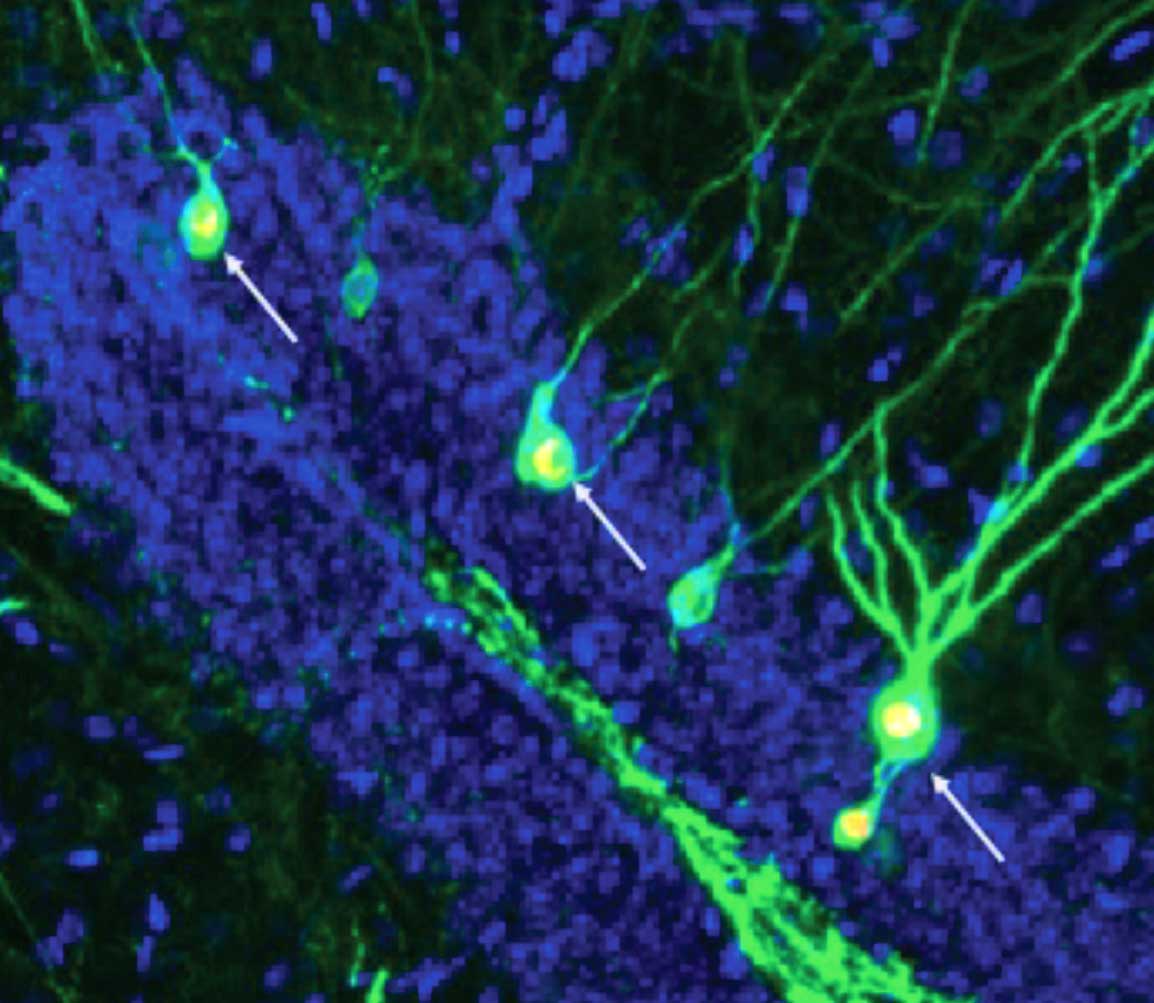
    Memory-Storing Neurons in Mouse Hippocampus
    The new study shows that boosting neurogenesis increases the number of newly formed neurons involved in storing and retrieving memories (arrows) in the hippocampus of mice with AD. Credit: © 2022 Mishra et al. Originally published in Journal of Experimental Medicine. https://doi.org/10.1084/jem.20220391

    In the new JEM study, Lazarov and his colleagues boosted neurogenesis in AD mice by genetically enhancing the survival of neuronal stem cells. The scientists deleted the gene Bax, which plays a major role in neuronal stem cell death, ultimately leading to the maturation of more new neurons. Increasing the production of new neurons in this manner restored the animals’ cognitive performance, as demonstrated in two different tests measuring spatial recognition and contextual memory.

    Integration of New Neurons in Memory-Storing Circuits

    By fluorescently labeling neurons activated during memory acquisition and retrieval, the scientists discovered that, in the brains of healthy mice, the neural circuits involved in storing memories include many newly formed neurons alongside older, more mature neurons. These memory-storing circuits contain fewer new neurons in AD mice, but the integration of newly formed neurons was restored when neurogenesis was increased.

    Further analyses of the neurons forming the memory-storing circuits revealed that boosting neurogenesis also increases the number of dendritic spines. These are structures in synapses known to be critical for memory formation. Plus, boosting neurogenesis also restores a normal pattern of neuronal gene expression.

    Lazarov and colleagues confirmed the importance of newly formed neurons for memory formation by specifically inactivating them in the brains of AD mice. This reversed the benefits of boosting neurogenesis, preventing any improvement in the animals’ memory.

    “Our study is the first to show that impairments in hippocampal neurogenesis play a role in the memory deficits associated with AD by decreasing the availability of immature neurons for memory formation,” Lazarov says. “Taken together, our results suggest that augmenting neurogenesis may be of therapeutic value in AD patients.”

    Reference: ” Augmenting neurogenesis rescues memory impairments in Alzheimer’s disease by restoring the memory-storing neurons” by Rachana Mishra, Trongha Phan, Pavan Kumar, Zachery Morrissey, Muskan Gupta, Carolyn Hollands, Aashutosh Shetti, Kyra Lauren Lopez, Mark Maienschein-Cline, Hoonkyo Suh, Rene Hen and Orly Lazarov, 19 August 2022, Journal of Experimental Medicine.
    DOI: 10.1084/jem.20220391

    Never miss a breakthrough: Join the SciTechDaily newsletter.
    Follow us on Google and Google News.

    Alzheimer's Disease Brain Neuroscience
    Share. Facebook Twitter Pinterest LinkedIn Email Reddit

    Related Articles

    “Cognitive Clock” – Researchers Develop New Measure of Brain Health

    Identifying “The Terrorist Inside My Husband’s Brain” – Living Brain Imaging Can Clearly Differentiate Between Types of Dementia

    Neuroscientists Discover Promising Way to Restore Cognitive Function Impaired by Alzheimer’s Disease

    Century of Data Shows COVID-19 Likely to Impact the Brain Long-Term

    Treating Neurodegenerative Diseases From Glaucoma to Alzheimer’s: New Discovery on How to Protect Neurons and Encourage Their Growth

    Long Before Alzheimer’s Symptoms, Plaque Emerges Deep in the Brain [Video]

    Common Nutrient Supplement May Prevent Alzheimer’s Disease

    Test for Alzheimer’s May Be Undermining Drug Trials

    Disrupted Sleep Patterns Linked to Alzheimer’s

    Leave A Reply Cancel Reply

    • Facebook
    • Twitter
    • Pinterest
    • YouTube

    Don't Miss a Discovery

    Subscribe for the Latest in Science & Tech!

    Trending News

    Millions Take These IBS Drugs, But a New Study Finds Serious Risks

    Scientists Unlock Hidden Secrets of 2,300-Year-Old Mummies Using Cutting-Edge CT Scanner

    Bread Might Be Making You Gain Weight Even Without Eating More Calories

    Scientists Discover Massive Magma Reservoir Beneath Tuscany

    Europe’s Most Active Volcano Just Got Stranger – Here’s Why Scientists Are Rethinking It

    Alzheimer’s Symptoms May Start Outside the Brain, Study Finds

    Millions Take This Popular Supplement – Scientists Discover a Concerning Link to Heart Failure

    The Universe Is Expanding Too Fast and Scientists Can’t Explain Why

    Follow SciTechDaily
    • Facebook
    • Twitter
    • YouTube
    • Pinterest
    • Newsletter
    • RSS
    SciTech News
    • Biology News
    • Chemistry News
    • Earth News
    • Health News
    • Physics News
    • Science News
    • Space News
    • Technology News
    Recent Posts
    • Simple Blood Test May Predict Alzheimer’s Years Before Brain Scans Show Signs
    • Scientists Say Adding This Unusual Seafood to Your Diet Could Reverse Signs of Aging
    • U.S. Waste Holds $5.7 Billion Worth of Crop Nutrients
    • Scientists Say a Hidden Structure May Exist Inside Earth’s Core
    • Doctors Surprised by the Power of a Simple Drug Against Colon Cancer
    Copyright © 1998 - 2026 SciTechDaily. All Rights Reserved.
    • Science News
    • About
    • Contact
    • Editorial Board
    • Privacy Policy
    • Terms of Use

    Type above and press Enter to search. Press Esc to cancel.