
Close Menu
    Facebook X (Twitter) Instagram
    SciTechDaily
    • Biology
    • Chemistry
    • Earth
    • Health
    • Physics
    • Science
    • Space
    • Technology
    Facebook X (Twitter) Pinterest YouTube RSS
    SciTechDaily
    Home»Biology»Bowl-Shaped Nanoparticles Help Untangle Alzheimer’s Disease Amyloid Beta Plaques
    Biology

    Bowl-Shaped Nanoparticles Help Untangle Alzheimer’s Disease Amyloid Beta Plaques

    By Biophysical SocietyJune 6, 2021No Comments3 Mins Read
    Facebook Twitter Pinterest Telegram LinkedIn WhatsApp Email Reddit
    Share
    Facebook Twitter LinkedIn Pinterest Telegram Email Reddit
    Amyloid Beta Plaques
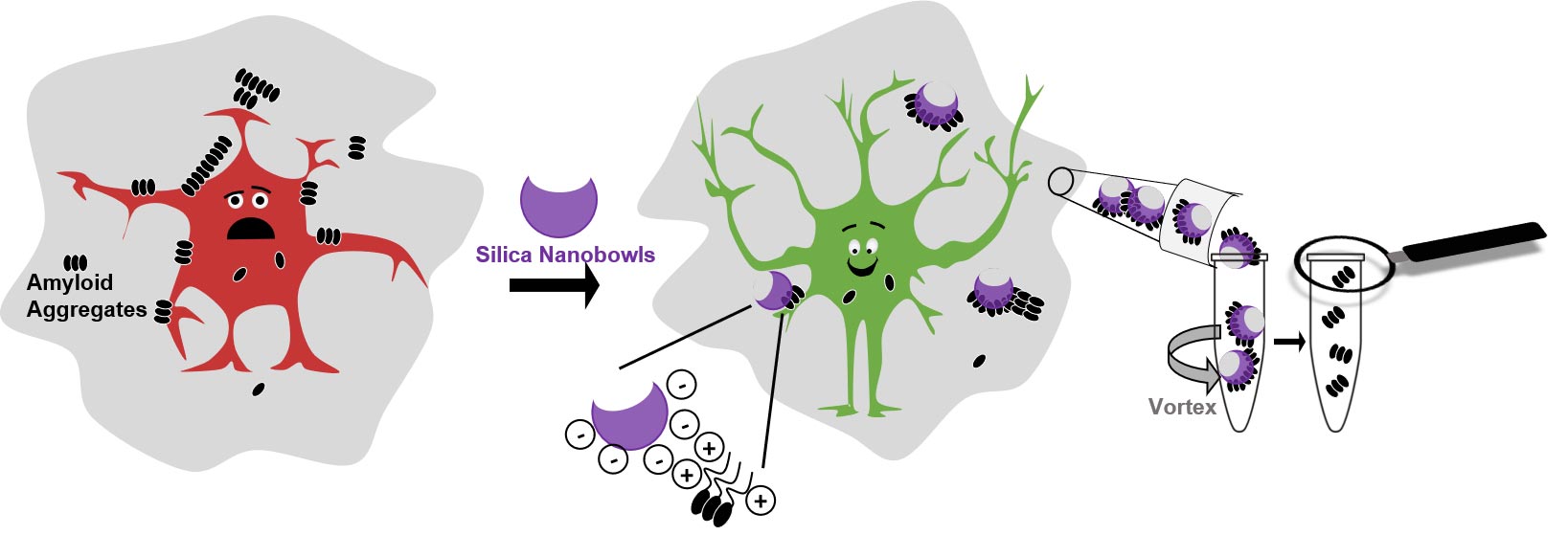
    The amyloid beta protein that tangles to form the hallmark Alzheimer’s brain plaques, cling to ultra-small “bowls,” called nanobowls, scientists find. They can use these nanobowls to remove the toxic amyloid aggregates and further study them. Credit: Illustration courtesy of Vrinda Sant

    New research shows that the protein that causes Alzheimer’s Disease’s hallmark brain plaques clings to certain bowl-shaped nanoparticles, allowing researchers to better understand the disease and potentially providing a targeted therapeutic.

    Scientists are still a long way from being able to treat Alzheimer’s Disease, in part because the protein aggregates that can become brain plaques, a hallmark of the disease, are hard to study. The plaques are caused by the amyloid beta protein, which gets misshapen and tangled in the brain. To study these protein aggregates in tissue samples, researchers often have to use techniques that can further disrupt them, making it difficult to figure out what’s going on. But new research by Vrinda Sant, a graduate student, and Madhura Som, a recent PhD graduate, in the lab of Ratnesh Lal at the University of California, San Diego, provides a new technique for studying amyloid beta and could be useful in future Alzheimer’s treatments. Sant and her colleagues presented their research at the 65th Annual Meeting of the Biophysical Society.

    Scientists have been studying the possibility of using nanoparticles, ultra-small structures that can be coated in therapeutics, to provide targeted treatments for a number of diseases. There are several potential applications for nanoparticles, such as coating them with chemotherapy agents and targeting them to a tumor for cancer treatment without toxic side effects for the rest of the body. Sant began researching bowl-shaped nanoparticles, which she calls “nanobowls,” as a potential way to deliver treatments for Alzheimer’s Disease.

    Amyloid Proteins Stick Without Drugs

    Sant expected to have to coat the nanobowls in some kind of pharmaceutical in order to have them alleviate the amyloid beta protein plaques that contribute to Alzheimer’s. But the amyloid beta proteins clung to the nanobowls even when they were just coated in a lipid-polymer without pharmaceuticals added, allowing the scientists to remove the toxic protein aggregates from the cells. “We were surprised to find that the nanobowls were therapeutic themselves,” Sant says.

    Sant says while using nanobowls as therapeutics for Alzheimer’s Disease can be a potential application, it currently serves scientists who want to better understand the amyloid beta aggregates. In their recent research, Sant and team found that multiple forms of amyloid beta aggregates co-exist and not all forms directly convert into amyloid plaques, confirming what had been a hypothesis in the field. The research team is now working on using nanobowls to extract and further study amyloid beta protein aggregates. With amyloid beta being implicated in neurodegenerative diseases, cancer and cardiovascular conditions, nanobowls have potential for a range of diagnostics and treatments.

    Never miss a breakthrough: Join the SciTechDaily newsletter.
    Follow us on Google and Google News.

    Alzheimer's Disease Biochemistry Biophysical Society Biophysics Biotechnology Brain Nanoparticles Neuroscience
    Share. Facebook Twitter Pinterest LinkedIn Email Reddit

    Related Articles

    Protein Made in the Liver May Cause Alzheimer’s Disease in the Brain

    Researchers Discover a Molecule Critical to Functional Brain Rejuvenation

    Evidence of Sleep-Dependent Brain Activity in Clearing Toxic Proteins and Preventing Alzheimer’s Disease

    Researchers Discover Crucial Step in Formation of Deadly Brain Diseases

    Brain Pacemaker Implanted to Treat Alzheimer’s

    Researchers Use FDDNP–PET Scanning to Predict Cognitive Decline

    FDA Approved Drug Reverses Alzheimer’s Symptoms in Mice

    Scientists Create Brain Cells from Skin Cells

    Alzheimer’s Spreads Throughout the Brain by Jumping From Neuron to Neuron

    Leave A Reply Cancel Reply

    • Facebook
    • Twitter
    • Pinterest
    • YouTube

    Don't Miss a Discovery

    Subscribe for the Latest in Science & Tech!

    Trending News

    New Study Reveals Why Ozempic Works Better for Some People Than Others

    Climate Change Is Altering a Key Greenhouse Gas in a Way Scientists Didn’t Expect

    New Study Suggests Gravitational Waves May Have Created Dark Matter

    Scientists Discover Why the Brain Gets Stuck in Schizophrenia

    Scientists Engineer “Tumor-Eating” Bacteria That Devour Cancer From Within

    Even “Failed” Diets May Deliver Long-Term Health Gains, Study Finds

    NIH Scientists Discover Powerful New Opioid That Relieves Pain Without Dangerous Side Effects

    Collapsing Plasma May Hold the Key to Cosmic Magnetism

    Follow SciTechDaily
    • Facebook
    • Twitter
    • YouTube
    • Pinterest
    • Newsletter
    • RSS
    SciTech News
    • Biology News
    • Chemistry News
    • Earth News
    • Health News
    • Physics News
    • Science News
    • Space News
    • Technology News
    Recent Posts
    • The Surprising Reason You Might Want To Sleep Without a Pillow
    • Household Cats Could Hold the Secret to Fighting Breast Cancer
    • Scientists Say This Natural Hormone Reverses Obesity by Targeting the Brain
    • This 15,000-Year-Old Discovery Changes What We Know About Early Human Creativity
    • 35-Million-Year-Old Mystery: Strange Arachnid Discovered Preserved in Amber
    Copyright © 1998 - 2026 SciTechDaily. All Rights Reserved.
    • Science News
    • About
    • Contact
    • Editorial Board
    • Privacy Policy
    • Terms of Use

    Type above and press Enter to search. Press Esc to cancel.