
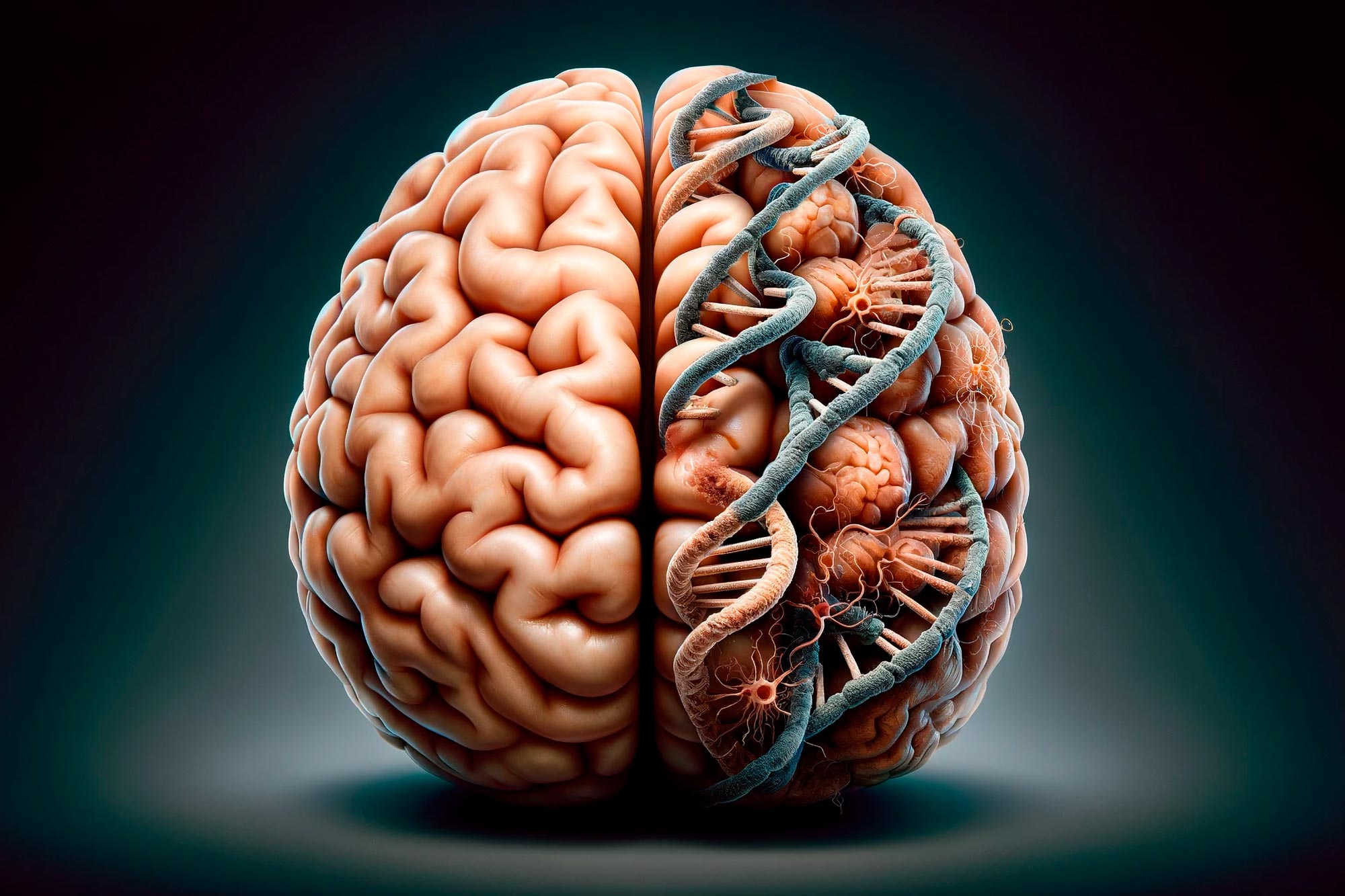
Neurodevelopmental and psychiatric disorders such as schizophrenia, bipolar disorder, autism, and depression have profound impacts on affected individuals and society.
The National Institute of Mental Health has launched the SSPsyGene consortium, which unites top researchers to study 250 high-risk genes believed to contribute to these disorders. By mutating these genes in human stem cells and analyzing the effects, researchers aim to unravel the genetic factors of these conditions and pave the way for more effective treatments.
Understanding the Genetic Basis of Neurodevelopmental Disorders
Neurodevelopmental and psychiatric disorders (NPD) including schizophrenia, bipolar disorder, autism, and depression are detrimental to individuals, their families, and society as a whole, and in many cases still lack effective treatments. It’s becoming more and more clear that genetic mutations in certain genes can increase the likelihood of developing NPD, and several hundreds of those “risk genes” have been identified to date, but their role related to NPD remains a mystery.
“Very little is known about the basic function of most of these genes, and what we do know often comes from work in cancer cell lines rather than brain cell types,” says David Panchision, Chief of the Developmental and Genomic Neuroscience Research Branch at the National Institute of Mental Health (NIMH), who spearheaded the SSPsyGene program aiming to tackle this challenge.
“As such, we still don’t have a clear understanding of how alterations in these genes may work individually or in combination to contribute to neurodevelopmental and psychiatric disorders.”

Launch of SSPsyGene: A New Initiative in Mental Health Research
To get to the bottom of this, the National Institute of Mental Health (NIMH) initiated a consortium called SSPsyGene in 2023, uniting research teams from renowned US universities with the joint goal of characterizing the genetic origins of NPD, focusing on 250 selected high-risk genes.
Among the contributors are Jubao Duan, Endeavor Health (formerly NorthShore University Health System) and University of Chicago, USA and Zhiping Pang, Rutgers University, USA with their teams, who developed a method for mutating NPD risk genes in human stem cells at large scale. In the modified cells, a selected NPD risk gene is mutated so that it no longer makes a functional protein. The modified stem cells can subsequently be turned into neurons and other brain cells to model the consequences of risk gene mutations in a simplified, lab-based version of the human brain.
In the initial phase of the project, the teams tested 23 NPD risk genes, reported in work published in a recent article in the journal Stem Cell Reports. The resulting stem cell lines will be made available to other researchers worldwide to facilitate research on those risk genes and their contribution to NPD.
In future works, Pang, Duan and the other members of the consortium will join forces to generate mutated stem cell lines for a much larger number of risk genes, with the ultimate goal of understanding the genetic causes for NPD and for generating better treatments.
“The hope is that this collaborative work will generate a highly impactful resource for the neuroscience and psychiatric research community,” Panchision says.
Reference: “Scaled and efficient derivation of loss-of-function alleles in risk genes for neurodevelopmental and psychiatric disorders in human iPSCs” by Hanwen Zhang, Ada McCarroll, Lilia Peyton, Sol Díaz de León-Guerrerro, Siwei Zhang, Prarthana Gowda, David Sirkin, Mahmoud ElAchwah, Alexandra Duhe, Whitney G. Wood, Brandon Jamison, Gregory Tracy, Rebecca Pollak, Ronald P. Hart, Carlos N. Pato, Jennifer G. Mulle, Alan R. Sanders, Zhiping P. Pang and Jubao Duan, 12 September 2024, Stem Cell Reports.
DOI: 10.1016/j.stemcr.2024.08.003
Never miss a breakthrough: Join the SciTechDaily newsletter.
Follow us on Google and Google News.
1 Comment
“In the modified cells, a selected NPD risk gene is mutated so that it no longer makes a functional protein. The modified stem cells can subsequently be turned into neurons and other brain cells to model the consequences of risk gene mutations in a simplified, lab-based version of the human brain.” In other words, they have a tissue culture of stem cells that are mutated to stop making one protein, and then see what happens when the cell is made to differentiate into a brain cell type. This is supposed to somehow help us understand mental illness.
The genetic reductionism of modern medicine is frightening, and myopic. There is more to the brain than genes and their proteins. And just as cells in tissue culture don’t behave like cells in a real brain, the brain does not behave independently of the rest of the body, and the body does not behave independently of the culture. People have depression, anxiety, and other mental illness due mostly to the culture and the lifestyles it gives us, including drugs, stress, bad diet, poisoned food/water/air, and recently, COVID lockdowns. You can’t study the impact of real life and real culture on mental illness by looking at mutated cells in tissue culture. Too bad this is where mental health money is going, instead of addressing the reasons why people become mentally ill.
Of course, this is all about technology development, especially in genetics. “Among the contributors are Jubao Duan, Endeavor Health (formerly NorthShore University Health System) and University of Chicago, USA and Zhiping Pang, Rutgers University, USA with their teams, who developed a method for mutating NPD risk genes in human stem cells at large scale.” Technology is driving the research, not the other way around.