
Close Menu
    Facebook X (Twitter) Instagram
    SciTechDaily
    • Biology
    • Chemistry
    • Earth
    • Health
    • Physics
    • Science
    • Space
    • Technology
    Facebook X (Twitter) Pinterest YouTube RSS
    SciTechDaily
    Home»Health»Brain Takes a Beating As Arteries Age
    Health

    Brain Takes a Beating As Arteries Age

    By Ola Nilsson, Umea UniversityAugust 20, 2019No Comments3 Mins Read
    Facebook Twitter Pinterest Telegram LinkedIn WhatsApp Email Reddit
    Share
    Facebook Twitter LinkedIn Pinterest Telegram Email Reddit

    Brain Inflammation

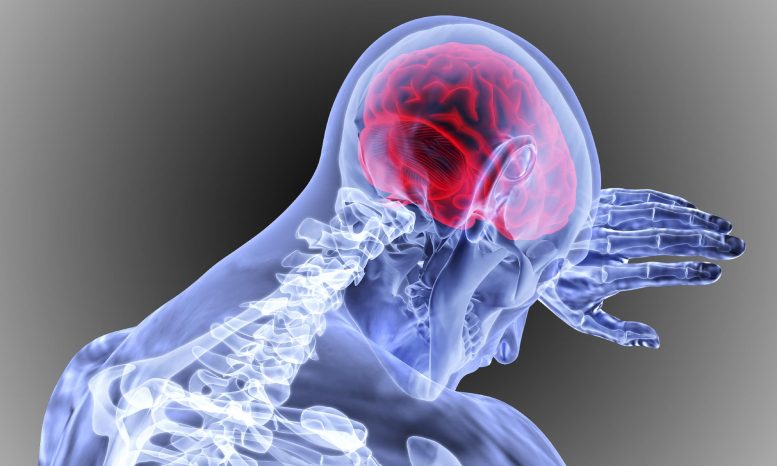
    Researchers in Umeå, Sweden, have presented a model that explains why memory deteriorates as the body ages. With age, the brain receives an increased load from the heart’s beating as the body’s large arteries stiffen over the years, causing damage to the smallest blood vessels in the brain.

    Lars Nyberg
    Lars Nyberg serves as Professor of Neuroscience and director of Umeå Center for Functional Brain Imaging (UFBI). He is a member of the Royal Swedish Academy of Sciences. Credit: Mattias Pettersson

    The fact that human memory is deteriorating with increasing age is something that most people experience sooner or later, even among those who avoid diseases such as Alzheimer’s. Similarly, a connection between the aging of the brain and the body is well known. However, the exact nature of this association is not known.

    “We suggest a chain of events on how the aging of the brain and vessels are related,” says Lars Nyberg, professor at Umeå University.

    What Umeå researchers Lars Nyberg and Anders Wåhlin have created is an explanatory model that starts with the heartbeat, and carries through the largest arteries in the body all the way to the finest vessels in the brain. An important feature of the model is that it provides a rationale for why some cognitive processes may be particularly at risk for the proposed mechanism.

    Anders Wahlin
    Anders Wåhlin, researcher at Department of Radiation Sciences, Umeå University. Credit: Umeå University

    As the human body ages, large arteries, such as the aorta, stiffen and lose a large portion of their ability to absorb the pressure increase generated as the heart ejects blood into the arteries. Such pressure pulsatility is instead transmitted to smaller blood vessels, for example, those in the brain. The smallest blood vessels in the brain, the capillaries, are subjected to increased stress that causes damage to cells within and surrounding the capillary walls. These cells are important in the regulation of the capillary blood flow. If the smallest blood vessels are damaged, this is detrimental to the ability to increase the blood supply to the brain when coping with demanding cognitive processes.

    According to the researchers’ model, the hippocampus in the brain is particularly vulnerable. The structure in that part of the brain is important for the episodic memory, that is, the ability to remember events from the past. The vulnerability of the hippocampus relates to the fact that it is located close to the large vessels and thus is exposed to the increased load early in the chain. In a young and healthy person, the pulsations are soft, but in an aging person the pulsations can be so powerful that they affect the brain tissue and can damage the blood supply to memory processes.

    The Umeå researchers’ model is based on a number of previous studies from the last five years.

    “We have laid the puzzle of current and verified research in different fields to a broader and more detailed picture of the course of events. It will form a starting point for future research to gain a better understanding and, in the long term, researchers may also find solutions to slow down the process,” says Anders Wåhlin.

    ###

    Reference: “At the Heart of Cognitive Functioning in Aging” by Anders Wåhlin and Lars Nyberg, 11 July 2019, Trends in Cognitive Sciences.
    DOI: 10.1016/j.tics.2019.06.004

    Never miss a breakthrough: Join the SciTechDaily newsletter.
    Follow us on Google and Google News.

    Aging Brain Umea University
    Share. Facebook Twitter Pinterest LinkedIn Email Reddit

    Related Articles

    Scientists Identify the Cause of Alzheimer’s Progression in the Brain – Very Different Than Previously Thought

    Right Light on the Mother’s Belly May Be Important to Fetal Brain Development

    National Institutes of Health Small Business Funding Boosts Alzheimer’s Science Advances

    Simple Blood Test Can Accurately Reveal Underlying Neurodegeneration (Dementia, ALS)

    Secondary Infections Inflame the Brain, Worsening Cognition & Memory in Alzheimer’s Disease

    “Cognitive Clock” – Researchers Develop New Measure of Brain Health

    Amazon Indigenous People May Hold a Key to Slowing Down Aging

    Brain Shrinkage: Your Neighborhood May Affect Your Brain Health

    Rapid Mental Rejuvenation: Experimental Drug Reverses Age-Related Cognitive Decline Within Days

    Leave A Reply Cancel Reply

    • Facebook
    • Twitter
    • Pinterest
    • YouTube

    Don't Miss a Discovery

    Subscribe for the Latest in Science & Tech!

    Trending News

    Artificial Sweeteners May Harm Future Generations, Study Suggests

    Splashdown! NASA Artemis II Returns From Record-Breaking Moon Mission

    What If Consciousness Exists Beyond Your Brain

    Scientists Finally Crack the 100-Million-Year Evolutionary Mystery of Squid and Cuttlefish

    Beyond “Safe Levels”: Study Challenges What We Know About Pesticides and Cancer

    Researchers Have Found a Dietary Compound That Increases Longevity

    Scientists Baffled by Bizarre “Living Fossil” From 275 Million Years Ago

    Your IQ at 23 Could Predict Your Wealth at 27, Study Finds

    Follow SciTechDaily
    • Facebook
    • Twitter
    • YouTube
    • Pinterest
    • Newsletter
    • RSS
    SciTech News
    • Biology News
    • Chemistry News
    • Earth News
    • Health News
    • Physics News
    • Science News
    • Space News
    • Technology News
    Recent Posts
    • What if Dark Matter Has Two Forms? Bold New Hypothesis Could Explain a Cosmic Mystery
    • Researchers Expose Hidden Chemistry of “Ore-Forming” Elements in Biology
    • Geologists Reveal the Americas Collided Earlier Than We Thought
    • 20x Difference: Study Reveals True Source of Airborne Microplastics
    • Scientists Uncover Hidden Force Powering Yellowstone’s Supervolcano
    Copyright © 1998 - 2026 SciTechDaily. All Rights Reserved.
    • Science News
    • About
    • Contact
    • Editorial Board
    • Privacy Policy
    • Terms of Use

    Type above and press Enter to search. Press Esc to cancel.