
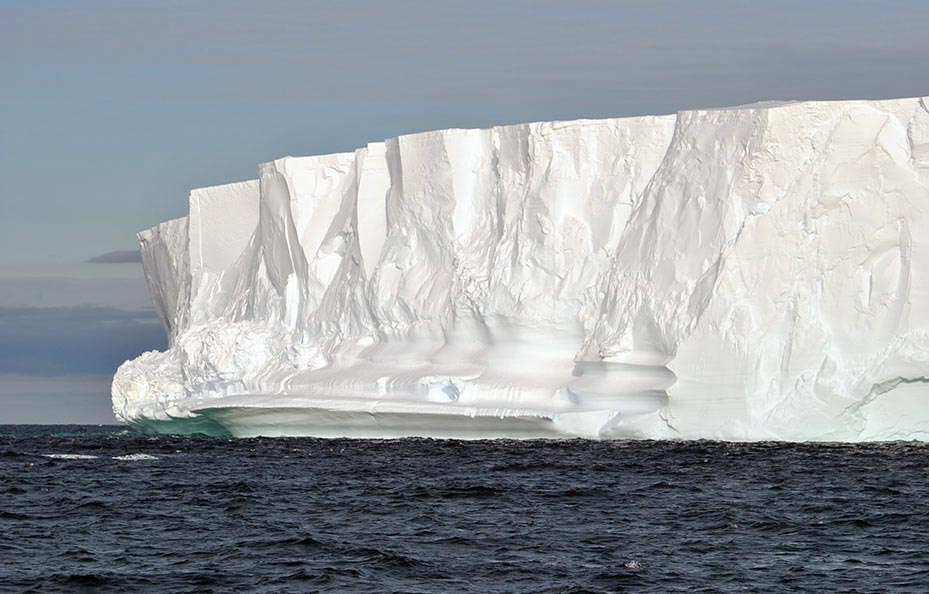
Inland Antarctic ice contains volumes of water that can raise global sea levels by several meters. A new study published in the journal Nature shows that glacier ice walls are vital for the climate, as they prevent rising ocean temperatures and melting glacier ice.
The ocean can store much more heat than the atmosphere. The deep sea around Antarctica stores thermal energy that is the equivalent of heating the air above the continent by 400 degrees.
Now, a Swedish-led international research group has explored the physics behind the ocean currents close to the floating glaciers that surround the Antarctic coast.
“Current measurements indicate an increase in melting, particularly near the coast in some parts of Antarctica and Greenland. These increases can likely be linked to the warm, salty ocean currents that circulate on the continental shelf, melting the ice from below,” says Anna Wåhlin, lead author of the study and professor of oceanography at the University of Gothenburg.
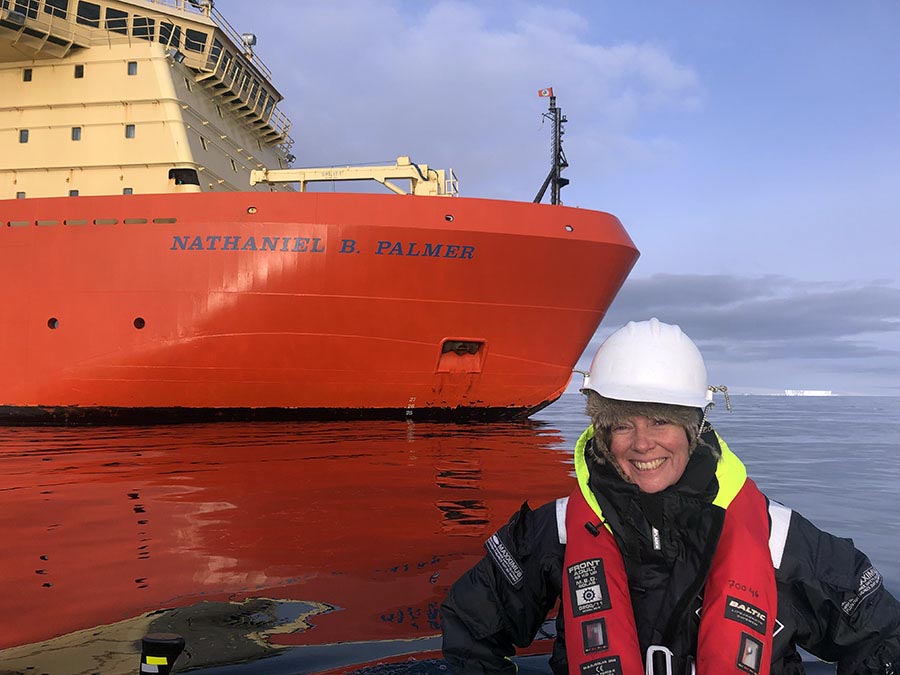
“What we found here is a crucial feedback process: the ice shelves are their own best protection against warm water intrusions. If the ice thins, more oceanic heat comes in and melts the ice shelf, which becomes even thinner etc. It is worrying, as the ice shelves are already thinning because of global air and ocean warming,” says Céline Heuzé, climate researcher at the Department of Earth Sciences of Gothenburg University.
The stability of ice is a mystery
Inland Antarctic ice gradually moves towards the ocean. Despite the ice being so important, its stability remains a mystery – as does the answer to what could make it melt faster.
Since the glaciers are difficult to access, researchers have been unable to find out much information about the active processes.
More knowledge has now been obtained from studying the measurement data collected from instruments that Anna Wåhlin and her research colleagues placed in the ocean around the Getz glacier in West Antarctica.
The ice’s edge blocks warm seawater
Gertz has a floating section that is approximately 300 to 800 meters (1,000 to 2,600 feet) thick, beneath which there is seawater that connects to the ocean beyond. The glacier culminates in a vertical edge, a wall of ice that continues 300–400 meters (1,000 to 1,300 feet) down into the ocean. Warm seawater flows beneath this edge, towards the continent and the deeper ice further south,” says Anna Wåhlin.
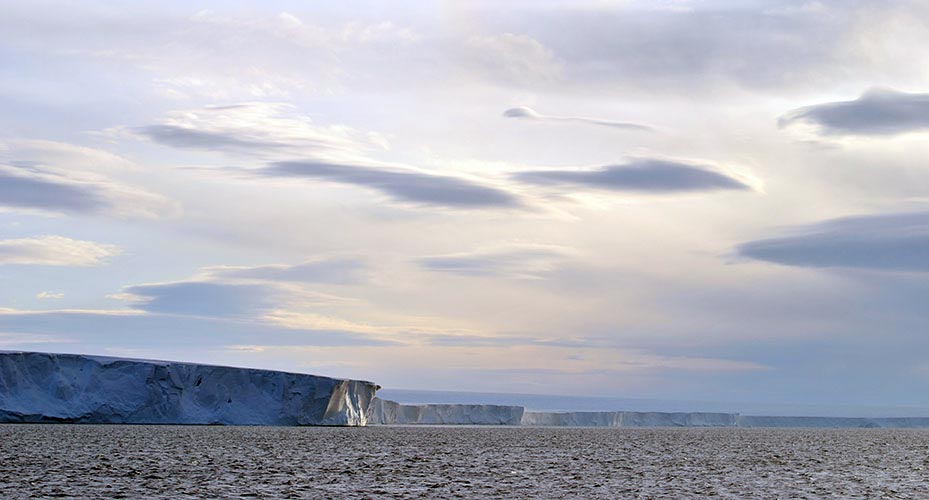
“Studying the measurement data from the instruments, we found that the ocean currents are blocked by the ice edge. This limits the extent to which the warm water can reach the continent. We have long been stumped in our attempts to establish a clear link between the transport of warm water up on the continental shelf and melting glaciers,” says Anna Wåhlin.
Now, we understand that only a small amount of the current can make its way beneath the glacier. This means that around two-thirds of the thermal energy that travels up towards the continental shelf from the deep sea never reaches the ice.”
Can lead to better prognoses
The results of the studies have provided researchers with a greater understanding of how these glacier areas work.
“From the Getz glacier, we are receiving measurements of heat transport in the ocean that correspond with the melting ice being measured by satellites. This also means that the floating glaciers – the ice fronts in particular – are key areas that should be closely monitored. If the ice walls were to disappear, much greater levels of thermal energy would be released towards the ice on land.”
“Consequently, we no longer expect to see a direct link between increasing westerly winds and growing levels of melting ice. Instead, the increased water levels can be caused by the processes that pump up warmer, heavier water to the continental shelf, for example as low-pressure systems move closer to the continent.”
Researchers believe that the studies have provided them with significantly better tools to be able to predict future water levels and create more accurate climate prognoses.
Facts about the continental shelf
A continental shelf is part of the ocean floor that belongs to the tectonic plates. Generally, the continental shelf is 0–500 meters deep and culminates in a continental slope.
Reference: “Ice front blocking of ocean heat transport to an Antarctic ice shelf” by A. K. Wåhlin, N. Steiger, E. Darelius, K. M. Assmann, M. S. Glessmer, H. K. Ha, L. Herraiz-Borreguero, C. Heuzé, A. Jenkins, T. W. Kim, A. K. Mazur, J. Sommeria and S. Viboud, 26 February 2020, Nature.
DOI: 10.1038/s41586-020-2014-5
Never miss a breakthrough: Join the SciTechDaily newsletter.
Follow us on Google and Google News.
2 Comments
Oh! The sky is falling. Imagine that. Congrats for getting those selfies, very scientific.
so we are surrounded by ice walls…….