
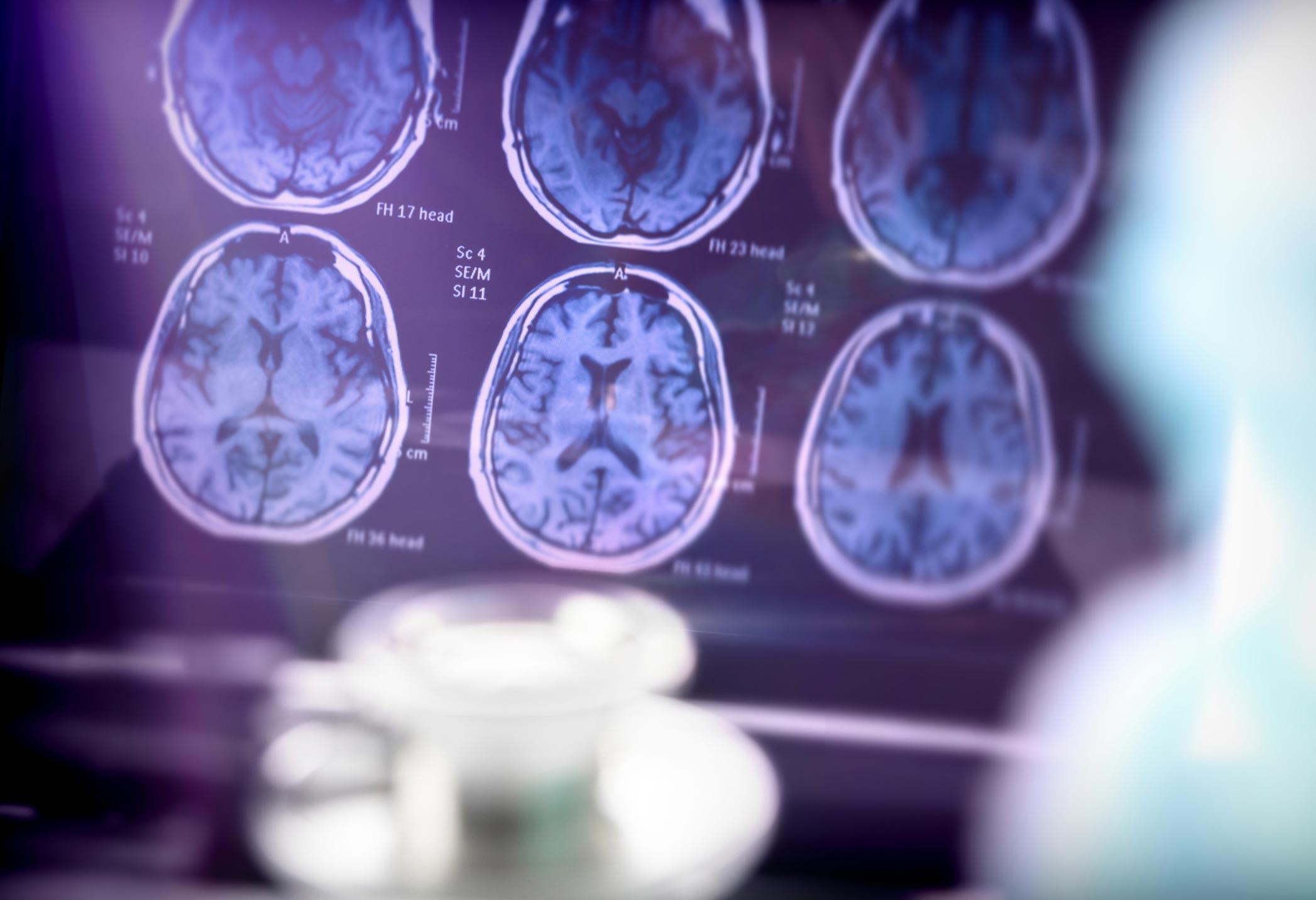
Ability of immune system to destroy Alzheimer’s-related protein oscillates with daily circadian rhythm.
The brain’s ability to clear a protein closely linked to Alzheimer’s disease is tied to our circadian cycle, according to research published recently in PLOS Genetics. The research underscores the importance of healthy sleep habits in preventing the protein Amyloid-Beta 42 (AB42) from forming clumps in the brain, and opens a path to potential Alzheimer’s therapies.
“Circadian regulation of immune cells plays a role in the intricate relationship between the circadian clock and Alzheimer’s disease,” said Jennifer Hurley, an expert in circadian rhythms, and associate professor of biological science at Rensselaer Polytechnic Institute. “This tells us a healthy sleep pattern might be important to alleviate some of the symptoms in Alzheimer’s disease, and this beneficial effect might be imparted by an immune cell type called macrophages/microglia.”
Research Focused on Immune Cells and AB42 Clearance
The research was conducted at the Rensselaer Center for Biotechnology and Interdisciplinary Studies, which has a focus on neurodegenerative disease. Dr. Hurley worked with Rensselaer professors Robert Linhardt, a glycans expert and inventor of synthetic heparin, and Chunyu Wang, whose ongoing research has detailed several mechanisms in the production and spread of proteins implicated in Alzheimer’s.
“This insight reveals a new mechanism and path to treatment of neurodegenerative diseases like Alzheimer’s through an interdisciplinary approach, and is emblematic of the CBIS strength in research and discovery and provides a new angle to human health and well-being,” said Deepak Vashishth, director of the CBIS.
The circadian system is comprised of a core set of clock proteins that anticipate the day/night cycle by causing daily oscillations in the levels of enzymes and hormones, ultimately affecting physiological parameters such as body temperature and the immune response. Disruption of the circadian system is increasingly associated with diseases like diabetes, cancer, and Alzheimer’s.
Circadian Control of Immune Cells
A telltale sign of Alzheimer’s disease is plaques, extracellular clumps of AB42 in the brain. Macrophages (referred to as microglia when they reside in the brain), which are immune cells that seek and destroy unwanted material, clear AB42 from the brain by ingesting it in a process called phagocytosis. In earlier research, Dr. Hurley and collaborators at the Royal College of Surgeons in Ireland investigated circadian control of macrophages, amassing an exhaustive dataset that made it possible to see which macrophage RNA and proteins oscillate with a circadian rhythm. The researchers noticed oscillations in enzymes that help to make two proteins on the macrophage cell surface – heparan sulfate proteoglycan and chondroitin sulfate proteoglycan– both of which are known to play a role in regulating clearance of AB42.
Could these cell surface proteoglycans be a link between the circadian system and Alzheimer’s? In a series of elegant experiments testing this hypothesis, the team established that the amount of AB42 ingested by healthy macrophages oscillates with a daily circadian rhythm. That pattern did not occur in macrophages without a circadian clock. They also measured daily oscillations in the levels of heparan sulfate proteoglycans and chondroitin sulfate proteoglycans produced on the surface of macrophage cells with healthy circadian cycles. Peak AB42 clearance occurred as production of surface cell proteoglycans was at its lowest level, and removal of these proteoglycans increased ingestion, which suggests that the proteoglycans inhibit AB42 clearance.
“What’s clear is that this is all timed by the circadian clock,” said Dr. Hurley. “When there’s a lot of these cell surface proteoglycans, the macrophages don’t ingest the AB42. We’re not certain why that would be, but there is definitely a relationship.”
Potential for Alzheimer’s Therapies
That relationship could be used to develop therapies that would encourage greater AB42 clearance, perhaps by boosting the amplitude of daily oscillations, which tend to diminish as we age.
“In theory, if we could boost that rhythm, perhaps we could increase the clearance of AB42 and prevent damage to the brain,” said Dr. Hurley.
For more on this research, see Circadian Rhythms Control Immune Cells That Clear Away Alzheimer’s Disease Protein.
Reference: “Circadian control of heparan sulfate levels times phagocytosis of amyloid beta aggregates” by Gretchen T. Clark, Yanlei Yu, Cooper A. Urban, Guo Fu, Chunyu Wang, Fuming Zhang, Robert J. Linhardt and Jennifer M. Hurley, 10 February 2022, PLoS Genetics.
DOI: 10.1371/journal.pgen.1009994
At Rensselaer, Hurley, Linhardt, and Wang were joined in the research by Gretchen T. Clark, Yanlei Yu, Cooper A. Urban, Fuming Zhang, and Guo Fu, who is now at the Chinese Academy of Sciences. “Circadian Control of Heparan Sulfate Levels Times Phagocytosis of Amyloid Beta Aggregates” was produced with support from the National Institutes of Health, the National Science Foundation, and the Warren Alpert Foundation.
Never miss a breakthrough: Join the SciTechDaily newsletter.
Follow us on Google and Google News.