
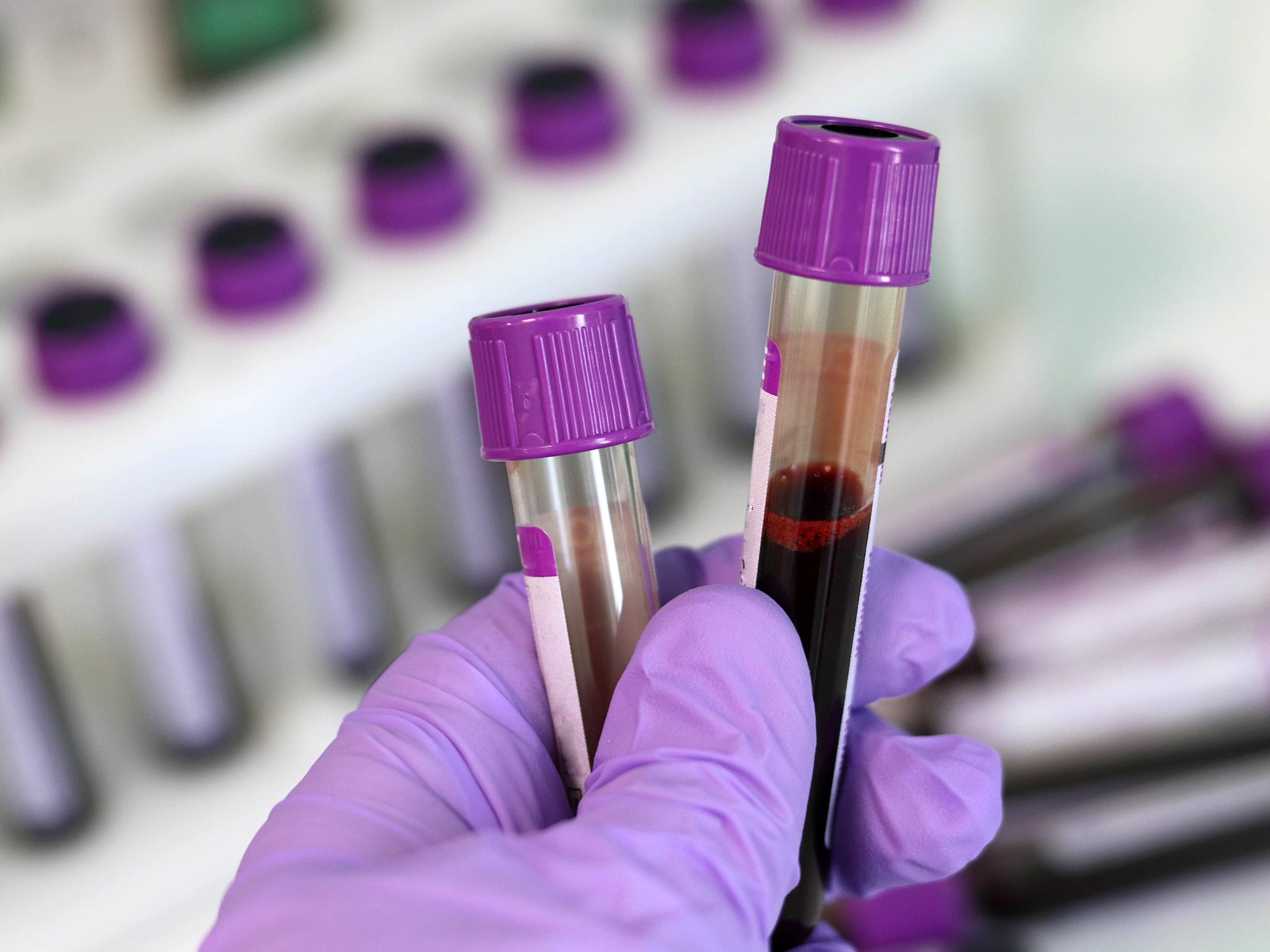
Diagnosing ALS is a challenge, but new research has found a highly effective way to detect and track the disease using blood biomarkers.
The study compared three types of biomarkers and found that neurofilament light chain proteins stood out as the most reliable indicator, successfully identifying ALS more than 80% of the time. It also helped predict patient survival, offering crucial information for both patients and doctors.
Identifying ALS with Blood Tests
ALS, or amyotrophic lateral sclerosis, is often challenging to diagnose, and its progression can be difficult to predict. A new study has identified the most effective blood tests for detecting and monitoring ALS, offering a potential breakthrough in diagnosis and disease tracking. The findings were published today (February 26, 2025) in Neurology, the medical journal of the American Academy of Neurology.
“Having an effective biomarker can be highly valuable—in addition to helping in making the diagnosis, it can help in predicting prognosis, evaluating what stage of the disease people are in, and tracking their progress or their response to treatments,” said study author Sylvain Lehmann, MD, PhD, of the Inserm Hospital and University of Montpellier in France.
Three Key Blood Markers Under Study
The study compared three types of blood biomarkers: neurofilament light chain proteins, glial acidic proteins, and phosphorylated tau 181. Neurofilament light chain proteins can be detected in the blood when nerve cells are injured or die. Glial acidic proteins are released when cells work to repair injury. Phosphorylated tau 181 is linked to the buildup of amyloid proteins in the body, which occurs in Alzheimer’s disease.
For the neurofilament light chain proteins, researchers were also testing four techniques for measuring the levels.
The study involved 139 people who had ALS and 70 people who did not have ALS but had similar diseases such as lower motor neuron disease and primary lateral sclerosis.
Researchers tested their blood using these three types of biomarkers. They then followed the participants for an average of 3.5 years for the people with ALS and about 12 years for the people who did not have ALS. During that time, 86% of the people with ALS died, compared to 8% of the people with other diseases.
Tracking Survival and Disease Progression
For neurofilament light chain proteins, the people with ALS had levels in their blood three times higher than the people with other diseases.
The study found that the neurofilament light chain tests correctly identified the people with ALS more than 80% of the time. The accuracy of diagnosis for the glial acidic protein and phosphorylated tau 181 tests was poor, with accurate results around 50% of the time.
The Prognostic Power of Neurofilament Light Chain
The researchers also identified a level of neurofilament light chain protein that can help predict survival for people with ALS. Within a year, more than 40% of people with protein levels below that point were still alive, while none of the people with levels above that point were still alive.
“While more research needs to be done to confirm these findings, having better information about prognosis is valuable for people with ALS and their families as well as the doctors who treat them,” Lehmann said.
A limitation of the study was that all the participants were from the same area of France, so the results may not apply to people from other areas.
Reference: “Comparative Performances of 4 Serum NfL Assays, pTau181, and GFAP in Patients With Amyotrophic Lateral Sclerosis” by Etienne Mondesert, Constance Delaby, Elisa De La Cruz, Jens Kuhle, Pascal Benkert, Nicolas Pradeilles, Marie Duchiron, Mehdi Morchikh, William Camu, Jean-Paul Cristol, Christophe Hirtz, Florence Esselin and Sylvain Lehmann, 26 February 2025, Neurology.
DOI: 10.1212/WNL.0000000000213400
The study was supported by the French Foundation for Medical Research and the AXA INTERVAL project.
Never miss a breakthrough: Join the SciTechDaily newsletter.
Follow us on Google and Google News.