

A new collaboration between Brown University and TU Delft has brought us closer to interstellar travel using light-powered sails.
By combining ultra-thin, highly reflective materials with AI-optimized nanoscale design, researchers created a revolutionary lightsail that’s cheaper, faster to make, and possibly scalable to missions like Starshot — aiming to reach nearby stars in just decades rather than millennia.
The Long Journey to the Stars
Since it launched in 1977, NASA’s Voyager 1 spacecraft has traveled more than 15 billion miles into deep space. That’s an incredible distance, yet it’s still less than 1% of the way to Alpha Centauri, the closest star to our sun. To reach other stars within a human lifetime, spacecraft will need to travel much faster than anything we’ve built so far.
One promising solution is a “lightsail” — a thin, reflective sheet that uses the pressure of light to propel itself, similar to how wind pushes a sailboat. Compared to conventional propulsion systems, lightsails could dramatically reduce travel time to nearby stars, potentially cutting it from thousands of years down to just a few decades.
A Breakthrough in Lightsail Engineering
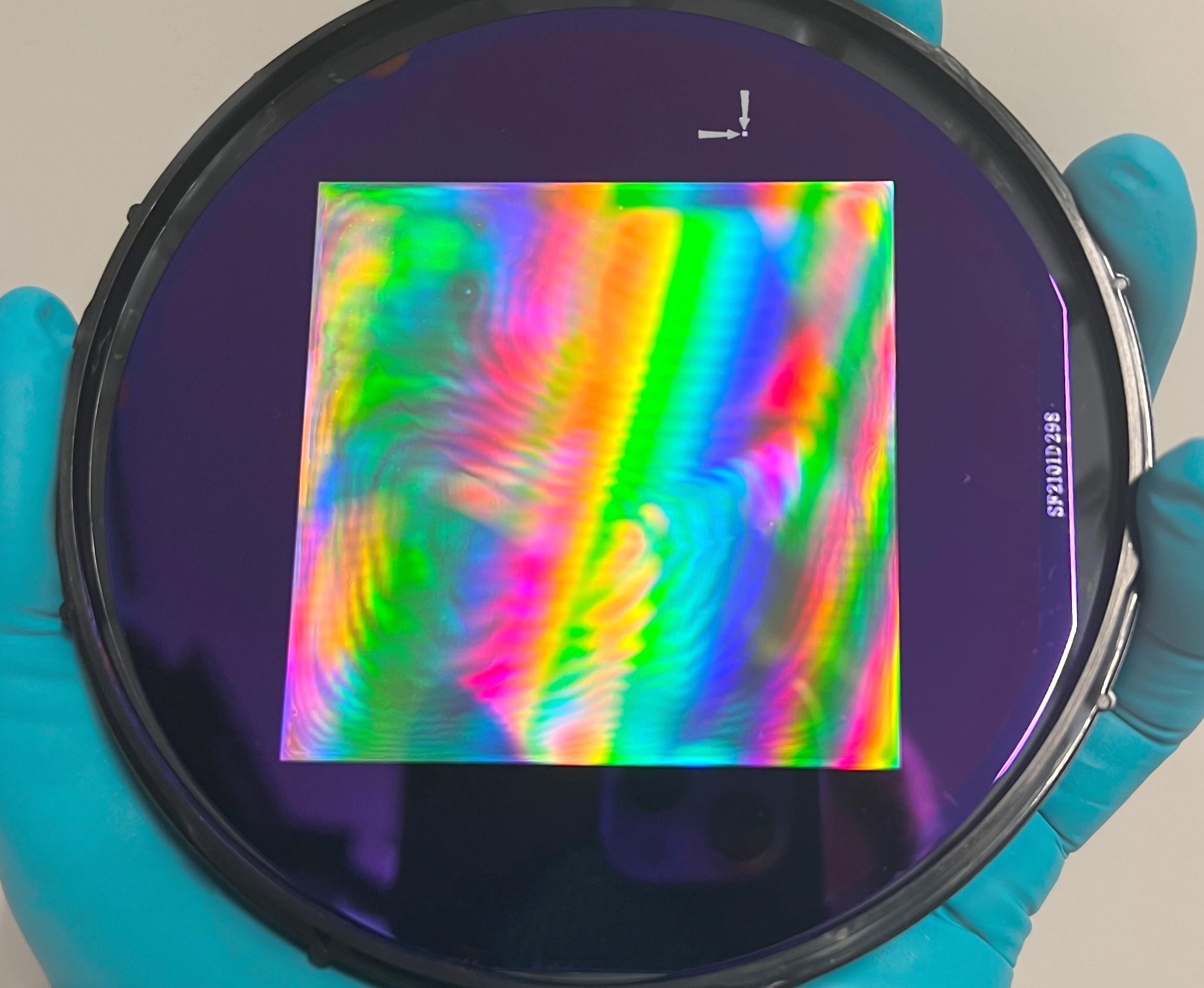
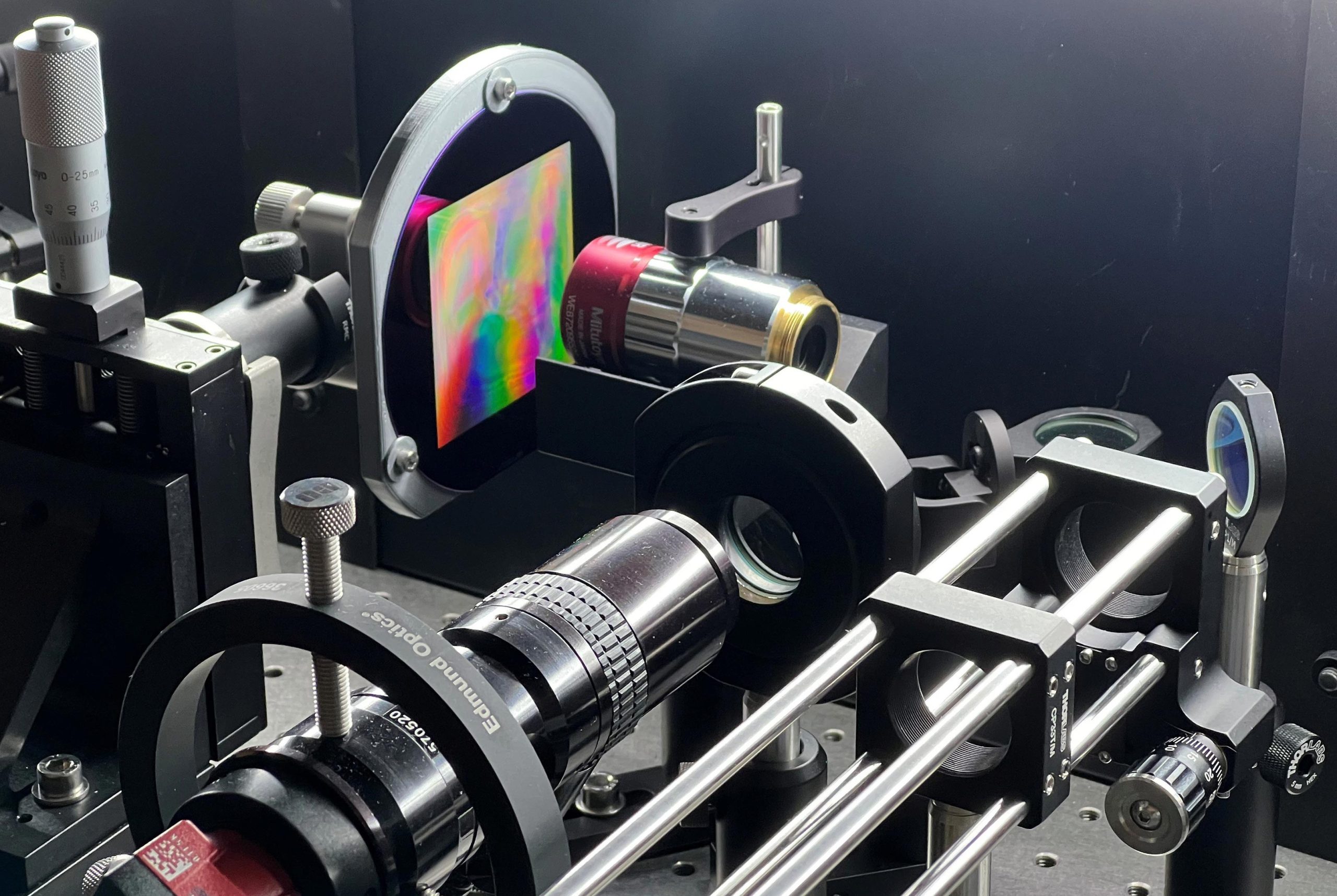
Now, researchers from Brown University and Delft University of Technology (TU Delft) in the Netherlands have developed a new method for designing and building ultra-thin, highly reflective lightsail membranes. In a study published in Nature Communications, the team describes a prototype that measures 60 millimeters (about 2.4 inches) across but is only 200 nanometers thick — thousands of times thinner than a human hair. Its surface is covered with billions of tiny holes at the nanoscale, which reduce weight and boost reflectivity, making it more efficient for light-driven acceleration.
“This work was a joint effort between theorists at Brown University and experimentalists at TU Delft making it possible to design, fabricate and test a highly reflective lightsail with the largest aspect ratio recorded to date,” said Miguel Bessa, an associate professor in Brown’s School of Engineering who co-led the research with Richard Norte, an associate professor at TU Delft. “The experimental breakthrough of Richard’s team proves their fabrication process is scalable to the dimensions needed for interstellar travel and can be done in a cost-effective manner. Simultaneously, my team is very enthusiastic to see the essential role of our latest optimization method guided by machine learning in solving such an interesting and difficult engineering problem.”
Towards the Starshot Dream
The research is a significant step toward realizing goals like those of the Starshot Breakthrough Initiative, founded by entrepreneur Yuri Milner and the late physicist Stephen Hawking. The goal is to use ground-based lasers to power hundreds of meter-scale lightsails carrying microchip-sized spacecraft. This new lightsail design could be scaled up to meter scale fairly easily, the researchers say, and with a manageable price tag.
For their design, the team used single-layer silicon nitride, a lightweight and high-strength material that’s well suited for lightsail design. The researchers then worked to maximize its reflectivity while minimizing its weight. The reflectivity of the surface determines how much light pressure is created behind the sail, which in turn determines how fast it can accelerate. At the same time, a lighter material requires less force to accelerate, so less mass equals more speed.
AI-Driven Optimization for Light-Speed Travel
The optimization process involved designing a pattern of nanoscale holes — billions of them across the material’s surface with diameters smaller than the wavelength of light. Bessa’s team, including Brown Ph.D. student Shunyu Yin, used a new artificial intelligence method they developed to optimize the shape and placement of the holes for increased reflectivity and decreased weight.
Once they had an optimized design, a team led by Norte at TU Delft went to work fabricating it in the lab.
“We have developed a new gas-based etch that allows us to delicately remove the material under the sails, leaving only the sail,” Norte said. “If the sails break, it’s most likely during manufacturing. Once the sails are suspended, they are actually quite robust. These techniques have been uniquely developed at TU Delft.”
Tiny Sails, Giant Leaps for Engineering
Fabricating this design with traditional methods would have been expensive and taken as long as 15 years, the researchers say. But using Norte’s techniques, fabrication took about a day and is thousands of times less expensive. The result is a membrane that the researchers believe has the highest aspect ratio — centimeter-scale length but with nanoscale thickness — of any lightsail design to date. The researchers hope that their methods will not only help humans reach the stars, but also push the limits of nanoscale engineering.
Beyond Stars: The Future of Nanotech
“The new machine learning and optimization techniques we used here are very general,” Bessa said. “We could use them to create lots of different things for different purposes. This is really just the beginning. We might be on the verge of solving engineering problems that have remained unsolvable up to now.”
Reference: “Pentagonal photonic crystal mirrors: scalable lightsails with enhanced acceleration via neural topology optimization” by Lucas Norder, Shunyu Yin, Matthijs H. J. de Jong, Francesco Stallone, Hande Aydogmus, Paolo M. Sberna, Miguel A. Bessa and Richard A. Norte, 24 March 2025, Nature Communications.
DOI: 10.1038/s41467-025-57749-y
The research was funded by the European Union (ERC, EARS, 101042855) and a Limitless Space Institute I2 Grant.
Never miss a breakthrough: Join the SciTechDaily newsletter.
Follow us on Google and Google News.
1 Comment
Eldest US radical: Accelerate project so Personkind can fulfill & safeguard its interstellar destiny.