
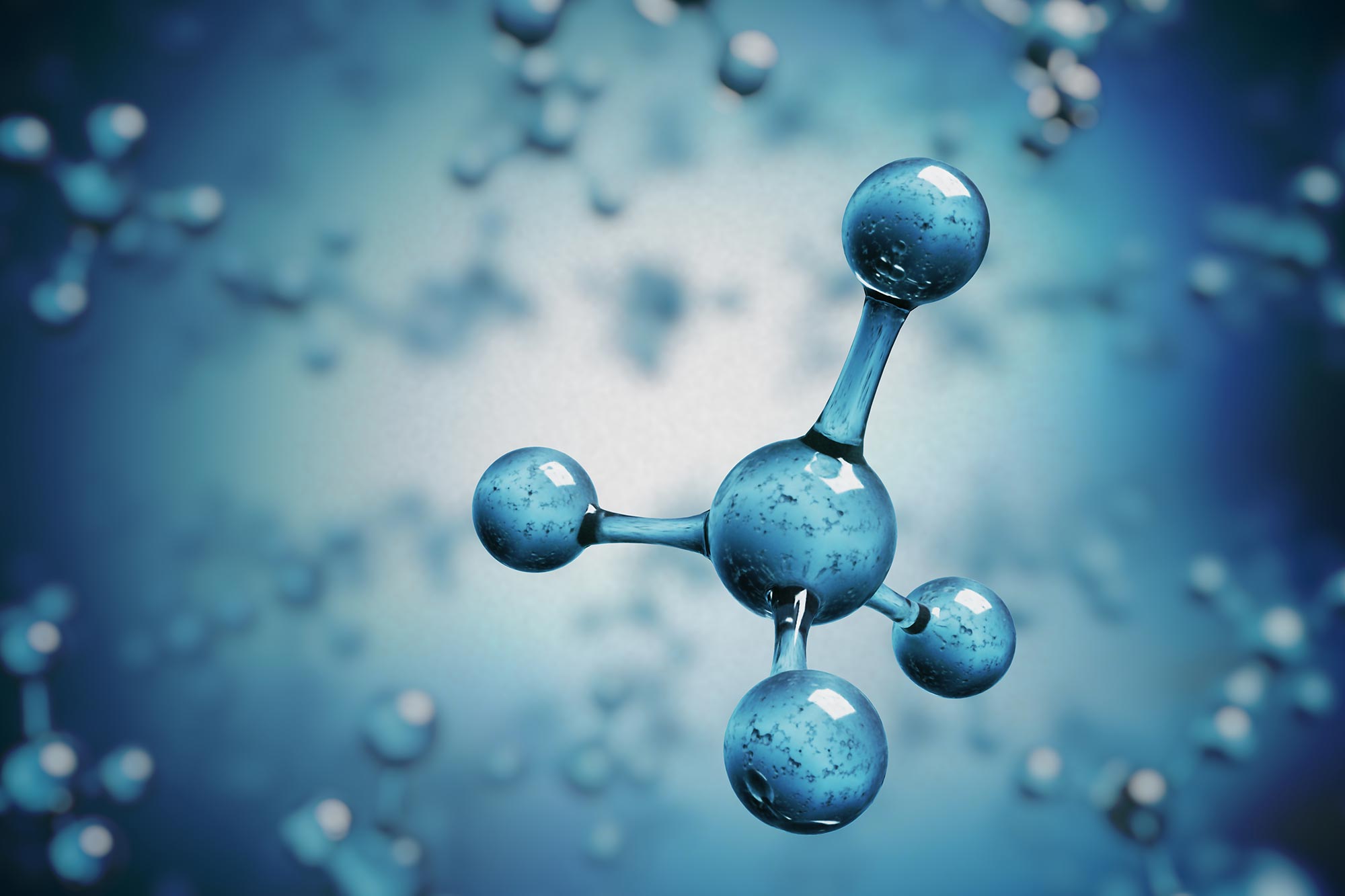
A new method has the potential to deliver significant energy savings, according to a study.
Chemists have developed an innovative method to capture and convert carbon dioxide into methane, raising the possibility that future gas emissions could be transformed into alternative fuel using electricity from renewable sources.
Carbon dioxide (CO2) is a greenhouse gas that accounts for a large part of Earth’s warming climate, and is produced by power plants, factories, and various forms of transportation. Typical carbon capture systems aimed at reducing its presence in the atmosphere work to lower carbon dioxide emissions by isolating CO2 from other gases and converting it to useful products. However, this process is difficult to implement on an industrial scale due to the massive amount of energy required for these systems to operate.
A Streamlined Approach with Nickel Catalysts
Now, using a special nickel-based catalyst, researchers have figured out a way to save much of this precious energy by turning captured carbon dioxide directly into methane, said Tomaz Neves-Garcia, lead author of the study and a current postdoctoral researcher in chemistry and biochemistry at The Ohio State University.
By employing nickel atoms laid out on an electrified surface, the team was able to directly convert carbamate, the captured form of carbon dioxide, to methane. They found that nickel atoms, a cheap and widely available catalyst, were extremely good at making this conversion.
“We are going from a molecule that has low energy and producing from it a fuel that has high energy,” said Neves-Garcia. “What makes this so interesting is that others capture, recover, and then convert carbon dioxide in steps, while we save energy by doing these steps simultaneously.”
Most importantly, streamlining the carbon capture process helps reframe what scientists know about the carbon cycle, and is a vital step to setting up more complex strategies for faster and more efficient climate mitigation technologies.
“We need to focus on spending the lowest energy possible for carbon capture and conversion,” said Neves-Garcia. “So instead of performing all the capture and conversion steps independently, we can combine it in a single step, bypassing wasteful energy processes.”
The paper was recently published in the Journal of the American Chemical Society.
Although many carbon capture methods are still in their early stages, with researchers from an array of fields working to improve them, the field is a promising one, said Neves-Garcia.
Closing the Carbon Cycle with Methane
Converting CO2 into a fuel using renewable electricity has the potential to close the carbon cycle. For example, when methane is burned to generate energy, it emits carbon dioxide, which, if captured and converted back to methane, could lead to a continuous cycle of energy production without adding to Earth’s global warming burden.
The study also represents the first time that researchers discovered they could use electrochemistry to achieve carbamate conversion to methane. Although many attempts have been made to convert captured CO2 into useful products, until now most researchers have only shown the ability to produce carbon monoxide.
“Methane can be a really interesting product, but the most important thing is that this opens a path to develop more processes to convert captured CO2 into other products,” he said.
Moving forward, the team expects to keep exploring other chemical clean energy alternatives to help inspire the creation of a variety of sustainable carbon capture routes.
“Everything always goes back to energy, and there’s a lot of excitement and effort invested in the future of this field to save more of it,” said Neves-Garcia.
Reference: “Integrated Carbon Dioxide Capture by Amines and Conversion to Methane on Single-Atom Nickel Catalysts” by Tomaz Neves-Garcia, Mahmudul Hasan, Quansong Zhu, Jing Li, Zhan Jiang, Yongye Liang, Hailiang Wang, Liane M. Rossi, Robert E. Warburton and L. Robert Baker, 6 November 2024, Journal of the American Chemical Society.
DOI: 10.1021/jacs.4c09744
Other co-authors include Quansong Zhu and L. Robert Baker from Ohio State, Liane M. Rossi from the University of Sao Paulo, Mahmudul Hasan and Robert E. Warburton from Case Western Reserve University, Jing Li and Hailiang Wang from Yale University, as well as Zhan Jiang and Yongye Liang from the Southern University of Science and Technology.
Never miss a breakthrough: Join the SciTechDaily newsletter.
Follow us on Google and Google News.
10 Comments
I am going to play the nemesis here, sort of. There have been lunatics saying we need either fewer cattle, or none at all, because of their methane production, and how that methane contributes to green house gases, and global warming. Yet now, we have scientists trying to create methane from CO2 to save on energy production, and reduce global warming. And, of course,the methane will be burned for its energy, with the byproduct being CO2. Hmmm, somebody got some splainin to do. Not Mr. Gore, please.
Please share the response as I am very interested in the debate as well
Since you and Thembelani asked, I thought I’d try to answer.
The idea is to use fossil fuels, and then capture the evil carbon dioxide (CO2) out of the exhaust, as it traps heat in the atmosphere, maybe changing climates. Here, they use a nickel catalyst and some source of hydrogen (H), to do some unexplained chemistry magic, turning the CO2 into methane (CH4, and presumably oxygen O2). It’s hard to collect all the methane cows make so it escapes into the atmosphere maybe warming the planet, but in this process they end up with methane in a container. They can use it as natural gas fuel by burning it, and maybe even capture its CO2 exhaust again, “closing the loop”, keeping the CO2 out of the air, thus solving climate change and global warming, saving the Earth from burning away next year, and also preventing everything, because everything is caused by climate change, huzzah!
It sounds great. The article and the study abstract don’t mention several crucial things that make it a shrug. Is the nickel catalyst consumed (converted to unwanted chemical byproducts) in the reaction? If so, does the mining and transportation and refining of the nickel totally counteracting this new good CO2 capturing? Are any of the nickel byproducts/contaminants toxic or carcinogenic? What kind of electrical power or heat input is needed to start the reaction? Is that using more power than the captured methane can provide, thus exhausting more CO2 elsewhere? Does this technology scale to where it could be used outside a laboratory, like maybe in a coal power plant? Is it economically feasible (can it at least pay for itself), but really can it actually make money? The answers to all of these are going to be that it doesn’t work in the real world, or else they would say so.
It’s good. It really is. It’s creative, it’s progress. It’s better living through chemistry. They have the right direction in mind too, saying “We need to focus on spending the lowest energy possible for carbon capture and conversion”. It’s all about efficiency, or it won’t happen. Nickel is a cheaper catalyst than the easy choice of rare earth minerals like platinum, which is why your catalytic converter was stolen, so it’s a plausible option. Is this going to help, probably not. Maybe it is a step on the way to helping humanity finally control what we put in the air.
As I understand it, a catalyst is a substance that speeds up a chemical reaction without itself being consumed or changed. So the nickel catalyst would be endlessly reusable. Now if the electricity being used was from a renewable resource such as wind or hydro this process could have great potential
While that is strictly true in the definition for the chemical equation, in practice catalysts tend to wear or degrade and need replacing. Once anything gets off the chalkboard and into the hands of engineers, let alone manufacturers, it won’t ever be endlessly reusable. It’s a real world problem that doesn’t show up in the introductory textbook, but will show up in the lab. Contaminants might react with the nickel, or maybe it slowly oxidizes, especially with high energy or electrocatalyst reactions. There are also incomplete reactions, where a process isn’t 100% efficient, and some of the catalyst just isn’t regenerated and is lost. Nickel can be toxic in sulphates and acetates etc., and many nickel compounds are soluble, so some might be left over in solution that needs disposing.
You’ll have seen this again with catalytic converters on a car; they don’t last forever, getting contaminated by burning oil, or maybe it overheats, or it gets physically damaged, or it just plain wears out after a decade or a hundred thousand miles, and the Check Engine light comes on for low catalytic converter bank efficiency. Suddenly you’re taking the top off a mountain with detonations and heavy equipment to get more palladium and rhodium and platinum and coal and iron to refine with blast furnaces and other chemicals to manufacture a very expensive converter, all while wondering if the emissions could equal out even if it lasted a century after all the emissions just to make one.
Renewable energy is complicated. Look up the amount of methane sent into the atmosphere yearly after flooding an area for a hydroelectric dam. It’s shocking, not to mention the emissions of any mega-construction project. I haven’t seen emissions studies on the full process of wind energy, mining the metals for turbines and manufacturing and lubricating and repairing and decommissioning and so on, but I’m interested in it. Sadly it’s another example of the textbook having efficient endlessly renewable clean energy, when in practice it’s mechanical and temporary and not so clean or efficient.
I like your optimism. Things are complicated, and it’s hard to know what to do. I might be more cynical now, but hopefully with this nickel catalyst thing we at least know something we didn’t know before.
This is so ridiculous as to essentially be fraud. Converting CO2 to methane requires a HUGE energy input regardless of how it’s done. If we’re going to do this sustainably, ultimately that energy musty come from renewable power, and we are not even close to replacing the electricity we use today with renewable power, so there is no excess available for CO2 upgrading.
In fact, it’s even worse than that because we have lots of ADDED need for renewable power — more and more EV’s to recharge, heat pumps to replace natural gas and fuel oil for space heating, and new data centers springing up every day to support more AI, home entertainment, and blockchain / cryptocurrency support. From where will we get all of the renewable power needed for this new “miracle???”
With the right catalyst, efficiency goes up, and the energy input can be reduced. They say it directly converts the carbamate to methane, and fewer reactions saves energy.
It’s not fraud, I think. It’s new knowledge. They never called it a miracle. The headline does hype it as a “breakthrough”, but the first sentence says it only “raises” the “possibility” that emissions “could be” converted in “the future”. Maybe some might say there is the potential it is thought plausible to suggest that one could believe that’s a lot of meaningless weasel words, allegedly. Still, that’s a quarrel with the Ohio State University public relations department’s bad writing style. They do that for prestige and attention, but also to attract more funding for more science, so it’s annoying and maybe forgivable.
This is no miracle. Maybe some other breakthrough like nuclear fusion will find the energy source, only needing a cheap catalyst, where nickel could make a whole thing work. I think you’re right that this doesn’t fix anything for the foreseeable future and would waste energy if anyone tried.
If the hydrogen for this process comes from the electrolysis of water, and if the power for both the CO2 to methane and water electrolysis steps comes from renewable energy, then this process is basically a way to store renewable energy for long periods of time. If the cost is comparable to, or cheaper than, storing the same energy in batteries, then this process could be a game changer.
This is absurd. Why not just plant more trees? I thought that was already being done.
Converting CO2 to methane? Not a problem. Pump CO2 into the atmosphere, grow grass, cattle eat grass and lo! natural green methane!