

Close Menu
    Facebook X (Twitter) Instagram
    SciTechDaily
    • Biology
    • Chemistry
    • Earth
    • Health
    • Physics
    • Science
    • Space
    • Technology
    Facebook X (Twitter) Pinterest YouTube RSS
    SciTechDaily
    Home»Health»Breast Milk Molecule Can Raise the Risk of HIV Transmission
    Health

    Breast Milk Molecule Can Raise the Risk of HIV Transmission

    By SciTechDailyOctober 3, 2012No Comments2 Mins Read
    Facebook Twitter Pinterest Telegram LinkedIn WhatsApp Email Reddit
    Share
    Facebook Twitter LinkedIn Pinterest Telegram Email Reddit
    breastfeeding-mother-infant
    Researchers found that a naturally occurring sugar in breast milk can increase the risk of HIV transmission from an HIV-positive mother to her HIV-negative baby. However, not all milk sugars are problematic. More than five of the 150 complex sugars in breast milk seem to have a protective effect against HIV. 

    Scientists have discovered that a sugar that occurs naturally in breast milk can double the likelihood of a HIV-negative baby acquiring the virus from an HIV-positive mother. The molecule is called 3′-sialyllactose (3′-SL) and it is found in varying concentrations in the milk of women.

    The scientists published their findings in the American Journal of Clinical Nutrition. However, not all milk sugars are problematic. More than five of the 150 complex sugars in breast milk seem to have a protective effect against HIV. The HIV-negative infants who consumed these sugars had a better chance of reaching their second birthday than HIV-negative babies who drank milk lacking those sugars.
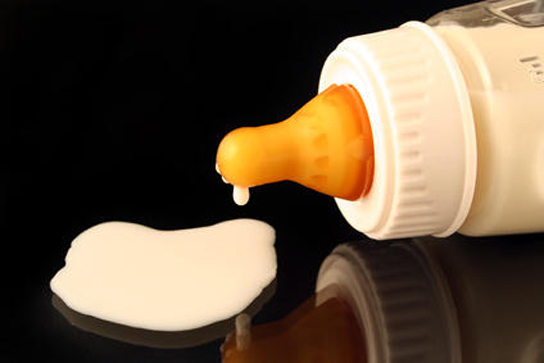
    formula-milk

    Several labs are currently trying to identify how the variation in sugar molecules in breast milk influences infant health. These sugars are called human milk oligosaccharides (HMOs). Once clear links have been established, the researchers can start clinical trials to come up with HMOs as health-boosting additives to infant formula milk. It also isn’t clear whether a HIV-positive mother who produces 3′-SL-rich milk should switch to formula feeding, as it’s unknown if this would raise or lower the chance of the baby succumbing to other intestinal or respiratory infections.

    Reference: “Human milk oligosaccharide concentration and risk of postnatal transmission of HIV through breastfeeding” by Lars Bode, Louise Kuhn, Hae-Young Kim, Lauren Hsiao, Caroline Nissan, Moses Sinkala, Chipepo Kankasa, Mwiya Mwiya, Donald M Thea and Grace M Aldrovandi, 15 August 2012, American Journal of Clinical Nutrition.
    DOI: 10.3945/ajcn.112.039503

    Never miss a breakthrough: Join the SciTechDaily newsletter.
    Follow us on Google and Google News.

    Breast Milk Disease HIV Infectious Diseases
    Share. Facebook Twitter Pinterest LinkedIn Email Reddit

    Related Articles

    New Anti-HIV Candidate Blocks Every Strain of HIV-1, HIV-2 and SIV

    Researchers May Have Pinpointed a Strategy for Eliminating Latent HIV

    New Gene-Editing Technique Could Prove to be an Effective Technique for Blocking HIV

    Researchers Eliminate HIV from Cultured Human Cells for First Time

    Nanoparticles Carrying Bee Venom Kill HIV

    Scientists Turn HIV Against Itself, A Possible Step Towards a Cure

    New Class of Proteins Inhibit HIV Infection in Cell Cultures

    Latency Develops Soon After Infection and Slows When Antiretroviral Therapy is Given

    Engineered Stem Cells Suppress HIV in Living Tissues

    Leave A Reply Cancel Reply

    • Facebook
    • Twitter
    • Pinterest
    • YouTube

    Don't Miss a Discovery

    Subscribe for the Latest in Science & Tech!

    Trending News

    Wasp Colonies Explode Into Violence After Losing Their Queen

    Scientists Create “Living Plastic” That Self-Destructs in Just Six Days

    Your Blood May Carry a 700-Million-Year-Old Secret

    Scientists Discover Some “Zombie Cells” May Actually Help You Live Longer

    Earth May Be Seeding Venus With Life, According to New Research

    What Scientists Found Inside a 117-Year-Old Woman Reveals New Clues to Long Life

    Scientists Discover Mysterious Creature Living in the Great Salt Lake – and It Exists Nowhere Else on Earth

    It’s Alive? Surprising Discovery Changes What We Know About Fog

    Follow SciTechDaily
    • Facebook
    • Twitter
    • YouTube
    • Pinterest
    • Newsletter
    • RSS
    SciTech News
    • Biology News
    • Chemistry News
    • Earth News
    • Health News
    • Physics News
    • Science News
    • Space News
    • Technology News
    Recent Posts
    • Scientists Crack Major Ammonia Problem With a Platinum Catalyst Breakthrough
    • MIT Engineers Solve a Major Lidar Problem That Has Stumped Researchers for Years
    • NASA’s X-59 Sonic Boom Killer Is Ready for Its Biggest Test Yet
    • Why Some Cancers Turn Deadly: Researchers Uncover a Hidden Trigger
    • The Best Exercise Combination for Longevity, According to a 30-Year Study
    Copyright © 1998 - 2026 SciTechDaily. All Rights Reserved.
    • Science News
    • About
    • Contact
    • Editorial Board
    • Privacy Policy
    • Terms of Use

    Type above and press Enter to search. Press Esc to cancel.