

El Argar used regional pottery networks to enforce political and economic dominance over its neighbors, revealing early state formation in prehistoric Iberia.
Researchers from the Universitat Autònoma de Barcelona (UAB) and the Max Planck Institute for Social Anthropology have identified the political and economic boundaries that separated El Argar, widely regarded as the first state-level society in the Iberian Peninsula, from neighboring Bronze Age communities in La Mancha and Valencia around 4,000 years ago. These neighboring groups, which had less centralized social structures, engaged in complex interactions with the more hierarchical Argaric society.
The study, published in the Journal of Archaeological Method and Theory, is based on a detailed analysis of pottery production and distribution in northern Murcia. This area served as a cultural frontier between El Argar and the Bronze Age communities of Valencia and La Mancha (2200–1550 BCE). By examining how pottery was made and circulated, the researchers were able to trace patterns of interaction and define the boundaries between these societies. Their findings offer new insights into the emergence of early state systems in prehistoric Europe and may help identify similar border dynamics in other contemporary cultures.
It represents a pioneering study on prehistoric frontiers.
“Any effort to understand the consolidation of the first states in recent prehistory must take into account how political boundaries were created and maintained. Nevertheless, in archaeology, borders have received relatively little attention, even though one of their key structuring concepts, ‘archaeological cultures’, implies spatial limits between social, economic, and political entities,” explains Roberto Risch, lecturer of the Department of Prehistory at the UAB and coordinator of the study.

The analysis has allowed identifying clear interaction patterns between the core area of El Argar and its neighbors which demonstrate the existence of socioeconomic and political boundaries. “We have been able to observe active zones of exchange and negotiation, in which power relations and social differences could be traced through the circulation of pottery vessels,” explains Adrià Moreno Gil, a researcher at the Max Planck Institute for Social Anthropology and the Saxony-Anhalt State Heritage Office, Germany, and first author of the study.
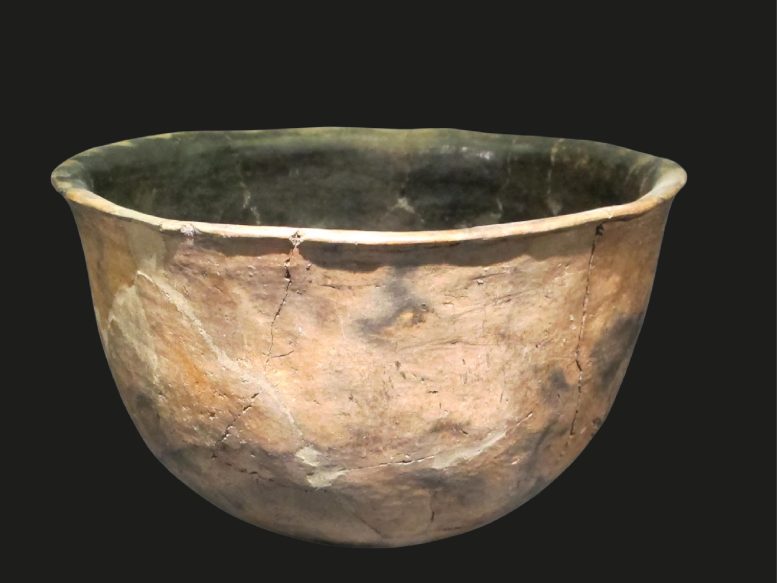
The borderlands identified are marked by significant differences in the clay and pottery techniques used in different regions of the Segura River basin. In all the settlements of the southern half, there is a predominance of typical Argaric ceramics made with clay found more than 100 kilometers further south, in the coastal mountains of Murcia and Almeria.
This implies the existence of a distribution network of Argaric ceramics on a regional scale, controlled by the villages of the Argaric core area. Conversely, in the northern part of the study area, there is a multiplicity of small pottery productions that use local clay.
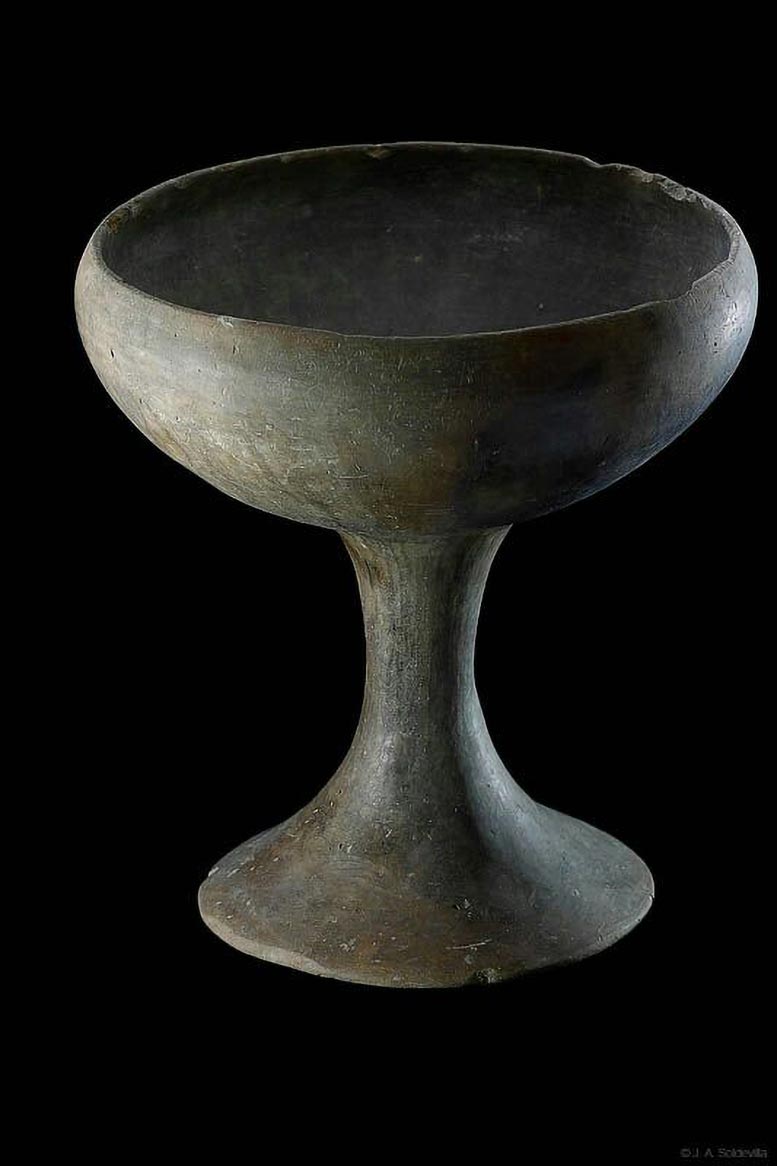
Such a marked contrast, researchers point out, must have resulted from significantly different economic systems. While El Argar was able to manufacture large quantities of pottery in the vicinity of very specific clay deposits and circulate them over great distances, the peripheral communities continued with a basically domestic and local-scale production.
“All this led to the consolidation of asymmetrical relations between the groups of southeast Iberia, marked by the pre-eminence of El Argar, not only in the control of strategic resources, such as metals, but also of everyday objects such as pottery. The imposition of borders ultimately served to establish these unequal relations, which developed into a true core-periphery system,” concludes Adrià Moreno Gil.
First state structures of El Argar
The study now published reinforces the interpretation of the Argaric society as a highly integrated and uniform political and economic organization, with circulation networks of raw materials and products much more developed than previously thought. “These results clearly support the hypothesis that the first state structures developed around 1800 BCE in Western Europe,” says Roberto Risch.
Before the study, it was known that the Argaric culture was an expansive society that, from a relatively small original core area of approximately 5,000 square kilometers, came to control a large region of the southeastern peninsula (about 35,000 square kilometers).
However, the specific dynamics of the political, economic, and social relations between El Argar and neighboring groups and how these relations materialized in a border area had not been the subject of study until now. Although the importance of borders for the functioning of states such as El Argar had been recognized, there was no research dedicated to the study of specific borderland spaces.
New methodology for the study of prehistoric civilizations
The researchers applied an innovative methodology based on extensive field surveys, the analysis of ceramic materials, including a petrographic study, and spatial modeling using geographic information systems (GIS). This methodological combination has allowed for the mapping of ceramic production and circulation areas with a level of detail unprecedented in the Iberian Peninsula.
“From a methodological standpoint, our study demonstrates that the analysis of ceramics is a key tool for understanding economic exchanges, social relations, and the configuration of border spaces between political and economic entities, especially in contexts of complex and unequal dynamics such as this one,” says Carla Garrido García, predoctoral researcher at the UAB and co-author of the study.
This methodology could be applied to the study of other cultures contemporary to El Argar, such as the Únětice in Central Europe and the Minoan civilization in Crete, to better understand how they structured and maintained their borders with neighboring groups. These societies, like El Argar, developed complex economic and political systems, the dynamics of which have not yet been fully explored.
Reference: “Bronze Age Frontiers and Pottery Circulation: Political and Economic Relations at the Northern Fringes of El Argar, Southeast Iberia, ca. 2200–1550 BCE” by Adrià Moreno Gil, Carla Garrido García, Bárbara Bonora Soriano, David Gómez-Gras and Roberto Risch, 16 March 2025, Journal of Archaeological Method and Theory.
DOI: 10.1007/s10816-025-09702-y
The study was funded by the Max Planck Institute for Social Anthropology (Halle Saale, Germany), the Catalan Institution for Research and Advanced Studies (ICREA) of the Government of Catalonia, and the Spanish Ministry of Science and Innovation.
Never miss a breakthrough: Join the SciTechDaily newsletter.
Follow us on Google and Google News.