

UMD researchers have discovered key mechanisms in gene regulation that could improve the design of RNA-based medicines.
RNA-based medicines are among the most promising approaches to combating human disease, as evidenced by the recent successes of RNA vaccines and double-stranded RNA (dsRNA) therapies. While healthcare providers can now develop drugs that use dsRNA to precisely target and silence disease-causing genes, a significant challenge remains: efficiently delivering these potentially life-saving RNA molecules into cells.
A new study published in eLife on February 4, 2025, could drive breakthroughs in RNA-based drug development. Researchers at the University of Maryland used microscopic roundworms as a model to explore how dsRNA molecules naturally enter cells and influence multiple future generations. Their findings revealed several pathways for dsRNA uptake in the worms’ cells—a discovery that could enhance drug delivery methods in humans.
New Insights into RNA Transport
“Our findings challenge previous assumptions about RNA transport,” said the study’s senior author Antony Jose, an associate professor of cell biology and molecular genetics at UMD. “We’ve learned that RNA molecules can carry specific instructions not just between cells but across many generations, which adds a new layer to our current understanding of how inheritance works.”
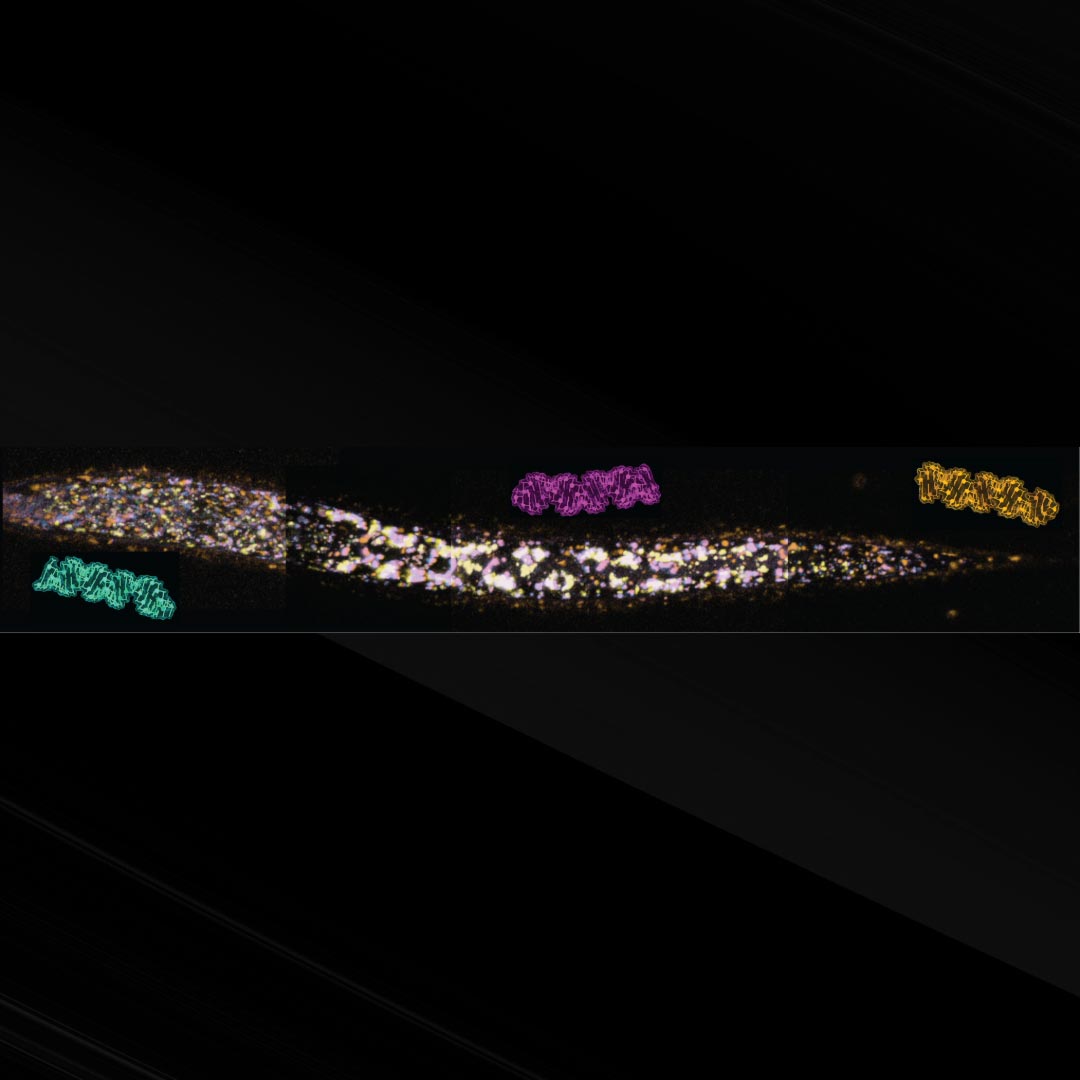
The team found that a protein called SID-1, which acts as a gatekeeper for the transfer of information using dsRNA, also has a role in regulating genes across generations. When researchers removed the SID-1 protein, they observed that the worms unexpectedly became better at passing changes in gene expression to their offspring. In fact, these changes persisted for over 100 generations—even after SID-1 was restored to the worms.
Potential Implications for Human Medicine
“Interestingly, you can find proteins similar to SID-1 in other animals including humans,” Jose noted. “Understanding SID-1 and its role has significant implications for human medicine. If we can learn how this protein controls RNA transfer between cells, we could potentially develop better targeted treatments for human diseases and perhaps even control the inheritance of certain disease states.”
The research team also discovered a gene called sdg-1 that helps regulate ‘jumping genes’— DNA sequences that tend to move or copy themselves to different locations on a chromosome. While jumping genes can introduce new genetic variations that may be beneficial, they are more likely to disrupt existing sequences and cause disease. The researchers found that sdg-1 is located within a jumping gene but produces proteins that are used to control jumping genes, creating a self-regulating loop that could prevent unwanted movements and changes.
“It’s fascinating how these cellular mechanisms maintain this delicate balance, like a thermostat keeping a house at just the right temperature so it isn’t too warm or too cold,” Jose explained. “The system needs to be flexible enough to allow some ‘jumping’ activity while preventing excessive movements that could harm the organism.”
Jose believes the team’s findings provide valuable insights into how animals regulate their own genes and maintain stable gene expression across generations. Studying these mechanisms could potentially pave the way for innovative future treatments for heritable diseases in humans.
Looking ahead, the team plans to investigate mechanisms related to the transport of different types of dsRNA, where SID-1 is localized and why certain genes are being regulated across generations while others are not.
“We’re just scratching the surface,” Jose said. “What we discovered is just the beginning of understanding how external RNA can cause heritable changes that last for generations. This work will help scientists better understand how to design and deliver RNA-based medicines to patients more effectively.”
Reference: “Intergenerational transport of double-stranded RNA in C. elegans can limit heritable epigenetic changes” by Nathan M Shugarts Devanapally, Aishwarya Sathya, Andrew L Yi, Winnie M Chan, Julia A Marre and Antony M Jose, 4 February 2025, eLife.
DOI: 10.7554/eLife.99149
This research was supported by the National Institutes of Health (Award Nos. R01GM111457 and R01GM124356) and the U.S. National Science Foundation (Award No. 2120895).
Never miss a breakthrough: Join the SciTechDaily newsletter.
Follow us on Google and Google News.
1 Comment
Anneyong