
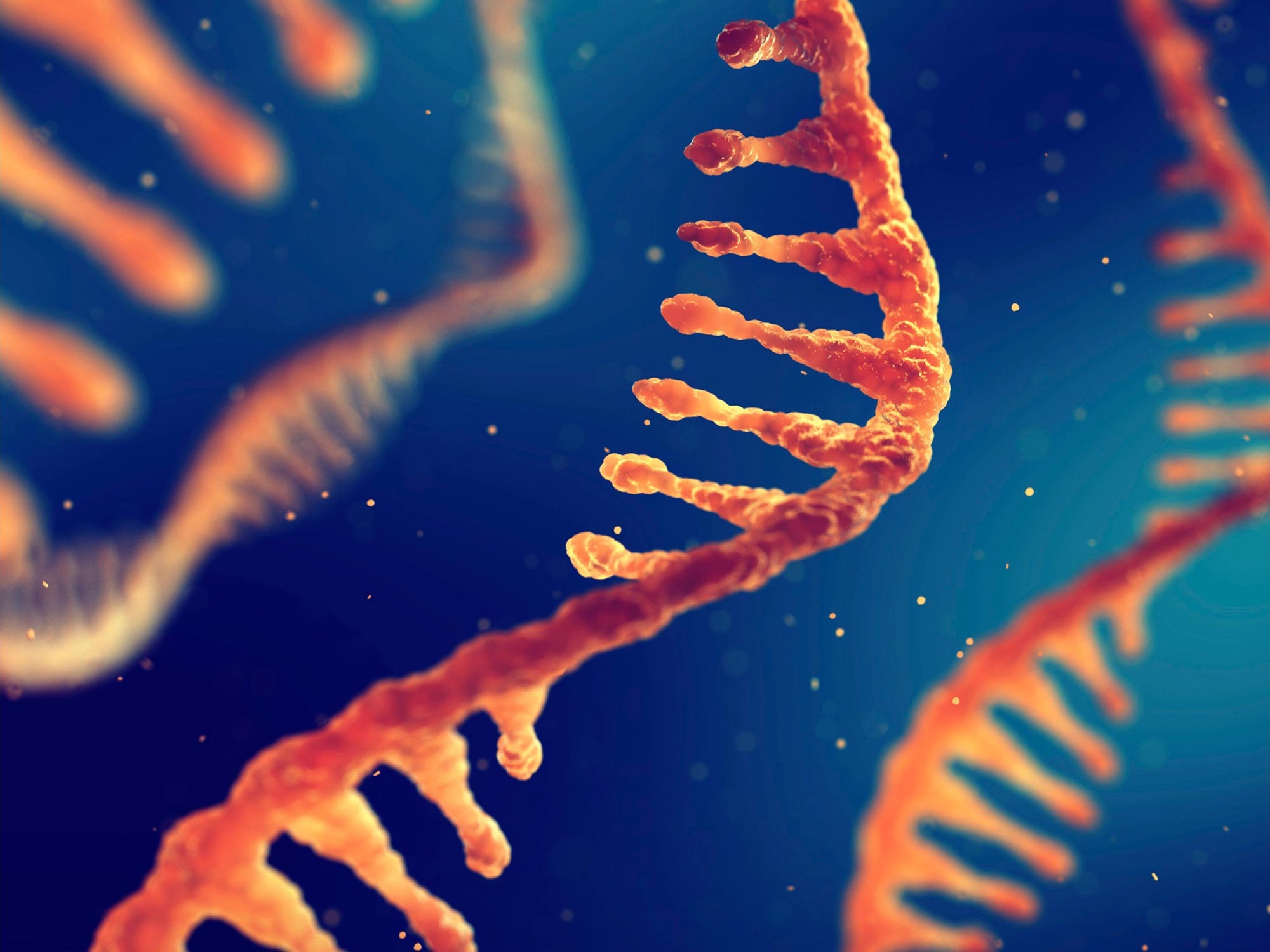
This study is the first to demonstrate that certain tRNA introns influence gene expression.
Scientists have discovered that some small RNA segments—previously dismissed as “junk”—play a functional role in regulating messenger RNA production and helping cells manage oxidative stress.
These segments, known as introns, are parts of a subset of transfer RNAs (tRNAs), which are crucial for assembling amino acids into proteins. Traditionally, these introns were thought to be nonfunctional because they are removed from tRNA molecules before the tRNA can participate in protein synthesis.
However, a new study from The Ohio State University has shown that certain introns bind to essential regions of molecules that translate genetic information into proteins, triggering their degradation and thus halting protein production. In experiments where cells were exposed to oxidative stress, one type of intron remained unusually stable, suggesting that these introns might be part of an evolutionary survival mechanism.
Unexpected observations over the years led the scientists to investigate a functional role for what they call “fitRNAs,” short for free introns of tRNAs: improbable sequencing relationships with other RNA molecules, varied methods used by cells to discard them, and overexpression of some, but not all, introns in stressful conditions.
“Nobody was anticipating a function for introns. But it just didn’t make sense to me that they’d have no function and yet the cell thought there should be six or more different ways to destroy them,” said senior author Anita Hopper, professor molecular genetics at Ohio State.
“Why would the cell want to treat them preferentially if they were just junk? We were onto this idea that there must be some function. And for the last five years, our team devised some really smart experiments to prove it.”
The research was recently published in the journal Molecular Cell.
A New Mechanism of Gene Regulation
Transfer RNA (tRNA) works with messenger RNA (mRNA) to construct proteins by way of complementarity, meaning that a tRNA sequence pairs with its complementary sequence on the mRNA molecule to make sure the correct amino acid is added to the chain as a protein is being built.
Using yeast as a study model, Hopper’s team saw several years ago that some lopped-off intron sequences were complementary to mRNA sequences, signaling the introns might have importance to translating the genetic code. There are 10 tRNA families that contain introns, and each intron family is destroyed in a distinct way. This study focused on two of those families.
The researchers found that once freed from the tRNA, these floating introns with complementary sequences bind to specific mRNAs, which causes the mRNAs to fall apart so protein production can’t occur. Experiments confirmed a clear inverse relationship: Deleting or inducing overexpression of fitRNAs led to corresponding increases or decreases in target mRNA, respectively.
The fitRNA function appears similar to that of microRNAs, small segments of RNA (also once considered junk) that inhibit genes’ protein-building functions – but there’s a significant difference, said first author Regina Nostramo, a postdoctoral researcher in Hopper’s lab.
MicroRNAs interact with proteins from the Argonaute family to degrade messenger RNA, “but because there are no Argonaute proteins in this yeast species, something else is happening and the messenger RNA is still getting degraded. So it’s a similar mechanism, but the details of what’s happening are different,” Nostramo said.
There is another distinction, Hopper noted: MicroRNAs consistently attach to the same non-coding “seed” area of their target messenger RNAs, but the freed introns bind to a section of mRNA that contains protein-building instructions.
“So it’s not only a newly discovered small non-coding RNA, but it operates in a novel way,” she said.
A Potential Survival Mechanism
Having the power to inhibit protein production suggests introns give cells an advantage, the researchers said. Co-author Paolo Sinopoli, a third-year molecular genetics student in Hopper’s lab, identified at least 33 mRNAs targeted by one intron family selected for focus in this study. Though they don’t belong to a single category, the affected proteins tend to relate to cell division and reproduction.
“The question we had is, ‘Why does the intron exist to begin with?’” Sinopoli said. “We see from tRNA that they exist in humans, in mice, in flies, in yeast. So they’re present in all of these organisms despite appearing to be inefficient – but inefficient things in biology tend not to stick around.”
The abundance and stability of one fitRNA in cells experiencing oxidative stress provides a clue to their importance that the team will continue to pursue by exposing cells to heat stress, starvation, and other challenging circumstances.
“Maybe cells use these little introns as negative regulators of gene expression – because they don’t get destroyed under certain conditions,” Hopper said. “Maybe they have a very minor role under healthy conditions for cells, but under stress, when some of them stabilize, then maybe that’s a really important role.”
Reference: “Free introns of tRNAs as complementarity-dependent regulators of gene expression” by Regina T. Nostramo, Paolo L. Sinopoli, Alicia Bao, Sara Metcalf, Lauren M. Peltier and Anita K. Hopper, 11 February 2025, Molecular Cell.
DOI: 10.1016/j.molcel.2025.01.019
This work was supported by the National Institutes of Health, Pelotonia undergraduate fellowships and Ohio State undergraduate research scholarships.
Never miss a breakthrough: Join the SciTechDaily newsletter.
Follow us on Google and Google News.
1 Comment
Interesting