
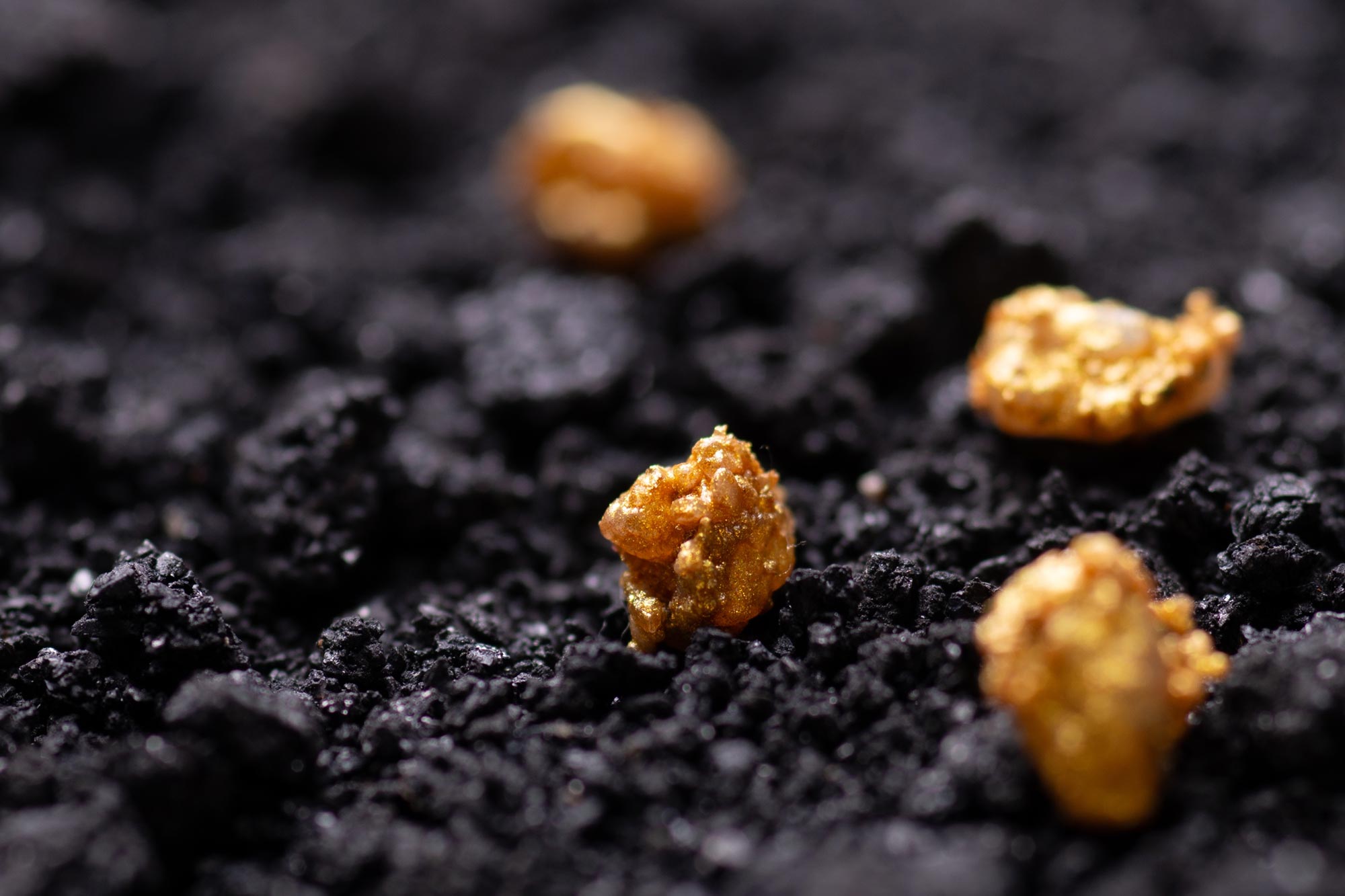
Luminescence dating has confirmed Roman exploitation of alluvial gold in the Eastern Pyrenees for the first time.
For centuries, stories of gold hidden in the rivers of the Pyrenees have circulated across the Iberian Peninsula, with even medieval Islamic sources praising the quality of gold from the Segre River for minting coins. Now, researchers have uncovered the clearest evidence yet that the Romans were exploiting those riches nearly 1,700 years ago.
A study led by the Autonomous University of Barcelona (UAB) and the University of A Coruña has confirmed the existence of Roman-era alluvial gold mines in the Eastern Pyrenees. By applying advanced optically stimulated luminescence (OSL) dating to sediments buried within hydraulic mining structures at the Guilleteres d’All site, the team identified activity dating to around the third to fourth centuries CE. The findings provide the first direct confirmation that Roman engineers were extracting gold from Pyrenean river deposits in this region.
River gold gains Roman context
Gold in the alluvial deposits of the Segre River has long been recognized, as it is in other rivers that begin in the Pyrenees. This secondary gold comes from Miocene deposits in the axial Pyrenees and is carried by the Segre and its tributaries, which leave it along river terraces from the Cerdanya to the Lleida plain.
Islamic sources had already described the gold of the Segre, noting its quality for coin production. Later literary and archaeological evidence led researchers to suggest that alluvial gold mining took place in the Cerdanya during Roman times. Earlier studies identified a workshop where gold was worked, along with silver and cinnabar at the Castellot de Bolvir site (2nd-1st centuries BCE), and a large set of erosional features in the Cerdanya Miocene deposits that may have been created by Roman hydraulic mining methods (Guilleteres d’All site).
Roman alluvial gold extraction relied on using water to erode deposits that contained gold. The methods varied from directing water through sediment to building galleries and flooding them with pressurized water.
Light reveals the mine’s age
The study, coordinated by professors Oriol Olesti Vila of the Department of Ancient and Medieval Studies at the UAB and Jorge Sanjurjo of the University Institute of Geology at the University of A Coruña, examined a large hydraulic deposit that formed part of the mining system. Because the site contained very few archaeological materials, dating it was difficult.
In 2022, the researchers began using Optically Stimulated Luminescence (OSL) to date the sediment that had filled the hydraulic structure. This method can date detrital sedimentary materials, especially quartz, because once they are buried in an archaeological layer, they are exposed to radioactive particles that can be measured and used to estimate age. Although this approach is less precise than C14 dating, it does not require organic matter, which is absent at the Guilleteres d’All.
Using OSL, researchers dated two samples from the same structure. Although the method produced a broad chronological range, both samples matched the first to fourth centuries CE, when the mine had clearly already been abandoned and was beginning to fill in. This timing confirms the Roman origin of the structure and, for the first time, verifies that the Romans exploited Pyrenean gold in this area.
A city near the gold
In this context, the location of the alluvial gold mines is significant. They lie about 10 km from the Roman city of Iulia Livica (present-day Llívia), the only Roman city documented in the Pyrenees and likely a center involved in organizing and managing the exploitation of this resource.
Reference: “First Evidence of Roman Gold Mining Obtained by Luminescence Dating of Sediments in Les Guilleteres D’All (Cerdanya, Girona, Eastern Pyrenees)” by Jorge Sanjurjo-Sánchez, Jordi Morera Camprubí and Oriol Olesti Vila, 18 September 2025, Land.
DOI: 10.3390/land14091912
Never miss a breakthrough: Join the SciTechDaily newsletter.
Follow us on Google and Google News.
1 Comment
thanks