
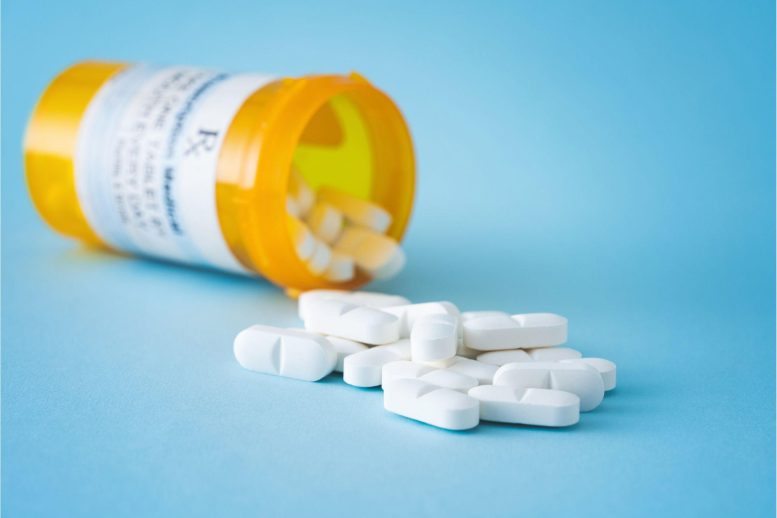
According to researchers who have analyzed clinical trial data for the new antimalarial drug tafenoquine, higher doses of the drug are necessary in order to become a reliable cure.
A report recently published in the journal eLife highlights the ineffectiveness of the current 300 mg dose of the antimalarial drug tafenoquine for certain patients.
The study reveals that while the 300 mg dose reduces recurrent vivax malaria infection by 70%, increasing the dose to 450 mg would increase the effectiveness to 85%. In other words, increasing the dose to 450 mg would result in one additional person being cured for every 11 people treated.
Advantages and Challenges of Tafenoquine
Tafenoquine is the first newly approved anti-relapse drug in 70 years, and its main advantage is that it can be taken as a single dose, unlike primaquine (the current treatment) which needs to be taken daily for 7–14 days.
“The same single dose of tafenoquine is recommended for all adults and this has important practical advantages. However, because of variation in body weight, that dose results in substantial variation in drug exposure,” explains lead author James Watson, a researcher at the Oxford University Clinical Research Unit, Hospital for Tropical Diseases, Ho Chi Minh City, Vietnam. “The tafenoquine studies suggested that this single 300 mg dose was inferior to primaquine doses which are lower than those recommended by the WHO in Southeast Asia. Overall, it seems that the currently recommended adult dose of tafenoquine is not as good as optimal primaquine treatment in preventing vivax malaria relapses in all endemic regions.”
To understand more about tafenoquine’s mechanism of action and optimal dosing, the team conducted a meta-analysis in which they pooled data from individual malaria patients who took part in the three clinical trials that led to the drug’s approval and healthy volunteers involved in an earlier pharmacokinetics study. They then used statistical models to characterize the relationship between the weight-adjusted dose of tafenoquine or primaquine treatment and the likelihood of recurrent malaria infection.
Efficacy Across Regions
They found that each additional mg/kg of tafenoquine substantially reduced the chance of having a recurrent vivax malaria infection within four months. For example, increasing the dose from 3mg/kg to 4mg/kg reduces the proportion of patients with a recurrent infection from ~30% to 20%. This association between tafenoquine dose and the proportion relapsing was seen in patients from Asia, Africa, and the Americas.
They then used patients’ weight data from the three efficacy trials to calculate the likely average efficacy of tafenoquine with either a 300 mg or 450 mg dose. A fixed tafenoquine dose of 300 mg would result in around 15% of the patients having a recurrence, whereas a dose of 450mg would reduce this proportion to 6%. Given that approximately half the patients given no anti-relapse treatment had a recurrence, this suggests that the lower 300 mg dose prevents 70% of recurrences whereas the 450 mg dose prevents 85% of recurrences.
To study the mechanism of action of tafenoquine, the team combined pharmacokinetics data from the healthy volunteers in the initial study with patients from the efficacy trials – nearly 4,500 drug measurements from 718 individuals. They also measured levels of methemoglobin, a measure of oxidative activity in the body. These two analyses revealed the drug’s metabolism, reflected by its rate of elimination from the body, rather than exposure to the parent compound, determined its activity in preventing vivax malaria recurrences, and it suggests that the conversion of tafenoquine into oxidative metabolites was responsible for its antimalarial activity, just as for primaquine.
“Our analysis provides strong evidence that the currently recommended adult dose of tafenoquine is insufficient for radical cure in all adults,” concludes senior author Nicholas White, Professor of Tropical Medicine at the Faculty of Tropical Medicine, Mahidol University, Thailand and the Centre for Tropical Medicine and Global Health, University of Oxford. “In endemic areas, relapse of Plasmodium vivax malaria causes substantial morbidity and contributes to mortality, particularly in young children. Tafenoquine can prevent malaria relapses in one treatment dose and is therefore, potentially, a major advance in antimalarial therapeutics. Getting the dose right is critical. The efficacy, tolerability, and safety of increased doses should now be evaluated in prospective studies.”
Reference: “The clinical pharmacology of tafenoquine in the radical cure of Plasmodium vivax malaria: An individual patient data meta-analysis” by James A Watson Is a corresponding author, Robert J Commons, Joel Tarning, Julie A Simpson, Alejandro Llanos Cuentas, Marcus VG Lacerda, Justin A Green, Gavin CKW Koh, Cindy S Chu, François H Nosten, Richard N Price, Nicholas PJ Day and Nicholas J White, 6 December 2022, eLife.
DOI: 10.7554/eLife.83433
Never miss a breakthrough: Join the SciTechDaily newsletter.
Follow us on Google and Google News.
2 Comments
There seems to be hesitancy to just go to a higher dose. Is it because of the cost for wide-scale application, or are there significant side-effects that weren’t mentioned? What is the LD50 toxicity for the drug?
Malaria is just one of many extremely dangerous diseases/parasites carried by mosquitoes & it is keep gaining resistance against all kinds of medicines!
We need to understand that the ONLY real solution is completely/globally eradicate all mosquitoes!
Mosquitoes are carriers of many extremely dangerous diseases & parasites
& they do NOT have any essential function in nature (which cannot be done by many other insects)!
Today we already have tech that can eradicate all mosquitoes & so, all we really need is a global UN agreement to start the project!!