
Close Menu
    Facebook X (Twitter) Instagram
    SciTechDaily
    • Biology
    • Chemistry
    • Earth
    • Health
    • Physics
    • Science
    • Space
    • Technology
    Facebook X (Twitter) Pinterest YouTube RSS
    SciTechDaily
    Home»Earth»Chelyabinsk Meteorite Sheds New Light on Dinosaur Extinction
    Earth

    Chelyabinsk Meteorite Sheds New Light on Dinosaur Extinction

    By Planetary Science InstituteJuly 17, 2014No Comments3 Mins Read
    Facebook Twitter Pinterest Telegram LinkedIn WhatsApp Email Reddit
    Share
    Facebook Twitter LinkedIn Pinterest Telegram Email Reddit
    Meteorite Sheds Light on Dinosaur Extinction Mystery
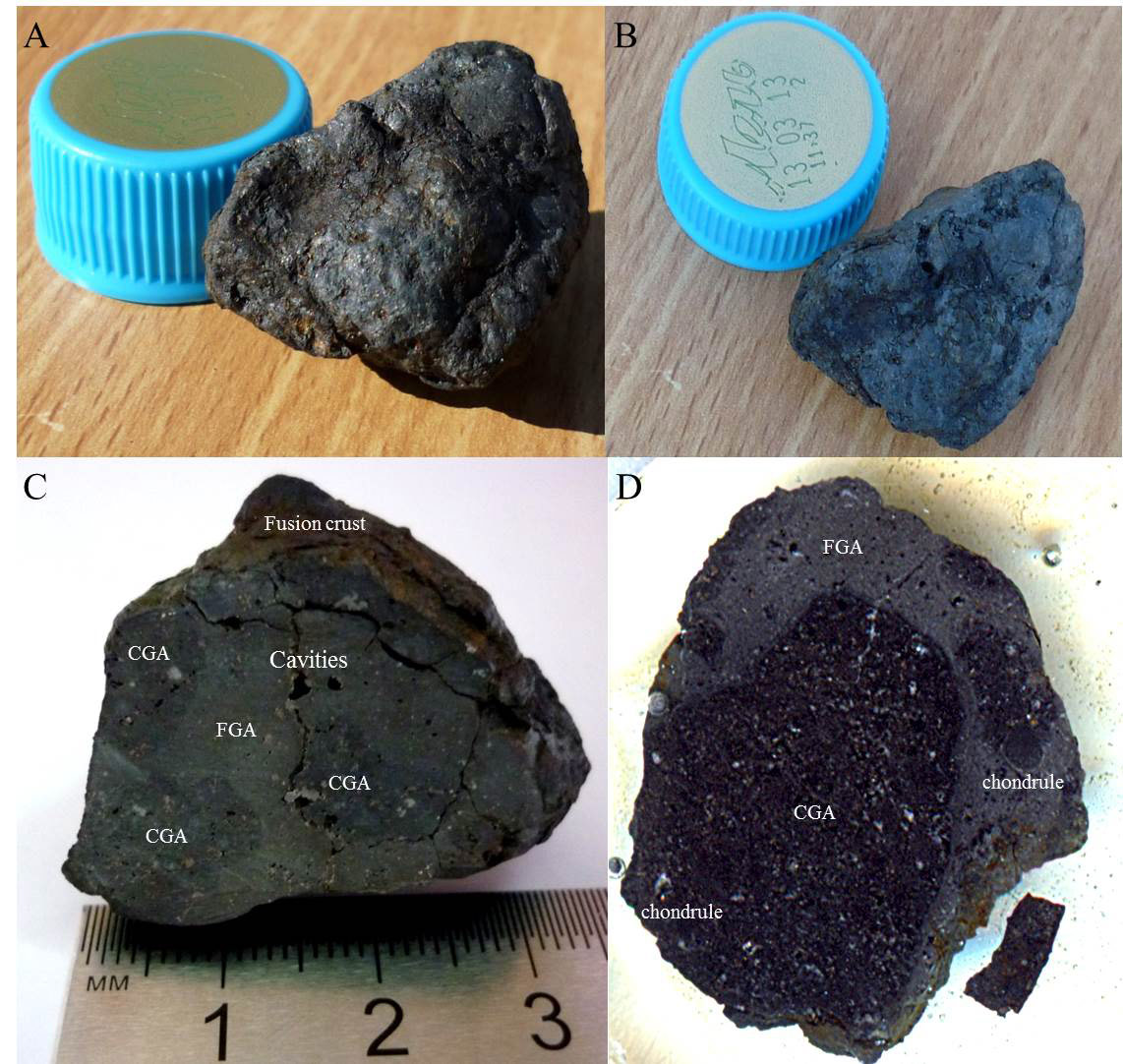
    Fragment of Chelyabinsk meteorite, showing the fusion crust — the result of a previous collision or near miss with another planetary body or with the sun. Credit: Dr. Victor Sharygin

    New measurements on the Chelyabinsk meteorite rule out the possibility for the Baptistina Asteroid Family being the source of the K/T impactor.

    Tucson, Arizona — A long-standing debate about the source of the asteroid that impacted the Earth and caused the extinction of the dinosaurs has been put to rest thanks to the Chelyabinsk meteorite that disintegrated over Russia in February 2013, a new paper published in the journal Icarus shows.

    Astronomers have debated whether the dinosaur killer was linked to the breakup of a large asteroid forming the Baptistina Asteroid Family (BAF) beyond Mars, some of which ended up on Earth-crossing orbits. The asteroid impacting Earth is thought to have been dark and carbonaceous. The BAF hypothesis was bolstered by them being dark and with a spectral shape similar to carbonaceous meteorites.

    Analysis of the Chelyabinsk meteorite shows that shock produced during catastrophic disruption of a large asteroid can darken otherwise bright silicate material. Shock darkening was first reported by Dan Britt (now at the University of Central Florida) in the early 1990s. The Chelyabinsk meteorite has both bright unshocked and dark shocked material. However, the details of the spectra of the dark Chelyabinsk material closely reproduces spectral signatures seen with members of the Baptistina Asteroid Family, said Planetary Science Institute Research Scientist Vishnu Reddy, lead author of “Chelyabinsk meteorite explains unusual spectral properties of Baptistina Asteroid Family” that appears in Icarus.

    “Shock and impact melt can make bright asteroids dark,” Reddy said. “In other words, not all dark asteroids are rich in carbon as once thought.” The latest measurements rule out the possibility for the Baptistina family being the source of the K/T impactor, he added.

    “The link between the K/T impactor, thought to be carbonaceous, and BAF, has been proved invalid,” Reddy said.

    Chelyabinsk provided a great opportunity to see the mixture of shocked and unshocked material in a single meteorite, Reddy said while cautioning that no clear evidence exists that the Russian meteorite itself came from the Baptistina family.

    “The new finding has implications for hazards from Near-Earth Objects and for mining asteroids for space-based resources,” Reddy said. “A potential target identified as primitive and rich in volatiles/organics and carbon based on its spectral colors could in fact be just shocked material with entirely different composition.”

    PSI researchers David P. O’Brien and Lucille Le Corre were among the co-authors on the paper.

    This research work was supported by grants from NASA’s Planetary Mission Data Analysis Program, NEOO Program, and Planetary Geology and Geophysics Program.

    Reference: “Chelyabinsk meteorite explains unusual spectral properties of Baptistina Asteroid Family” Vishnu Reddy, Juan Sanchez, William Bottke, Ed Cloutis, Matt Izawa, Dave O’Brien, Paul Mann, Matt Cuddy, Lucille Le Corre, Michael Gaffey and Gary Fujihara, 28 April 2014, Icarus.
    DOI: 10.1016/j.icarus.2014.04.027
    arXiv: 1404.6666

    Never miss a breakthrough: Join the SciTechDaily newsletter.
    Follow us on Google and Google News.

    Dinosaurs Planetary Science Planetary Science Institute
    Share. Facebook Twitter Pinterest LinkedIn Email Reddit

    Related Articles

    Intense Volcanism May Have Played a Role in Dinosaurs Extinction

    Scientists Link Earth’s Westward Drift of Magnetic Field and Superrotation of Inner Core

    Could Life on Earth Have Originated from Somewhere Else?

    Tamu Massif Confirmed as Largest Single Volcano on Earth

    Scientists Discover Mega-Canyon under Greenland Ice Sheet

    Satellite Data Reveals a Shift in Vegetation Growth at Northern Latitudes

    Using a Fifth Force of Nature to Probe Earth’s Deep Interior

    Possible Planetary Disasters That Could Cause Extinction

    “Iron-Rich Blobs” Penetrate Deep Into Earth’s Mantle

    Leave A Reply Cancel Reply

    • Facebook
    • Twitter
    • Pinterest
    • YouTube

    Don't Miss a Discovery

    Subscribe for the Latest in Science & Tech!

    Trending News

    Scientists Discover Cheap, Natural Remedy for High Blood Pressure

    Earth’s Upper Atmosphere Is Cooling Fast and Scientists Finally Know Why

    32,000 Olympic Pools of Magma Nearly Erupted Beneath Atlantic Island

    Exercise Changes the Heart in a Way Researchers Never Expected

    Too Much Sleep May Age Your Body Faster, New Study Warns

    Scientists Uncover Promising New Strategy To Stop Parkinson’s in Its Tracks

    Experts Reveal the Surprising Cancer Link Behind a Common Vitamin

    This Strange “Golden Orb” Found 2 Miles Deep Stumped Scientists for Years

    Follow SciTechDaily
    • Facebook
    • Twitter
    • YouTube
    • Pinterest
    • Newsletter
    • RSS
    SciTech News
    • Biology News
    • Chemistry News
    • Earth News
    • Health News
    • Physics News
    • Science News
    • Space News
    • Technology News
    Recent Posts
    • This Common Vitamin May Help Stop Prediabetes From Turning Into Diabetes
    • Canada’s Billion-Year-Old Rocks Could Hold the Future of Clean Energy
    • Climate Change Is Quietly Choking Rivers Across the Planet
    • Scientists Finally Solve the Mystery of “Clockwork” Earthquakes
    • Your Immune System Remembers Obesity for up to a Decade, Study Finds
    Copyright © 1998 - 2026 SciTechDaily. All Rights Reserved.
    • Science News
    • About
    • Contact
    • Editorial Board
    • Privacy Policy
    • Terms of Use

    Type above and press Enter to search. Press Esc to cancel.