
The Oldest Gibbon Fossil Was Discovered in Southwest China
The earliest gibbon fossil has been found by a team of researchers, filling a long-missing evolutionary gap in the history of apes.
The study, which was published in the Journal of Human Evolution, focuses on the hylobatid family of apes, which comprises 20 species of living gibbons that are found throughout tropical Asia from northeastern India to Indonesia.
“Hylobatids fossil remains are very rare, and most specimens are isolated teeth and fragmentary jaw bones found in cave sites in southern China and southeast Asia dating back no more than 2 million years ago,” explains Terry Harrison, a professor of anthropology at New York University and one of the paper’s authors. “This new find extends the fossil record of hylobatids back to 7 to 8 million years ago and, more specifically, enhances our understanding of the evolution of this family of apes.”
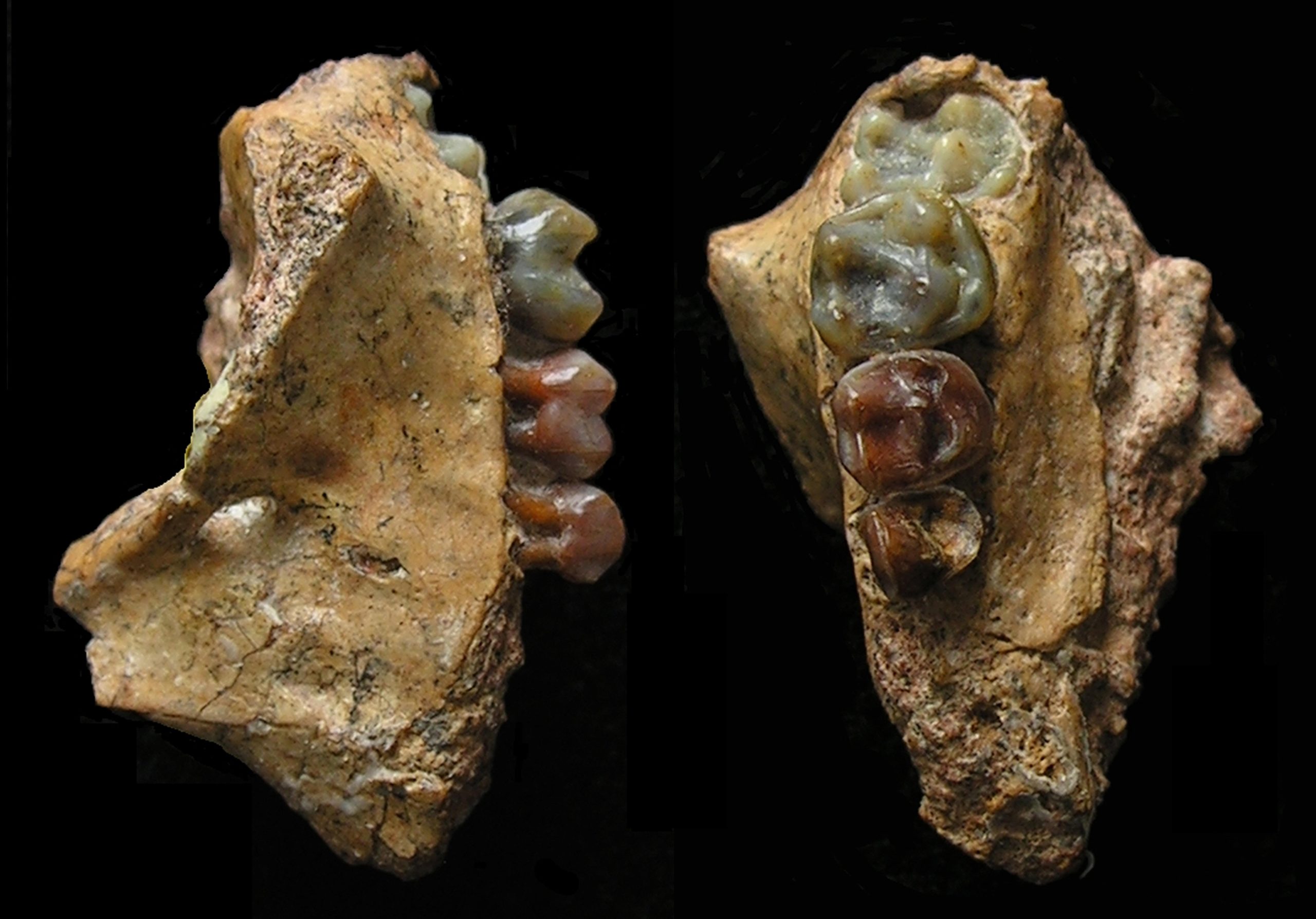
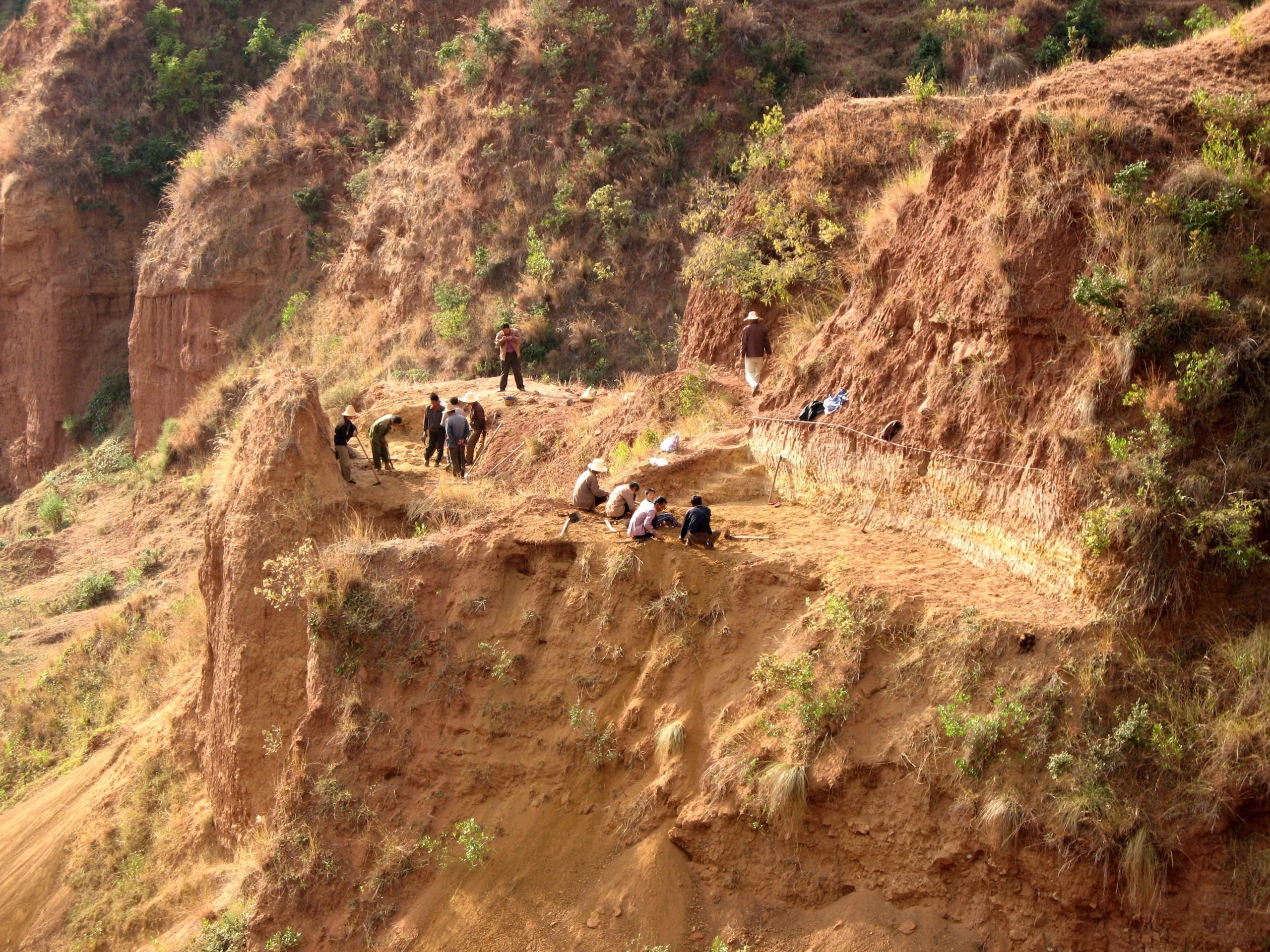
The fossil, found in the Yuanmou area of Yunnan Province in southwestern China, is of a small ape called Yuanmoupithecus xiaoyuan. The study’s analysis concentrated on the teeth and cranial specimens of Yuanmoupithecus, which included an upper jaw from a young child who was less than two years old at the time of its death.
Using the size of the molar teeth as a guide, Yuanmoupithecus was estimated to be close in size to modern-day gibbons, with a body weight of roughly 6 kilograms—or about 13 pounds.
Significance of the Yuanmoupithecus Specimen
“The teeth and the lower face of Yuanmoupithecus are very similar to those of modern-day gibbons, but in a few features the fossil species was more primitive and points to it being the ancestor of all the living species,” observes Harrison, part of NYU’s Center for the Study of Human Origins.
Ji discovered the child’s upper jaw during a field survey, and by comparing it with modern gibbon skulls kept at the Kunming Institute of Zoology, he was able to identify it as a hylobatid. In 2018, he invited Harrison and other colleagues to work on specimens gathered over the previous 30 years that were housed in the Yunnan Institute of Cultural Relics and Archaeology and the Yuanmou Man Museum.
“The remains of Yuanmoupithecus are extremely rare, but with diligence, it has been possible to recover enough specimens to establish that the Yuanmou fossil ape is indeed a close relative of the living hylobatids,” notes Harrison.
The Journal of Human Evolution study also found that Kapi ramnagarensis, which has been claimed to be an earlier species of hylobatid, based on a single isolated fossil molar from India, is not a hylobatid after all, but a member of a more primitive group of primates that are not closely related to modern-day apes.
“Genetic studies indicate that the hylobatids diverged from the lineage leading to the great apes and humans about 17 to 22 million years ago, so there is still a 10-million-year gap in the fossil record that needs to be filled,” Harrison cautions. “With the continued exploration of promising fossil sites in China and elsewhere in Asia, it is hoped that additional discoveries will help fill these critical gaps in the evolutionary history of hylobatids.”
Reference: “The earliest hylobatid from the Late Miocene of China” by Xueping Jia, Terry Harrison, Yingqi Zhang, Yun Wub, Chunxia Zhang, Jinming Hui, Dongdong Wua, Yemao Hou, Song Li, Guofu Wang and Zhenzhen Wang, 13 September 2022, Journal of Human Evolution.
DOI: 10.1016/j.jhevol.2022.103251
The study was funded by the National Natural Science Foundation of China, the Yunnan Natural Sciences Foundation, and the Strategic Priority Research Program of the Chinese Academy of Sciences.
The researchers also received access to skeletal and paleontological collections at the American Museum of Natural History in New York and the Smithsonian Institution’s National Museum of Natural History in Washington D.C., among others, in conducting their study.
Never miss a breakthrough: Join the SciTechDaily newsletter.
Follow us on Google and Google News.
6 Comments
It’s hard to believe that a child or infant under two years old could have teeth as well developed as those.
I am surprised at the amount of apparent tooth wear and perhaps decay, for an infant, on the more anterior teeth. -dentist, nyucd
A two year old gibbon is quite a bit more physically mature than a two year old Human. Qn adolescent, not an infant.
great
This evolution propoganda will soon come to end. Yet, I am astonished to see how people have been brainwashed to believe on an illogical and irrational just so that ppl would forget God
Just seen a comment dismissing evolution to forsake God.
No-one has to dismiss any God to understand evolution, just stretch the timelines to make it fit, God didn’t have a Swiss watch, also he never slept, so they probably thought it took six days.
The more you learn, the more you can make it fit with God. Ie, why did neanderthal man bury the dead in elaborate buriels, they must of believed in something, they couldn’t read or talk either.❤️